Private Safari vs Group Safari: Pros and Cons
June 16, 2026
Why Murchison Falls Should Be on Your Bucket List
June 17, 2026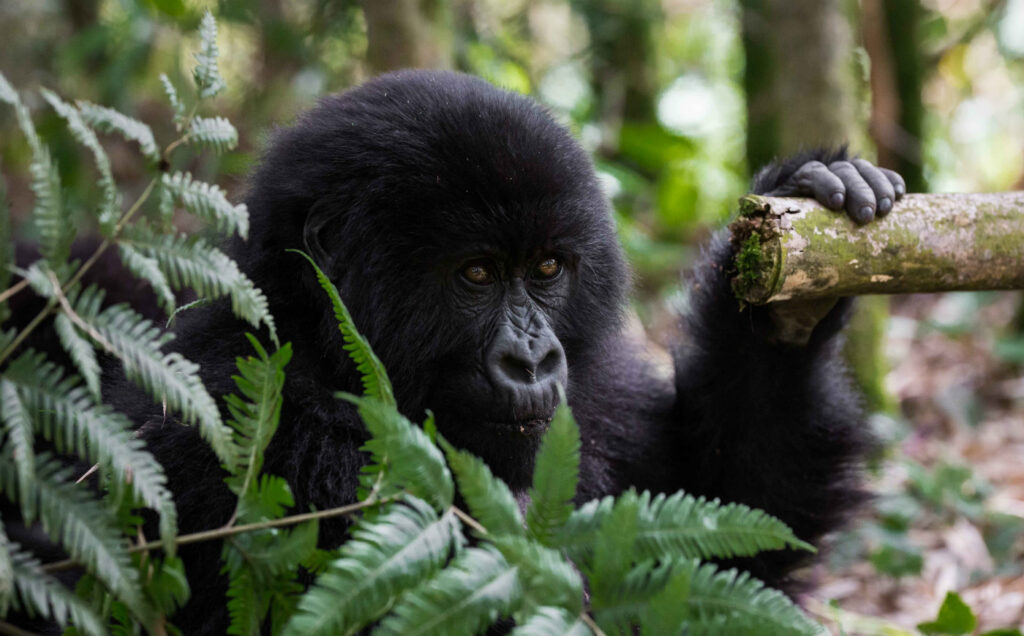
10 Things Nobody Tells You About Gorilla Trekking
Most people imagine gorilla trekking as a short, scenic walk through the forest followed by an hour of taking photographs. The brochures certainly make it look that way: a brief hike, a clearing, a gorilla family sitting patiently for the camera. The reality is richer, more physically demanding, and often more emotional than that picture suggests.
This article gathers 10 things nobody tells you about gorilla trekking — the details that rarely make it into the marketing material but that shape what the experience actually feels like. Some of it is practical. Some of it is harder to put into words until you have lived it yourself. All of it is intended to help you arrive in Bwindi Impenetrable with realistic expectations and a genuine appreciation for what you are about to take part in.
#1 The Trek Can Be Harder Than You Expect
Bwindi’s terrain is steep, often muddy, and threaded with dense vegetation that does not part easily. Trails climb and drop unpredictably, and altitude — ranging from roughly 1,200 to 2,600 metres — adds to the effort even for reasonably fit travellers. Fitness helps, but determination tends to matter more than athleticism; most people who finish the trek are not marathon runners, just people who kept going.
Where possible, rangers allocate gorilla families based on a visitor’s stated fitness level during the morning briefing, so it is worth being honest about your physical condition rather than overstating it. Porters are available at the park headquarters and provide real, practical assistance on the steeper sections.
#2 There Is No Guarantee How Long You’ll Walk
Some treks are over within an hour of leaving the park headquarters. Others take six hours or more before the gorilla family is located. This is because gorillas move freely through the forest in search of food, and trackers who set out at dawn can only report the family’s most recent position, not a guaranteed location.
This unpredictability is genuinely part of the experience rather than a flaw in it. You are entering a wild, unscripted environment, and the uncertainty of the walk is what makes the eventual sighting feel earned rather than staged.
#3 The Forest Is an Attraction in Itself
Long before the gorillas appear, the walk through Bwindi’s ancient montane rainforest is worth paying attention to. The forest is a UNESCO World Heritage Site for good reason: towering hardwood trees, more than 350 recorded bird species, an extraordinary variety of butterflies, and plant life found almost nowhere else on earth. Many trekkers admit afterwards that they had underestimated how striking the forest itself would be, having focused entirely on the gorillas beforehand.
#4 The First Gorilla Sighting Is Surprisingly Emotional
Nothing quite prepares you for the moment the forest opens and you see your first mountain gorilla. There is a particular kind of silence that falls over a group at that point — not awkward, but reverent. Many travellers describe a rush of adrenaline mixed with an unexpected stillness, a sense of being in the presence of something that deserves quiet respect rather than excitement.
It is common for people to struggle to describe the moment afterwards. Photographs rarely capture it, and words tend to undersell it. This is one of those experiences that is genuinely better lived than explained — which is, in its own way, part of the appeal.
#5 One Hour Feels Both Short and Long
Visitor time with the gorilla family is strictly limited to one hour, a rule set by the Uganda Wildlife Authority to minimise stress on the animals and reduce the risk of disease transmission between humans and gorillas. In the moment, an hour can feel like it passes in minutes — there is simply too much to take in. Yet most travellers leave feeling that it was, in fact, enough. The encounter is intense rather than prolonged, and that intensity tends to be more memorable than a longer but more passive viewing would be.
#6 The Silverback Commands Instant Respect
A mature silverback can weigh over 200 kilograms, and his physical presence is immediately apparent — broad-shouldered, deliberate in movement, calmly central to the group’s dynamics. He is typically the family’s protector and decision-maker, and the other members visibly defer to him without obvious tension. None of this requires reading human emotion into gorilla behaviour; the authority is simply evident in how the group organises itself around him.
#7 You Will Probably Get Dirty
Mud, intermittent rain, and dense undergrowth are part of the deal in a rainforest that receives rainfall throughout the year, regardless of season. Trousers get muddied, boots get soaked, and hands grip damp vegetation more than once along the trail. This is best treated as part of the adventure rather than a drawback — pack accordingly and the discomfort becomes a minor footnote rather than a complaint.
- Packing tip: waterproof, ankle-supporting boots and a quick-dry change of clothes for the return journey make a noticeable difference.
- Packing tip: gardening or lightweight work gloves help considerably when gripping vegetation on steep sections.
#8 Gorilla Trekking Is About Conservation Too
The USD 800 permit fee is not simply an entry ticket — it directly funds ranger salaries, anti-poaching patrols, habitat protection, and community benefit programmes in the areas surrounding Bwindi. Uganda’s mountain gorilla population has grown steadily in recent decades, a trend closely tied to this funding model and to the broader conservation programmes it supports, including the International Gorilla Conservation Programme’s work across the region.
Understanding this context tends to deepen the experience. You are not simply observing wildlife; you are participating, in a small but tangible way, in one of conservation’s more genuine success stories.
#9 Your Guide and Trackers Matter More Than You Realise
The trackers who locate the gorilla family, and the ranger guide who leads your group, shape the experience considerably more than most first-time trekkers anticipate. Trackers read subtle signs — broken vegetation, feeding remains, dung — to follow a family’s movement since dawn. Your guide manages your safety, interprets gorilla behaviour in real time, and often shares context about the specific family you are visiting, including individual gorillas’ personalities and histories where known. A knowledgeable, attentive guide turns a wildlife sighting into a genuinely informed encounter.
#10 You May Leave Changed
It would be an overstatement to promise that gorilla trekking changes everyone who does it. But a great many travellers report a genuine shift in perspective afterwards — a deeper appreciation for conservation, a recalibrated sense of scale about humanity’s place in the natural world, or simply a memory that resurfaces unexpectedly months later. These are real, frequently reported reactions rather than guaranteed outcomes, and they are worth going in open to rather than expecting on command.
What Should I Know Before Gorilla Trekking in Uganda?
| Before gorilla trekking in Uganda, know that the hike can take two to eight hours over steep, muddy terrain, permits cost USD 800 and should be booked months ahead, the minimum age is 15, and you’ll spend exactly one hour with the gorilla family once located. Expect to get muddy, bring sturdy boots, and consider hiring a porter. |
What Travellers Should Know Before They Go
- Clothing: neutral-coloured, long-sleeved shirts and trousers (avoid blue — it attracts tsetse flies); a waterproof jacket is essential year-round.
- Footwear: waterproof, ankle-supporting hiking boots are non-negotiable; trail trainers are not sufficient for Bwindi’s terrain.
- Fitness preparation: a few weeks of regular walking or light cardio beforehand makes a genuine difference, even without intensive training.
- Hiring a porter: available at park headquarters for a modest fee; strongly recommended for all fitness levels, and the fee directly supports the local community.
- Photography: bring a zoom lens if possible, carry spare batteries, and remember that flash photography is not permitted near the gorillas.
- Weather expectations: rain is possible in any season in this rainforest environment; pack as though it will rain, even during the drier months of June to August and December to February.
Frequently Asked Questions
| Question | Answer |
| How difficult is gorilla trekking? | It is rated moderate to strenuous. Steep, muddy, and sometimes overgrown terrain at altitudes up to roughly 2,600 metres means a reasonable level of fitness helps, though determination matters as much as athletic ability. Porters are available to assist. |
| What should I wear? | Neutral-coloured long sleeves and trousers, a waterproof jacket, sturdy waterproof boots, and gardening or work gloves for gripping vegetation. Avoid blue clothing, which attracts tsetse flies. |
| Is it worth the cost? | The USD 800 permit is a significant expense, but it funds ranger protection, anti-poaching work, and community programmes, while delivering an encounter most travellers describe as genuinely unlike anything else available on a safari. Value, ultimately, depends on what you are hoping to experience. |
| Can older travellers participate? | There is no upper age limit for gorilla trekking, and many older travellers complete it successfully, particularly when hiring a porter and being assigned a less physically demanding sector or family. A realistic conversation with your operator about fitness level helps in allocating an appropriate trek. |
| How close do you get to the gorillas? | Uganda Wildlife Authority guidelines require a minimum distance of seven metres from the gorillas at all times, enforced by rangers throughout the encounter, though gorillas sometimes choose to approach closer of their own accord. |
| What happens if it rains? | Treks proceed as planned in light to moderate rain; Bwindi receives rainfall throughout the year regardless of season. Trekking is only paused in cases of genuinely severe weather posing a safety risk, which is uncommon. |
| Is one hour enough? | Most travellers find it sufficient. The encounter is intense and immersive rather than passive, and the one-hour limit exists specifically to protect gorilla welfare and minimise disease transmission risk. |
| Which park is best for gorilla trekking? | Bwindi Impenetrable National Park offers the widest choice of habituated gorilla families across four trekking sectors and is Uganda’s primary gorilla trekking destination; Mgahinga Gorilla National Park offers a smaller, quieter alternative. |
Why Choose Terenga Safaris?
Planning a gorilla trekking trip involves more logistics than many first-time travellers expect — permit timing, sector selection, fitness-appropriate family allocation, and lodge proximity all affect how the day unfolds. Terenga Safaris handles this groundwork directly: we secure permits well ahead of peak season, advise honestly on which sector and trekking difficulty suits your fitness level, and work only with guides who bring genuine local knowledge and a calm, attentive presence on the trail.
We also take the conservation dimension of gorilla trekking seriously, working within Uganda Wildlife Authority and International Gorilla Conservation Programme guidelines on every itinerary we build. Our role is to prepare you properly for what the experience actually involves, so that nothing about the day comes as an unwelcome surprise — only the moments that are meant to.
Conclusion: More Than Just Another Wildlife Encounter
Gorilla trekking in Uganda is not simply another item on a wildlife checklist. It is physically engaging, occasionally muddy, frequently unpredictable, and — for most who complete it — genuinely moving in ways that are hard to anticipate from a brochure. Understanding these ten things nobody tells you about gorilla trekking beforehand will not remove the challenge or the uncertainty, but it should help you meet both with the right expectations.
| The mountain gorillas may be the reason many travellers come to Bwindi, but the journey through the forest and the memories created along the way are often what stay with them long after they leave. |
If you are ready to plan your gorilla trekking adventure, Terenga Safaris would be glad to help — from securing your permit to building an itinerary around the rest of Uganda’s wildlife and landscapes.