Best Time to Visit East Africa: A Month-by-Month Safari Guide
June 24, 2026Is Gorilla Trekking Worth the Money?
June 24, 2026
Rare Animals to See on an East Africa Safari: A Wildlife Guide.
Lions resting in golden grass, elephants crossing a dusty plain, giraffes silhouetted against an amber sky — these are the images that fill safari brochures, and they are every bit as magnificent as they look. But if you are curious about the rare animals to see on an East Africa safari, the region has far more to offer than its famous headliners. From a prehistoric bird that stands motionless in papyrus swamps for hours, to the world’s most trafficked mammal that almost nobody ever encounters in the wild, East Africa is home to a remarkable cast of lesser-known species.
Understanding this wider biodiversity doesn’t just deepen a safari — it transforms it. This guide introduces 11 extraordinary species, explains where and when to find them, and shows how responsible wildlife tourism helps protect the habitats they depend on.
Why East Africa Is a Global Biodiversity Hotspot
Few regions on earth pack as much ecological variety into a comparable area. Within Uganda, Kenya, Tanzania, and Rwanda, habitats shift from sea-level coral reefs and Indian Ocean coast through open savannah, acacia woodland, freshwater lakes, papyrus wetlands, montane rainforest, and high-altitude moorland — all the way to glaciated peaks above 5,000 metres.
This mosaic of ecosystems supports extraordinary biodiversity. Uganda alone records over 1,060 bird species and more primate species than any other country on earth. Tanzania’s Serengeti-Mara ecosystem hosts the largest terrestrial mammal migration in the world. Kenya’s northern frontier shelters species found nowhere else. Rwanda’s Albertine Rift harbours Critically Endangered primates in forests shared with no other nation.
Critically, the region also benefits from one of the most extensive networks of protected areas on the continent, from small community conservancies in northern Kenya to vast game reserves in southern Tanzania. These spaces — when supported by sustainable tourism and community partnerships — provide the most effective insurance against extinction for East Africa’s rarest wildlife.
Rare Animals to See on an East Africa Safari
Wildlife sightings in wild places can never be guaranteed. The animals below can all be encountered — but nature operates on its own schedule. The best you can do is put yourself in the right place, at the right time, with an expert guide.
Shoebill (Balaeniceps rex)
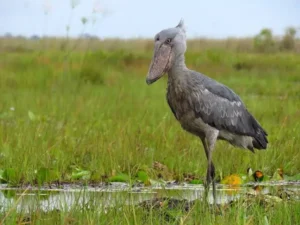
Conservation Status: Vulnerable (IUCN)
Identifying Features: A prehistoric-looking waterbird standing up to 1.4 metres tall, named for its massive shoe-shaped bill capable of catching lungfish and even small crocodiles.
Habitat & Behaviour: Dense papyrus swamps and floodplains. Largely solitary and territorial.
Where to See It: Murchison Falls NP and Mabamba Swamp, Uganda
Best Time: December to February (dry season)
Fascinating Fact: A shoebill can stand motionless for hours — a hunting strategy so effective it has barely evolved in millions of years. Uganda holds an estimated 70% of the global population.
Responsible Viewing Tip: Approach by canoe rather than motorised boat. Keep noise to a minimum. Maintain a distance of at least 30 metres.
Mountain Gorilla (Gorilla beringei beringei)
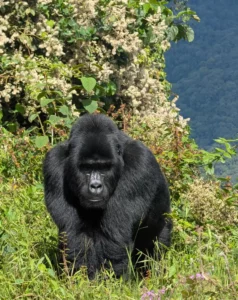
Conservation Status: Endangered (IUCN)
Identifying Features: The largest living primate. Adult male silverbacks can weigh over 200 kg. Thick fur insulates against cold montane temperatures above 2,000 metres.
Habitat & Behaviour: Montane rainforest. Lives in stable family groups of 5 to 30 individuals led by a dominant silverback.
Where to See It: Bwindi Impenetrable NP and Mgahinga Gorilla NP (Uganda); Volcanoes NP (Rwanda)
Best Time: June to September and December to February
Fascinating Fact: With fewer than 1,100 individuals remaining in the wild — all in the Virunga Massif and Bwindi — the mountain gorilla is critically rare. It is one of only a handful of great apes whose numbers are actually increasing, largely due to dedicated conservation and tourism revenue.
Responsible Viewing Tip: Keep a minimum distance of seven metres. Do not visit if you have a cough or cold — gorillas are vulnerable to human respiratory infections. Keep permit group sizes to eight.
Grevy’s Zebra (Equus grevyi)
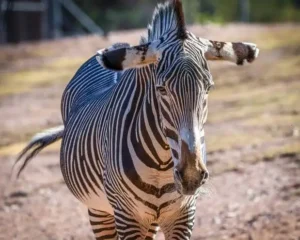
Conservation Status: Endangered (IUCN)
Identifying Features: Easily distinguished from the common plains zebra by its narrow, close-set stripes, large rounded ears, and white belly. The largest wild equid.
Habitat & Behaviour: Semi-arid grasslands and scrublands. Far less social than plains zebras — males are often solitary.
Where to See It: Samburu National Reserve and Buffalo Springs, Kenya
Best Time: June to October
Fascinating Fact: Fewer than 3,000 individuals remain in the wild, with northern Kenya holding the majority of the global population. Each Grevy’s zebra has a unique stripe pattern — as individual as a fingerprint.
Responsible Viewing Tip: Hire a local Samburu guide who knows individual animals and current movement patterns. Binoculars are essential in open scrubland.
Golden Monkey (Cercopithecus kandti)
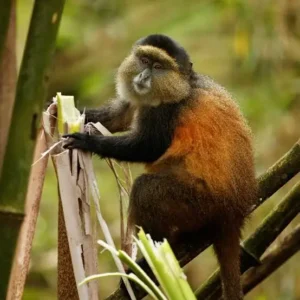
Conservation Status: Endangered (IUCN)
Identifying Features: A vivid, charismatic primate with bright orange-gold patches on its back contrasting sharply with black limbs and face. One of Africa’s most striking monkey species.
Habitat & Behaviour: Bamboo forest on the slopes of volcanic mountains, typically between 2,200 and 3,500 metres.
Where to See It: Mgahinga Gorilla NP (Uganda) and Volcanoes NP (Rwanda)
Best Time: Year-round; June to September for drier trekking
Fascinating Fact: The golden monkey is endemic to the Albertine Rift and found nowhere else on earth. Habituation programmes now allow close encounters at both Ugandan and Rwandan parks.
Responsible Viewing Tip: Combine a golden monkey trek with gorilla trekking in either Mgahinga or Volcanoes NP to make the most of a single mountain visit.
Rothschild’s Giraffe (Giraffa camelopardalis rothschildi)
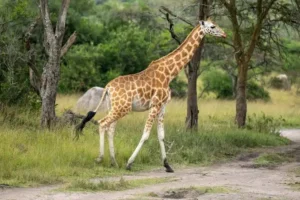
Conservation Status: Near Threatened
Identifying Features: One of the tallest giraffe subspecies, reaching up to 6 metres. Distinguished by cream-coloured legs (no spots below the knee) and five ossicones rather than the usual two.
Habitat & Behaviour: Woodland savannah and open grassland. Browsers feeding primarily on acacia and other tall trees.
Where to See It: Lake Nakuru NP and Giraffe Centre, Nairobi (Kenya); Murchison Falls NP (Uganda)
Best Time: Year-round; July to October for best visibility
Fascinating Fact: Fewer than 2,000 Rothschild’s giraffes remain in the Lake Nakuru National Parkwild. Murchison Falls NP hosts Uganda’s only population, which has grown considerably thanks to reintroduction efforts.
Responsible Viewing Tip: Approach slowly in a vehicle to avoid spooking the group. Dawn game drives offer the best photographic light in savannah habitats.
Sitatunga (Tragelaphus spekii)
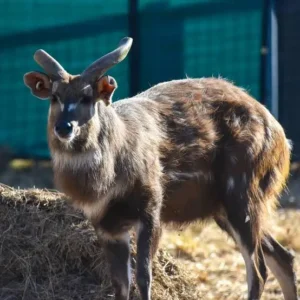
Conservation Status: Least Concern (localised)
Identifying Features: A semi-aquatic antelope with splayed hooves adapted for swampy ground. Males carry twisted, keeled horns. Coats range from shaggy chestnut in females to dark greyish-brown in older males.
Habitat & Behaviour: Papyrus swamps, flooded forest margins, and riverine vegetation. Rarely ventures far from water.
Where to See It: Bigodi Wetland Sanctuary (Uganda); Saiwa Swamp NP (Kenya)
Best Time: Year-round; mornings and evenings for best activity
Fascinating Fact: The sitatunga is almost never seen in open terrain — it retreats into dense swamp vegetation at the first sign of danger, often submerging to its neck.
Responsible Viewing Tip: Raised observation platforms at Bigodi and Saiwa Swamp offer the best vantage points without disturbing animals in the swamp below.
African Wild Dog (Lycaon pictus)
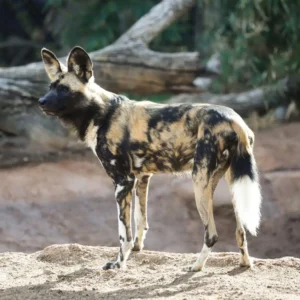
Conservation Status: Endangered (IUCN)
Identifying Features: Irregularly blotched in brown, black, yellow, and white — no two individuals have the same pattern. Large rounded ears aid both hearing and thermoregulation.
Habitat & Behaviour: Open woodland and savannah. Highly social, living in packs of 6 to 20, with a strongly cooperative hunting strategy.
Where to See It: Selous Game Reserve (Tanzania); Laikipia Plateau (Kenya)
Best Time: June to October
Fascinating Fact: With fewer than 6,000 individuals remaining, African wild dogs are among Africa’s rarest large carnivores. Packs can cover up to 50 kilometres a day, making sightings genuinely unpredictable.
Responsible Viewing Tip: A specialist guide with radio-tracking knowledge dramatically improves sighting chances. Ask operators specifically about pack movements before arrival.
Hirola (Beatragus hunteri)
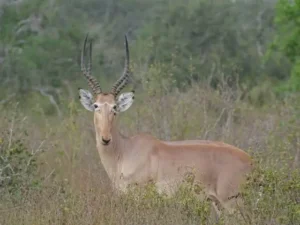
Conservation Status: Critically Endangered (IUCN)
Identifying Features: A medium-sized antelope with distinctive white spectacles around the eyes. Lyre-shaped horns are unique among East African bovids.
Habitat & Behaviour: Short-grass arid and semi-arid plains. Grazes in small herds in one of the world’s most restricted ranges.
Where to See It: Arawale National Reserve and surrounding Garissa region, northeastern Kenya
Best Time: November to February
Fascinating Fact: The hirola is sometimes called the ‘world’s most endangered antelope’, with an estimated population of under 500. It exists only in a narrow strip of northeastern Kenya and was recently reintroduced to Tsavo East NP.
Responsible Viewing Tip: Reaching the Garissa region requires a specialist operator. Combining a hirola sighting with northern Kenya’s camel culture creates a truly unusual safari experience.
Giant Forest Hog (Hylochoerus meinertzhageni)
Conservation Status: Least Concern (rarely seen)
Identifying Features: The world’s largest wild pig, weighing up to 275 kg. Distinguished by a massive head, warty facial skin, and coarse black hair.
Habitat & Behaviour: Dense montane forest and forest-savannah edges above 1,500 metres. Largely nocturnal.
Where to See It: Bwindi Impenetrable NP and Queen Elizabeth NP (Uganda); Aberdare NP (Kenya)
Best Time: June to September
Fascinating Fact: Despite being enormous, giant forest hogs are rarely photographed due to their nocturnal habits and preference for dense forest undergrowth. Encounters are often fleeting and unexpected.
Responsible Viewing Tip: Night game drives in Queen Elizabeth NP occasionally produce sightings. Alert your guide specifically to this species at the start of any forest walk.
Pangolin (Smutsia temminckii and Phataginus species)
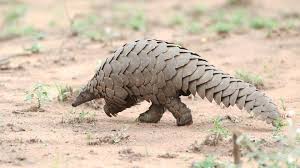
Conservation Status: Vulnerable to Critically Endangered (IUCN)
Identifying Features: Covered in overlapping keratin scales — the only scaled mammal in the world. Rolls into a defensive ball when threatened. Long, sticky tongue evolved to extract termites and ants.
Habitat & Behaviour: Savannah, woodlands, and forest. Solitary and predominantly nocturnal.
Where to See It: Distributed across East Africa; genuinely rare sightings in Uganda, Tanzania, and Kenya
Best Time: Night game drives, any season
Fascinating Fact: Pangolins are the world’s most trafficked wild mammal, decimated across Asia and increasingly Africa for their scales and meat. Seeing a pangolin in the wild is widely considered a once-in-a-lifetime encounter.
Responsible Viewing Tip: If you are fortunate enough to see a pangolin, do not touch it or attempt to photograph with flash. Report sightings to park rangers and your operator — it assists population monitoring.
De Brazza’s Monkey (Cercopithecus neglectus)
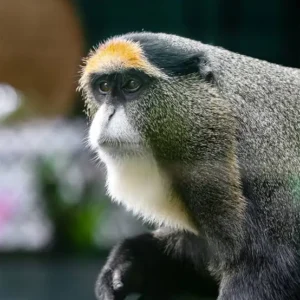
Conservation Status: Least Concern (localised)
Identifying Features: Unmistakable: a white beard, orange-brown brow band, and bluish-grey body. One of the most distinctive-looking primates in Africa.
Habitat & Behaviour: Riverine and swamp forest near permanent water sources. Rarely ventures far from dense riparian vegetation.
Where to See It: Semuliki NP and Toro-Semuliki Wildlife Reserve, western Uganda
Best Time: Year-round; mornings for best activity
Fascinating Fact: Semuliki is one of the few accessible places on earth where De Brazza’s monkey can be reliably encountered. The park itself is a Congolian rainforest outlier — one of Uganda’s most ecologically unusual destinations.
Responsible Viewing Tip: Combine a Semuliki visit with a trip to Kibale Forest for chimpanzees or the Rwenzori foothills for an unforgettable western Uganda circuit.
Quick Reference: Rare Wildlife at a Glance
A summary table for trip planning. ‘Chance of Seeing’ is indicative — conditions and guide expertise will significantly influence outcomes.
| Animal | Best Country | Best Park/Reserve | Chance of Seeing | Conservation Status |
| Shoebill | Uganda | Mabamba Swamp / Murchison Falls NP | Moderate–High | Vulnerable |
| Mountain Gorilla | Uganda / Rwanda | Bwindi / Volcanoes NP | High (with permit) | Endangered |
| Grevy’s Zebra | Kenya | Samburu NR / Buffalo Springs NR | Moderate | Endangered |
| Golden Monkey | Uganda / Rwanda | Mgahinga / Volcanoes NP | High (habituated groups) | Endangered |
| Rothschild’s Giraffe | Uganda / Kenya | Murchison Falls NP / Lake Nakuru NP | Moderate–High | Near Threatened |
| Sitatunga | Uganda / Kenya | Bigodi Wetland / Saiwa Swamp NP | Moderate | Least Concern (localised) |
| African Wild Dog | Tanzania / Kenya | Selous GR / Laikipia | Low–Moderate | Endangered |
| Hirola | Kenya | Tsavo East NP / Arawale NR | Low (specialist) | Critically Endangered |
| Giant Forest Hog | Uganda | Queen Elizabeth NP / Bwindi NP | Low–Moderate | Least Concern |
| Pangolin | Uganda / Kenya / Tanzania | Various (rare) | Very Low (rare) | Vulnerable–Crit. Endangered |
| De Brazza’s Monkey | Uganda | Semuliki NP | Moderate (specialist) | Least Concern |
Conservation Challenges Facing Rare East African Wildlife
Many of the species described here are declining not because of a single dramatic threat, but because of a confluence of persistent pressures.
- Habitat loss: Agricultural expansion, urban growth, and deforestation continue to reduce the range of forest-dependent species including gorillas, golden monkeys, and De Brazza’s monkeys.
- Human-wildlife conflict: As people and wildlife compete for space, predators such as African wild dogs face retaliatory killings after livestock predation events.
- Poaching and trafficking: Pangolins are trafficked in enormous numbers for Asian markets. Grevy’s zebras, hirola, and shoebills face localised poaching pressure.
- Climate change: Altered rainfall patterns affect wetland habitats (critical for sitatunga and shoebills) and the vegetation bands that mountain gorillas depend on.
- Community conservation: The most effective long-term conservation stories in East Africa — including mountain gorilla recovery — involve directly sharing tourism revenue with local communities who live alongside wildlife.
Responsible safaris make a measurable difference. Park entry fees, guide employment, lodge concession fees, and community levies directly fund rangers, habitat protection programmes, and anti-poaching patrols. Choosing a conservation-minded operator is not just an ethical decision — it is a practical one for anyone who wants these species to persist for future generations.
Practical Tips for Spotting Rare Wildlife
- Choose the right season: Dry months (June to October, December to February) offer the best visibility for most species, though some wetland species are more active year-round.
- Hire experienced, specialist guides: A good guide doesn’t just drive — they read tracks, listen for vocalisations, and know individual animals. Ask your operator specifically about guide expertise for the species you most want to see.
- Be patient and quiet: Rare animals reward stillness. Resist the temptation to rush from sighting to sighting.
- Respect park rules: Minimum approach distances, no flash photography, no food outside vehicles — these rules protect wildlife and often lead to better, calmer encounters.
- Bring binoculars (at minimum 8×42) and a camera with a long lens (at least 300mm equivalent) — essential for swamp birds and shy forest primates.
- Tell your guide your priorities at the start of every drive or walk. Expert guides will adapt their routes and focus accordingly.
Frequently Asked Questions
What is the rarest animal in East Africa?
The hirola is arguably the most critically threatened, with fewer than 500 individuals and one of the world’s smallest ranges. However, the pangolin may be the most difficult to encounter — they are distributed across the region but so rarely seen that any sighting is exceptional.
Can I see all of these animals on a single safari?
Unlikely on a standard itinerary, but a well-designed multi-country journey across Uganda, Kenya, and Tanzania could realistically target six or seven of these species. Terenga Safaris specialises in exactly this kind of tailor-made wildlife itinerary.
Which country offers the greatest wildlife diversity?
Uganda is remarkable for primates and birds — and is the only place where you can see mountain gorillas, chimpanzees, golden monkeys, shoebills, sitatunga, and De Brazza’s monkey on a single trip. Kenya leads for open-savannah species variety and the Great Migration. Tanzania offers the greatest number of mammals overall.
Are rare animal sightings ever guaranteed?
No responsible operator guarantees any specific wildlife sighting. What a specialist can guarantee is placing you in the most productive habitats, with the most knowledgeable guides, at the most favourable time of year — maximising your chances while managing expectations honestly.
What should I pack for rare wildlife viewing?
Binoculars (8×42 or 10×42), a camera with a telephoto lens, neutral-coloured clothing in muted greens and khakis, insect repellent, waterproof jacket, and a wildlife field guide specific to your destination. For gorilla trekking, add sturdy waterproof hiking boots.
Which parks are best for wildlife photographers?
Masai Mara (Kenya) for open savannah subjects and the Migration. Bwindi (Uganda) for gorillas. Mabamba Swamp (Uganda) for the shoebill. Samburu (Kenya) for Grevy’s zebra and other northern specialities. Selous (Tanzania) for wild dogs in wild, uncrowded landscape.
Is responsible tourism actually effective?
Yes — there is compelling evidence. Mountain gorilla numbers have increased from around 620 in 2003 to over 1,000 today, directly supported by trekking permit revenues. Community conservancies in Kenya have reversed wildlife decline on Laikipia. Sustainable tourism works when managed well.
Why Choose Terenga Safaris for a Wildlife-Focused Safari?
Planning a safari focused on East Africa’s rarest and most elusive wildlife requires more than a standard package itinerary. It requires current local knowledge, established ranger networks, and an honest conversation about what is achievable.
- Experienced specialist guides: Our guides know individual animal territories, seasonal movements, and the quieter techniques that produce the most intimate wildlife encounters.
- Tailor-made wildlife itineraries: We build every journey around your species wishlist, travel dates, and budget — not a template.
- Multi-country safari planning: Uganda gorillas, Kenya wild dogs, Tanzania shoebills — we design seamless cross-border journeys that cover multiple habitats and species in a single trip.
- Conservation-conscious travel: We partner only with lodges and community programmes that actively contribute to wildlife protection.
- Honest expectation management: We will never oversell encounter probabilities. We would rather you come back thrilled by what you genuinely saw.
Further Reading
Explore these related guides from Terenga Safaris:
- Why East Africa Is the Best Safari Destination: A Complete Guide
- The 12 Best National Parks in East Africa for an Unforgettable Safari
- Best Time to Visit East Africa: A Month-by-Month Safari Guide
- East Africa’s Best Experiences Beyond the Big Five
- Why Every Birdwatcher Should Visit Semuliki National Park
- Hidden Gems in Queen Elizabeth National Park
- Kenya, Tanzania, Rwanda, or Uganda? Comparing Four Safari Countries
- Beyond Wildlife: Experiencing Uganda Through Its People
Conclusion: Beyond the Big Five
The lions and elephants of East Africa will always deserve their fame. But some of the most extraordinary wildlife encounters on the continent happen when you look a little further — into a papyrus swamp at dawn, through the mist of a mountain bamboo forest, or along the muddy banks of a slow African river.
The rare animals to see on an East Africa safari offer something the Big Five cannot always provide: a genuine sense of discovery. Encountering a shoebill standing perfectly still in the early morning light, or watching a family of mountain gorillas settle in for a midday rest, is the kind of moment that redefines what wildlife travel can be.
East Africa’s extraordinary biodiversity depends on continued conservation investment — much of which flows directly from responsible, well-managed tourism. Every permit purchased, every community lodge night booked, every conservation fee paid contributes to keeping these species wild.
Contact Terenga Safaris to plan a tailor-made East African safari focused on the wildlife that matters most to you.
© 2026 Terenga Safaris. All rights reserved. Terenga Safaris is a registered Ugandan tour operator based in Makindye, Kampala.