Why Group Safaris Are the Smart Choice for Combined Safaris
July 7, 2026
What Should I Pack for a Safari?
July 8, 2026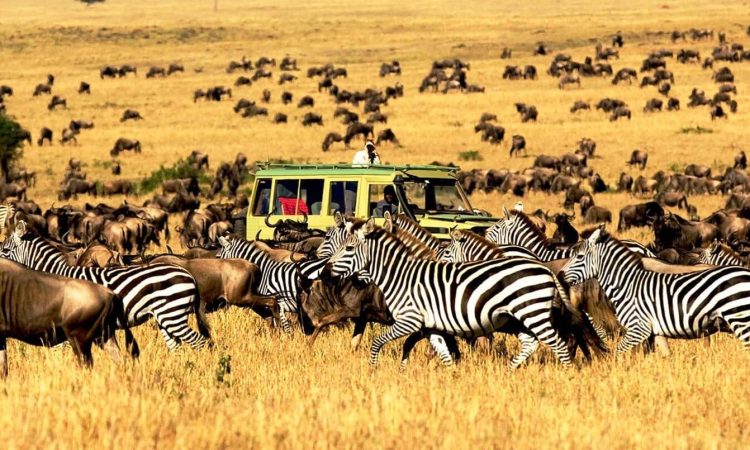
Uganda vs Kenya Safari: Which East African Destination Should You Choose?

The Uganda vs Kenya safari debate comes up constantly, and for good reason. Both countries sit at the heart of East Africa, both offer extraordinary wildlife, and both appear on almost every serious traveller’s shortlist. But they are not interchangeable. Choosing the wrong one for your interests, budget, or travel style is a genuine risk — and one that honest advice can prevent.
Kenya built the modern safari industry. Its open savannahs, iconic game reserves, and extraordinary concentrations of wildlife during the Great Migration have drawn travellers since the 1960s, and the infrastructure that followed is polished, reliable, and well-suited to first-time visitors. Uganda arrived later to the international radar but brought something different: mountain gorillas, impenetrable forest, the source of the Nile, and a rawness that Kenya’s more developed circuit sometimes lacks.
This is not a ranking. It is an honest comparison — of wildlife, cost, crowd levels, seasons, and the type of traveller each destination genuinely suits. By the end, you should have a clearer sense of which country deserves your next flight, and perhaps whether you need to choose at all.
The Case for a Kenya Safari: Spectacle on an Open Stage
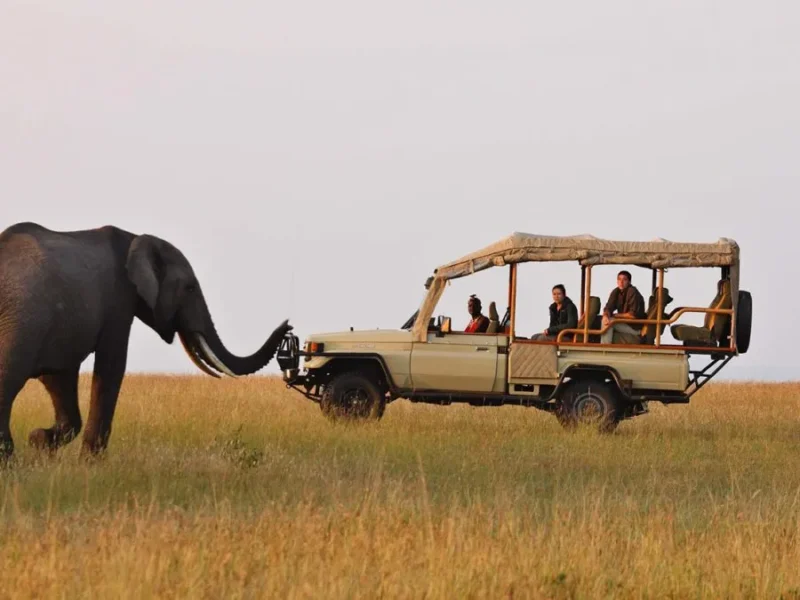
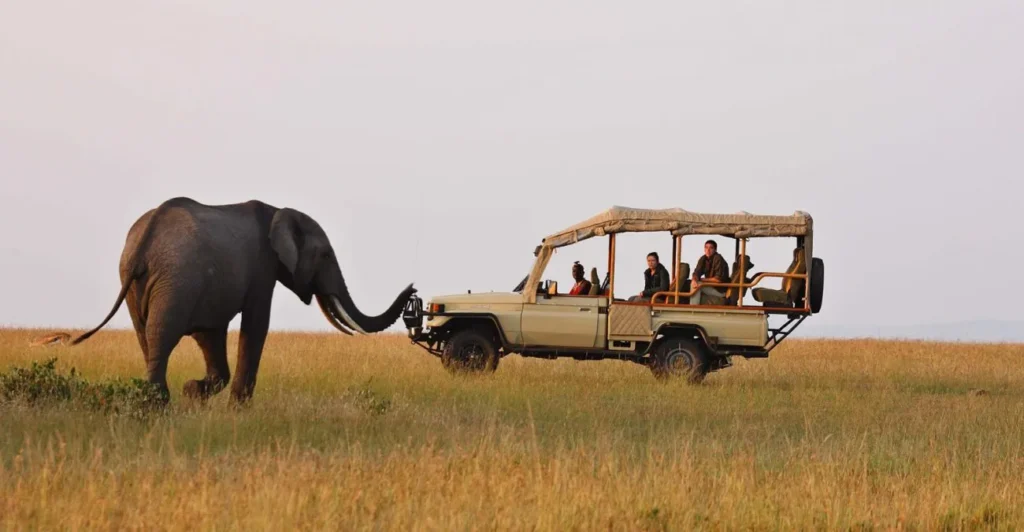
No country on earth does open-savannah wildlife quite like Kenya. Stand at the edge of the Mara Triangle at dawn and the plains stretch in every direction, broken only by acacia trees and the distant outline of the Oloololo Escarpment. Elephants move in family groups. Lions sleep in the grass. Cheetahs scan for Thomson’s gazelle with a concentration that makes your own breathing feel loud.
The Masai Mara is Kenya’s most famous reserve, but it is far from the only one worth your time. Amboseli offers flat, open terrain that places Kilimanjaro in the background of almost every photograph — on a clear morning, it is the kind of composition that makes wildlife photography feel almost unfair. Samburu, in the dry north, holds rare species found almost nowhere else: Grevy’s zebra, reticulated giraffe, and the long-necked gerenuk, which browses standing upright on its hind legs like something assembled by committee.
Kenya’s wildlife density, particularly for the classic Big Five, is genuinely hard to rival. The road and accommodation network is mature. You can move between reserves by light aircraft in under an hour, and the lodges range from comfortable to extraordinary, with a handful of properties that have genuinely redefined what a safari camp can be. If you are visiting East Africa for the first time and want to arrive somewhere that works efficiently and delivers on its promises from day one, Kenya is the more reliable choice.
That reliability comes at a cost, however — in two senses. Financially, Kenya’s top-tier camps are among the most expensive in Africa. The Masai Mara during peak Migration season is also one of the most visited reserves on the continent, and on a busy afternoon, it can feel more like a traffic queue than a wildlife encounter. The experience is still extraordinary, but it is not the raw, solitary Africa that some travellers imagine.
Who suits Kenya best? First-time safari visitors, families travelling with younger children who need reliable infrastructure, photographers targeting the Great Migration or Kilimanjaro backdrops, and travellers on tight schedules who want guaranteed efficiency.
The Case for a Uganda Safari: Forest, River and Rare Encounters
Uganda is not a savannah country in the Kenyan sense, though it has savannah in abundance. It is a country of layered habitats: equatorial forest, highland crater lakes, wetlands, and flat-topped escarpments above which fish eagles climb on thermals. The wildlife it holds is partly shared with Kenya, but the experiences it offers are entirely different in character.
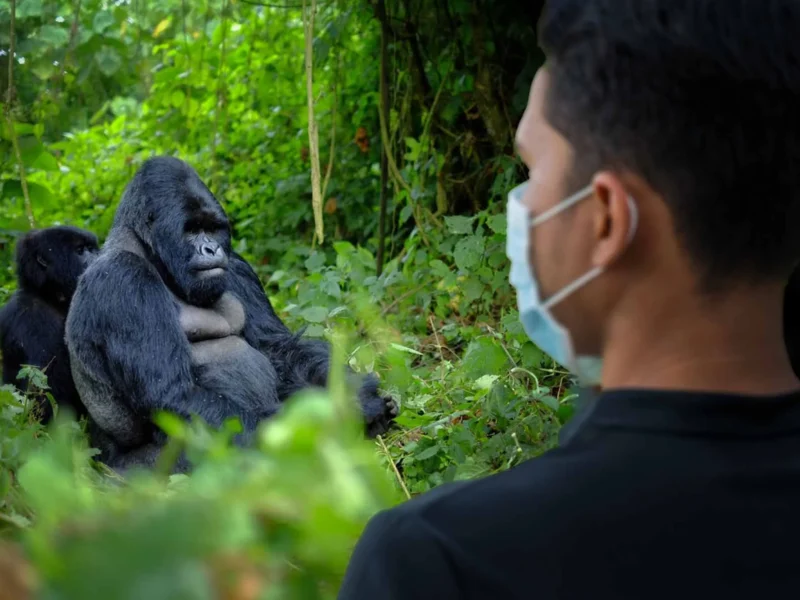
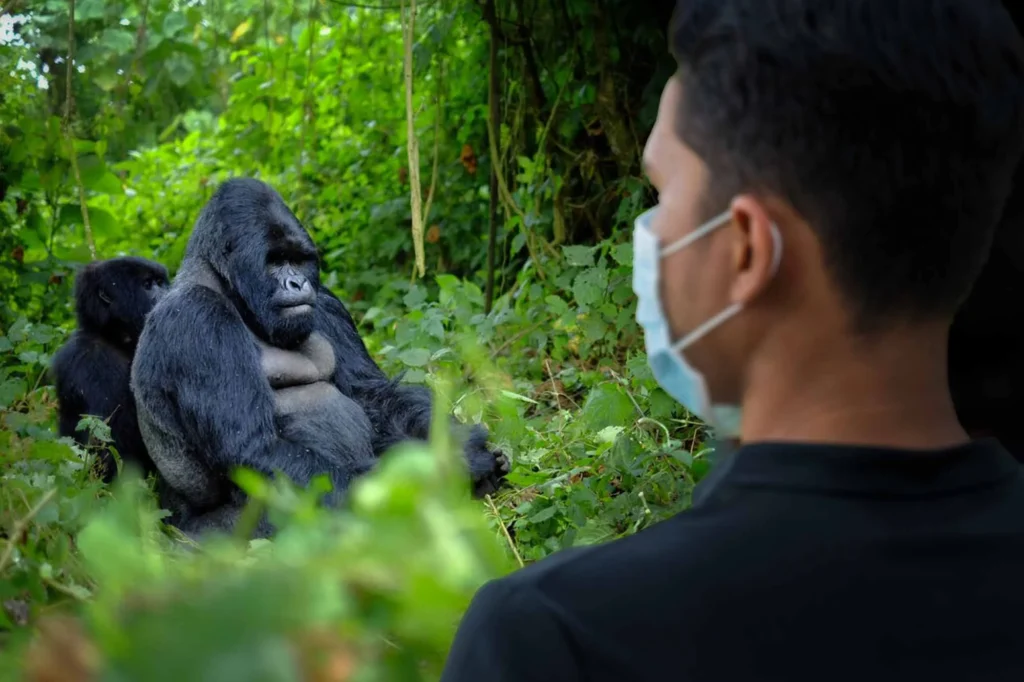
In terms of the Uganda vs Kenya safari comparison, Uganda’s single most compelling advantage is one that Kenya simply cannot match: mountain gorillas. Bwindi Impenetrable Forest in the south-west holds roughly half of the world’s remaining mountain gorilla population, and a trekking permit grants you one hour in the presence of a habituated group. It is not a zoo encounter or a distant camera shot. You are standing in forest undergrowth, watching a silverback move through the vegetation at arm’s length, aware that you are in his territory rather than the other way around. Nothing in Kenya, or in most of the world, compares.
Away from Bwindi, Uganda continues to impress. Queen Elizabeth National Park holds tree-climbing lions in the Ishasha sector, hippo-dense channels in the Kazinga, and one of the highest recorded bird counts per unit area of any national park in Africa. Murchison Falls, where the entire force of the Victoria Nile squeezes through a seven-metre gap in the rock, is not something you easily describe with adjectives — the sound reaches you before the view does. Kibale Forest is home to the world’s highest density of primates, including chimpanzees that can be tracked on guided walks through old-growth forest.
Uganda is cheaper than Kenya for equivalent experiences — not dramatically so, but meaningfully. Gorilla permits currently stand at $800 per person, which sounds steep in isolation but is considerably less than they were five years ago, when they reached $1,500, and represents extraordinary value for what you actually get. Beyond gorilla trekking, Uganda’s park fees, accommodation options, and transport costs sit at a level accessible to mid-range travellers who might struggle with Kenya’s premium-end rates.
The trade-off is infrastructure. Uganda’s roads — particularly in the west and north — are uneven at best and demanding at worst. Transfer times between parks are long. Flights between reserves exist but are fewer and less frequent than Kenya’s light aircraft network. Travellers coming from the Mara’s seamless logistics occasionally find Uganda’s pace disorienting. That is not a flaw in Uganda; it is simply the nature of a country still developing its tourism infrastructure, and for many travellers it adds rather than subtracts from the experience.
Uganda suits returning East Africa travellers seeking something beyond the classic circuit, wildlife enthusiasts who want primates alongside their plains game, birders at any level, and adventure travellers comfortable with longer, rougher journeys between destinations.
Uganda vs Kenya Safari: How the Wildlife Actually Compares
On raw numbers, Kenya wins for plains game. The Mara–Serengeti ecosystem during the Great Migration — typically July to October, with calving season in the south in February — involves more than 1.5 million wildebeest, half a million zebra, and hundreds of thousands of Thomson’s gazelle. It is the largest terrestrial mammal migration on earth, and it is everything people say it is. This is not a spectacle Uganda can offer.
Uganda, however, holds wildlife that Kenya does not. Mountain gorillas are the obvious example, but the list continues: eastern chimpanzees, golden monkeys in Mgahinga, grey-cheeked mangabeys, L’Hoest’s monkeys, olive baboons, red-tailed monkeys, and black-and-white colobus moving through the forest canopy above your head. The primate diversity is genuinely unmatched anywhere in East Africa.
For birdwatchers, Uganda is arguably the more rewarding country. Bwindi alone holds over 350 recorded species. Queen Elizabeth has logged more than 600. The shoebill, one of the most sought-after birds in Africa, is more reliably seen here — particularly from a canoe on the Mabamba Swamp near Entebbe — than almost anywhere else on the continent. Kenya offers excellent birding too, especially in Samburu and along the Rift Valley lakes, but Uganda’s forest habitats add species that savannah birding simply cannot produce.
Both countries hold the Big Five. Kenya’s populations of lion, leopard, elephant, buffalo and rhino are more consistently visible in open terrain. Uganda’s black rhinos were reintroduced at Ziwa Rhino Sanctuary, where you can track them on foot, which is the only way to see them in the country but also one of the more intimate wildlife encounters available. Leopard sightings in Uganda, as in much of forested Africa, require patience and a degree of fortune.
Which Is More Affordable: Uganda or Kenya?
Cost is one of the first questions in the Uganda vs Kenya safari conversation, and the honest answer is nuanced. Overall, Uganda is the more affordable destination — but the gorilla permit changes the equation significantly if that is your main objective.
In Kenya, the Masai Mara charges conservation fees of roughly $200 per day for non-residents, and the mid-range to luxury camp accommodation that most visitors use adds another $250 to $1,000 per night depending on season. The premium camps in the Mara during August — peak Migration — routinely charge above $1,500 per person per night. Budget and mid-range options exist, but they generally sit outside the best wildlife areas and involve longer driving times.
Uganda’s national park fees are lower. Queen Elizabeth, Murchison Falls and Kibale all sit in the range of $40 to $50 per person per day for non-residents, a fraction of the Mara’s daily rate. Gorilla trekking permits at $800 are fixed and non-negotiable, but they include everything from the permit to the ranger guide and the forest walk. Chimp tracking in Kibale costs around $200. The gap narrows when you factor in long-haul transfers and private vehicle hire, but Uganda remains the better-value option for travellers who are not specifically targeting the Mara during the Migration.
For budget and backpacker travellers, Uganda has genuinely affordable options that Kenya’s premium parks do not always offer. Community campsites, budget lodges in Jinja, and self-drive itineraries in Uganda are all feasible. The equivalent in Kenya often means staying far from the parks and spending hours in a vehicle each morning.
When to Go: Seasons in Uganda and Kenya
Kenya’s calendar is largely governed by two events: the Great Migration and the rains. The Migration’s river crossings — the Mara River scenes that fill wildlife documentaries — occur roughly between July and October, when wildebeest push north into Kenya from Tanzania. The long rains (April to May) turn roads muddy and make some camps difficult to reach, though they also thin crowds and lower prices considerably. The short rains in November are less disruptive. January to March and July to October are generally the most reliable months.
Uganda’s seasons are gentler in their extremes. The two dry seasons — December to February and June to August — are the most comfortable for travel and gorilla trekking. Bwindi’s forest is wet by nature, and even in the dry season you should expect mud on the gorilla trekking trails. The difference is that in the wet months, you are more likely to be tracking uphill through persistent rain for several hours, which many travellers find demanding. Gorilla permits are available year-round, however, and the forest’s atmosphere in the wet months has a quality of its own: mist in the canopy, moss-covered trunks, and almost no other visitors.
A practical point worth raising: Uganda’s weather varies considerably by altitude and region. The south-west highlands around Bwindi and Kabale are cooler and wetter than the hot, flat Murchison region in the north. Packing for Uganda often means preparing for three different climates within a single itinerary.
Crowds, Solitude and the Feel of Each Destination
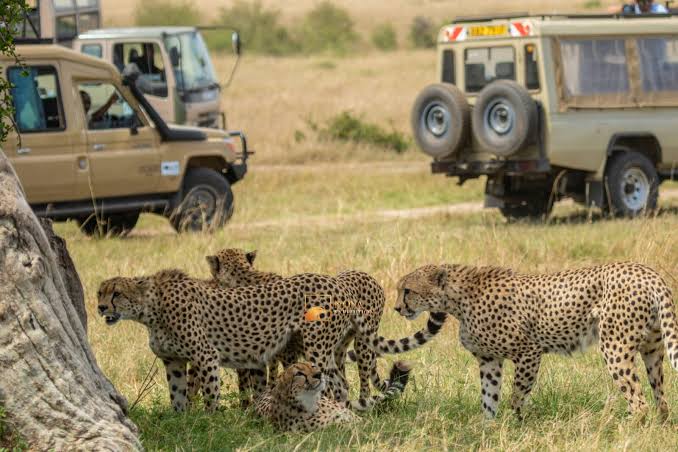
During the peak Migration season, the Masai Mara can feel extraordinarily busy. The triangular vehicle corridors that form around river crossings involve dozens of safari vehicles parked nose-to-tail, each carrying travellers trying to photograph the same wildebeest column. The crossing itself is still one of wildlife’s great spectacles, and even in a crowd it retains its power, but it is worth going in with realistic expectations about the logistics.
Kenya has responded to this by developing conservancies on the Mara’s borders — private or community-run areas with vehicle limits, walking safaris, and night drives. Ol Kinyei, Mara North, Olare Motorogi and others offer genuinely exclusive wildlife encounters within the broader Mara ecosystem. The cost is significantly higher, but the experience is proportionally better.
Uganda, by contrast, rarely feels crowded. Bwindi receives a fraction of the visitors that the Mara sees in a year, and the gorilla trekking system — with a maximum of eight visitors per group, per day — is carefully managed. Murchison Falls, despite being Uganda’s largest national park, rarely involves more than a handful of vehicles at any single sighting. Queen Elizabeth’s Ishasha sector, where the tree-climbing lions sleep in fig trees beside the Congo border, is genuinely quiet. This is not because Uganda’s wildlife is inferior; it is because the country’s international visibility is still catching up with what it actually offers.
If solitude and the sense of genuine discovery matter to you, Uganda currently delivers them far more reliably than the mainstream Kenya circuit.
Which Traveller Suits Uganda and Which Suits Kenya?
Choose Kenya if you:
- Are visiting East Africa for the first time and want reliable, polished safari infrastructure.
- Have the Great Migration on your bucket list and want to time your trip accordingly.
- Are travelling with young children who benefit from shorter drives and accessible camps.
- Are interested in classic savannah photography with open, unobstructed views.
- Prefer a wider choice of accommodation styles and price points in prime locations.
- Have a limited time window and need efficient connections between parks.
Choose Uganda if you:
- Want to trek mountain gorillas — there is simply no substitute.
- Have already done the classic East Africa circuit and want a genuinely different experience.
- Are a birdwatcher at any level, from casual to committed.
- Are interested in chimpanzee and primate behaviour.
- Are travelling on a mid-range budget and want maximum wildlife diversity for your spend.
- Want fewer tourists, longer drives accepted, and a rawer sense of the continent.
- Are combining East Africa with a Rwandan gorilla trek or Congo border experience.
Uganda and Kenya Together: The Case for Combining Both
The Uganda vs Kenya safari question does not always require a definitive answer, because many travellers discover that a combined itinerary is the more satisfying option. The two countries share an international arrival hub at Nairobi’s Jomo Kenyatta Airport, making back-to-back visits logistically straightforward. Fly Nairobi to Entebbe — a two-hour connection — and you move from one of the world’s great savannah ecosystems into one of its finest forest environments within a morning.
A typical combination might be five to seven nights in Kenya covering Amboseli and the Mara, followed by seven to ten nights in Uganda with a gorilla trek in Bwindi, chimp tracking in Kibale, and game drives in Queen Elizabeth. This kind of itinerary covers the full range of East African wildlife across two ecosystems and two very different safari characters, and it remains the most complete introduction to the region that a single trip can deliver.
It is not the cheapest option, and the gorilla permit adds meaningfully to the budget. But travellers who have done it consistently describe it as one of the most rewarding journeys they have taken — not because everything was seamless, but because two distinct countries showed them two distinct versions of what wild Africa can mean.
Choosing Between Uganda and Kenya: The Honest Conclusion
In the Uganda vs Kenya safari debate, the answer depends almost entirely on what kind of traveller you are. Kenya is the safer first move if you want certainty, efficiency, and the Migration in your photographs. Uganda is the more rewarding choice if you are willing to accept less polish in exchange for mountain gorillas, primate-filled forests, and the feeling that you have found somewhere the mainstream hasn’t yet swallowed entirely.
Neither country disappoints when visited with realistic expectations. Both reward research, good timing, and honest advice from people who know them properly. The mistake most travellers make is choosing one or the other on the basis of photographs or second-hand recommendations rather than a clear understanding of what each destination actually involves.
At Terenga Safaris, we plan itineraries across both countries and have no interest in pushing you towards one or the other for its own sake. What we care about is building a journey that fits your interests, your budget, and the kind of experience you are genuinely looking for. Whether that means a week in the Mara, three weeks across Uganda, or both countries in a single itinerary, the conversation starts with what matters most to you.
If you are still weighing your options, we are happy to help you work through them. No sales pitch — just a straightforward discussion about what each destination offers and whether it matches what you are looking for.