Uganda Safari vs Beach Holiday: Which Is Right for You?
June 26, 2026
The Best Forest Adventures in Uganda: A Complete Travel Guide.
June 26, 2026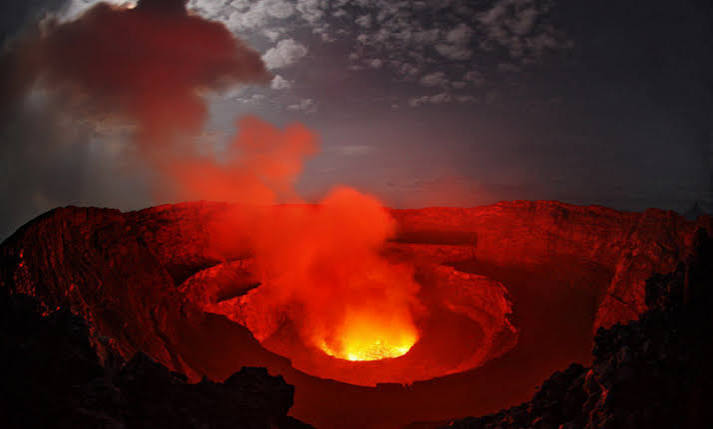
The Best Volcano Adventures in East Africa: A Complete Travel Guide
East Africa is celebrated worldwide for its wildlife, but beneath the savannahs and forests lies some of the planet’s most dramatic geology. From the steaming crater of Ol Doinyo Lengai to the mist-cloaked Virunga peaks shared by Uganda and Rwanda, the best volcano adventures in East Africa offer something safari game drives simply cannot — the physical challenge of the climb, the silence of high altitude, and a perspective of the continent that few travellers ever reach.
This guide covers eight of East Africa’s most rewarding volcanic peaks across Uganda, Rwanda, Tanzania, and Kenya. For each, you will find difficulty ratings, wildlife notes, practical planning advice, and honest guidance on who each trek suits best. Whether you are lacing up boots for the first time or looking to add a serious summit to a multi-country itinerary, there is a volcano here for you.
Why East Africa Is a Paradise for Volcano Adventures
The geological drama of East Africa is the product of the Great Rift Valley — a 6,000-kilometre fracture in the Earth’s crust that has been pulling the African continent apart for millions of years. Along its length, magma breaks through the surface, creating a string of volcanoes that runs from Ethiopia through Uganda, Rwanda, and Tanzania into Mozambique.
The Virunga volcanic chain, straddling the borders of Uganda, Rwanda, and the Democratic Republic of Congo, is the most biologically significant volcanic landscape in Africa. Eight volcanoes rise above the Albertine Rift, sheltering mountain gorillas, golden monkeys, and hundreds of bird species in their forests. These peaks are not just geologically remarkable — they are conservation sanctuaries of global importance, recognised by UNESCO.
Further east, Tanzania’s volcanic highlands include Mount Meru — Africa’s fifth-highest peak and one of its finest trekking routes — and Ol Doinyo Lengai, the only active natrocarbonatite volcano on Earth, sacred to the Maasai people. Kenya’s Rift Valley contributes its own accessible peaks, including Mount Longonot, whose rim walk offers one of East Africa’s most dramatic panoramas.
What unites these landscapes is their biodiversity. Volcanic soils are extraordinarily fertile, producing dense forests, alpine meadows, and endemic plant communities found nowhere else on Earth. For travellers, this means wildlife encounters woven into every ascent.
The Best Volcano Adventures in East Africa
The volcanoes below range from half-day rim walks to multi-day summit challenges. Status — active, dormant, or extinct — is noted for each.
Mount Sabinyo (Dormant)
Country: Uganda / Rwanda (Mgahinga Gorilla National Park / Volcanoes National Park)
Elevation: 3,669 m
Difficulty: Moderate to Hard
Typical Duration: 6–8 hours return
Scenic Highlights: The jagged ‘old man’s teeth’ ridgeline leads to three summit peaks, the last of which sits simultaneously on the borders of Uganda, Rwanda, and the DRC — a rare triple-point geography. Crater views and dense Afromontane forest throughout.
Wildlife: Mountain gorillas and golden monkeys inhabit the forest slopes. Sightings are never guaranteed on a trek, but the habitat is exceptional for birdwatching.
Best Time: June to September and December to February (dry seasons).
Best For: Fit hikers seeking a challenging day summit with extraordinary geopolitical novelty.
Practical Tip: Accessed from Mgahinga Gorilla National Park (Uganda) or Volcanoes National Park (Rwanda). Permits are required and should be booked in advance through the Uganda Wildlife Authority or Rwanda Development Board.
Mount Muhabura (Dormant)
Country: Uganda / Rwanda (Mgahinga / Volcanoes National Park)
Elevation: 4,127 m
Difficulty: Hard
Typical Duration: 8–10 hours return
Scenic Highlights: The highest of Uganda’s Virunga volcanoes rewards climbers with a summit crater lake and panoramic views across the Rift Valley, Lake Edward, and — on clear days — the Rwenzori range.
Wildlife: Forest elephants, buffalo, and primates have been recorded on the lower slopes. The summit zone is alpine and sparse.
Best Time: June to September and December to February.
Best For: Experienced trekkers comfortable with altitude and a very long day on the mountain.
Practical Tip: Altitude caution is essential — acclimatise with a lower volcano first if possible. Warm layers and rain gear are non-negotiable.
Mount Gahinga (Dormant)
Country: Uganda (Mgahinga Gorilla National Park)
Elevation: 3,474 m
Difficulty: Moderate
Typical Duration: 5–6 hours return
Scenic Highlights: A bamboo forest ascent leads to a marshy crater with unique highland vegetation. The least-visited of the three Ugandan Virunga volcanoes — and one of the more peaceful mountain experiences in the region.
Wildlife: Golden monkey tracking can be combined with a Gahinga ascent. Forest birds are abundant.
Best Time: June to September and December to February.
Best For: Families with older children, moderately fit first-time trekkers, and those seeking solitude.
Practical Tip: Often combined with Sabinyo or gorilla trekking into a two- to three-day Mgahinga itinerary.
Mount Bisoke (Dormant)
Country: Rwanda (Volcanoes National Park)
Elevation: 3,711 m
Difficulty: Moderate
Typical Duration: 6–8 hours return
Scenic Highlights: One of Rwanda’s most popular and rewarding volcano treks. The summit holds a beautifully clear crater lake reflecting the surrounding forest. Views across the Virunga chain are exceptional on clear mornings.
Wildlife: The approach trail passes through gorilla and golden monkey territory. Forest duikers, sunbirds, and weaver birds are regularly observed.
Best Time: June to September and January to February.
Best For: Moderately fit travellers combining the trek with Rwanda’s gorilla trekking programme.
Practical Tip: Permits are booked through the Rwanda Development Board. The trail starts from the park headquarters at Kinigi.
Ol Doinyo Lengai (Active)
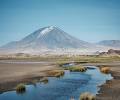
Country: Tanzania (near Lake Natron, Arusha Region)
Elevation: 2,962 m
Difficulty: Very Hard
Typical Duration: Typically overnight — depart midnight, summit at dawn
Scenic Highlights: The only active natrocarbonatite volcano on Earth, Ol Doinyo Lengai produces black lava that turns white on contact with air. The summit crater is an otherworldly landscape of ash cones and carbonatite lava flows. Lake Natron’s flamingo flocks visible far below.
Wildlife: Flamingos at Lake Natron; Maasai cattle herders in the surrounding plains. The volcano itself is barren at the summit.
Best Time: June to October (dry season). Avoid the rainy season — the steep ascent becomes dangerously unstable.
Best For: Very fit, experienced hikers who can manage steep scree and loose rock in darkness. Not recommended for beginners.
Practical Tip: The night ascent is standard — cooler temperatures make the steep gradient more manageable. Hire an experienced local guide from the Lake Natron area. Active venting can close summit access; verify conditions before booking.
Mount Meru (Dormant)
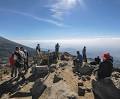
Country: Tanzania (Arusha National Park)
Elevation: 4,566 m — Africa’s fifth-highest peak
Difficulty: Moderate to Hard
Typical Duration: 3–4 days
Scenic Highlights: Meru’s inner crater is a spectacular collapse feature exposing dramatic geological layers. The final ridge walk to the summit is one of Tanzania’s finest, with Kilimanjaro rising above the clouds to the east.
Wildlife: Arusha National Park is rich in wildlife. Buffalo, giraffe, and colobus monkeys are commonly seen on lower slopes. Armed rangers accompany trekkers as mandatory escorts.
Best Time: June to February. Avoid March to May (heavy rains).
Best For: Trekkers seeking a multi-day mountain experience and a logical acclimatisation route before Kilimanjaro.
Practical Tip: Three overnight huts are available. Meru is an excellent standalone adventure or a Kilimanjaro preparation trek.
Mount Elgon (Extinct)
Country: Uganda / Kenya
Elevation: 4,321 m
Difficulty: Moderate
Typical Duration: 3–5 days (full circuit)
Scenic Highlights: Africa’s largest volcanic base by area. Elgon’s caldera — roughly 40 km wide — is one of the largest on the continent. The Sipi Falls area on the Ugandan side offers excellent day hiking. Salt-licking elephants are the park’s signature wildlife spectacle.
Wildlife: Elephants come to the lava caves at night to lick mineral salts — a phenomenon seen very rarely elsewhere. Olive baboons, forest elephants, and over 300 bird species.
Best Time: June to September and December to February.
Best For: Wildlife enthusiasts, photographers, and trekkers seeking a less-visited multi-day route.
Practical Tip: The Ugandan side (Mount Elgon National Park) is generally quieter and less developed than the Kenyan side. Book permits with the Uganda Wildlife Authority.
Mount Longonot (Dormant)
Country: Kenya (Great Rift Valley, south of Nairobi)
Elevation: 2,776 m
Difficulty: Easy to Moderate
Typical Duration: 3–5 hours (crater rim walk)
Scenic Highlights: Longonot’s perfectly symmetrical cone and accessible crater rim trail make it one of East Africa’s most photogenic introductory volcano hikes. Rift Valley escarpment views are outstanding. Lake Naivasha is visible to the north.
Wildlife: Buffalo, Maasai giraffe, and zebra graze on the outer slopes. The crater floor is densely forested and home to raptors.
Best Time: Year-round. Mornings are clearest — start early to avoid afternoon cloud.
Best For: First-time volcano hikers, day-trippers from Nairobi, families, and photographers.
Practical Tip: Longonot is a two-hour drive from Nairobi and easily combined with a Naivasha Lake day. Permits from Kenya Wildlife Service.
Quick Reference: East Africa’s Best Volcano Adventures
| Volcano | Country | Difficulty | Best Time | Signature Experience |
| Mount Sabinyo | Uganda / Rwanda | Moderate–Hard | Jun–Sep, Dec–Feb | Triple border summit; gorilla habitat |
| Mount Muhabura | Uganda / Rwanda | Hard | Jun–Sep, Dec–Feb | Summit crater lake; sweeping Rift views |
| Mount Gahinga | Uganda | Moderate | Jun–Sep, Dec–Feb | Bamboo forest; golden monkey tracking |
| Mount Bisoke | Rwanda | Moderate | Jun–Sep, Jan–Feb | Stunning crater lake at summit |
| Ol Doinyo Lengai | Tanzania | Very Hard | Jun–Oct | Active lava; Maasai sacred mountain |
| Mount Meru | Tanzania | Moderate–Hard | Jun–Sep, Dec–Feb | Dramatic crater; Kilimanjaro backdrop |
| Mount Elgon | Uganda / Kenya | Moderate | Jun–Sep, Dec–Feb | Largest volcanic base in Africa; caves |
| Mount Longonot | Kenya | Easy–Moderate | Year-round | Rift Valley views; crater rim walk |
Volcano Trekking vs Gorilla Trekking
Many travellers visiting Uganda or Rwanda face a natural question: should they prioritise a volcano ascent or dedicate a full day to gorilla trekking? The answer, where time and budget allow, is both. The experiences are complementary, not competing. The comparison below helps you plan.
| Feature | Volcano Trekking | Gorilla Trekking |
| Physical Challenge | High — steep trails, altitude, long days | Moderate to hard — dense forest terrain |
| Wildlife Encounters | Birds, primates, alpine flora; gorillas possible | Guaranteed gorilla family encounter |
| Photography | Landscapes, craters, panoramic vistas | Intimate wildlife portraiture |
| Cost | Lower — permits from USD 30–100 typically | Higher — gorilla permits from USD 700+ |
| Permit Required | Yes — park entry and guide fees | Yes — strictly limited daily permits |
| Best For | Hikers, adventure seekers, photographers | Wildlife lovers, first-time safari visitors |
| Conservation Value | Supports park funding and habitat protection | Directly funds mountain gorilla conservation |
Note: Gorilla permits in Uganda cost USD 800 per person (2025); Rwanda charges USD 1,500. Volcano trekking permits are considerably more affordable. A combined itinerary covering both remains one of East Africa’s most rewarding travel options.
Wildlife and Nature Along the Way
One of the pleasures of East African volcano trekking is that the journey matters as much as the summit. The forests, meadows, and crater lakes encountered on the way up are often where the most memorable natural encounters occur.
Across the Virunga volcanoes, you may encounter:
- Golden monkeys — endemic to the Albertine Rift, found in the bamboo zones of Mgahinga and Volcanoes National Parks
- Mountain gorillas — habituation areas in Bwindi and the Virungas occasionally overlap with volcano trekking routes
- Forest birds — including the Rwenzori turaco, African crowned eagle, and numerous sunbird species
- Unique alpine vegetation — including giant lobelias, heathers, and hagenia-hypericum woodland
- Bamboo forest zones — dense and atmospheric, particularly on Gahinga and the lower Bisoke trail
Wildlife sightings are never guaranteed. Animals are wild and move freely. The experience of walking through their habitat — even without a direct sighting — is itself remarkable.
Practical Planning Guide
Fitness Requirements
Mount Longonot and Mount Gahinga are appropriate for moderately fit walkers. Sabinyo, Bisoke, and Meru demand good physical condition and prior hiking experience. Muhabura and Ol Doinyo Lengai are serious mountain challenges requiring strong fitness and relevant experience.
Permits
All parks require permits. Costs and availability vary by country and season. In Uganda, permits are issued through the Uganda Wildlife Authority. In Rwanda, contact the Rwanda Development Board. Tanzania permits are managed through Tanzania National Parks (TANAPA). Kenya permits through Kenya Wildlife Service. Book well in advance during peak season (June to September).
Packing Essentials
- Layered clothing — temperatures drop sharply with altitude, even at the equator
- Waterproof jacket and trousers — weather changes rapidly on all peaks
- Sturdy hiking boots with ankle support
- Trekking poles — particularly valuable on steep volcanic scree
- Sun protection — equatorial UV is intense even on cloudy days
- At least two litres of water per person
- High-energy snacks and a packed lunch
- Headlamp with spare batteries (essential for Ol Doinyo Lengai night ascent)
Altitude Considerations
Most East African volcanoes are well below the altitude at which serious altitude sickness becomes a risk for fit travellers. However, Muhabura (4,127 m) and Meru (4,566 m) can cause headaches and fatigue in those who ascend too quickly. Acclimatise gradually, hydrate well, and descend if symptoms worsen.
Responsible Trekking
Stay on marked trails. Carry out all waste. Do not disturb wildlife or vegetation. Support local guides and porters by booking through licensed operators. Trekking fees directly fund park conservation and local communities.
Frequently Asked Questions
Which volcano is easiest to climb?
Mount Longonot in Kenya’s Rift Valley is the most accessible — a well-marked trail, manageable elevation gain, and a circular rim walk that most fit adults can complete in three to five hours. Mount Gahinga in Uganda is similarly accessible for first-time volcano trekkers.
Which volcano offers the best views?
Mount Muhabura on a clear day offers one of the most sweeping panoramas in the region, taking in the Rift Valley, Lake Edward, and the Rwenzori Mountains. Meru’s final ridge walk — with Kilimanjaro directly ahead — is another extraordinary vista. Bisoke’s summit crater lake is arguably the most photographically dramatic.
Can beginners climb East African volcanoes?
Yes — Longonot, Gahinga, and Bisoke are all suitable for reasonably fit beginners with appropriate footwear and a guide. Muhabura and Ol Doinyo Lengai are not recommended for first-time trekkers. Being honest about your fitness level when planning is the most important preparation you can do.
What should I pack?
Waterproof layers, sturdy boots with ankle support, trekking poles, at least two litres of water, sun protection, and high-energy snacks. For overnight treks such as Meru, a good sleeping bag rated to at least 5°C is essential.
Is volcano trekking in East Africa safe?
The established trekking routes on all volcanoes featured here are considered safe when undertaken with licensed guides. Ol Doinyo Lengai requires more caution given its active status — always check current volcanic activity levels before departing. Rangers accompany trekkers on Mount Meru as a mandatory safety measure.
Can I combine volcano trekking with a wildlife safari?
Absolutely. A popular Uganda itinerary combines gorilla trekking in Bwindi, a Virunga volcano ascent from Mgahinga, and a game drive in Queen Elizabeth National Park into a single eight- to ten-day trip. In Tanzania, Meru and Kilimanjaro sit within reach of the Serengeti and Ngorongoro Crater.
Do I need a guide?
Yes — guides are mandatory in all the national parks featured in this article. Beyond the regulatory requirement, a knowledgeable guide dramatically enhances the experience, improving wildlife spot rates, route safety, and understanding of the landscape’s geological and ecological history.
When is the best time to visit?
June to September and December to February represent the dry seasons across most of East Africa and are the best months for volcano trekking. Trails are drier, views are clearer, and access is more reliable. Ol Doinyo Lengai is best attempted between June and October.
Why Plan Your Volcano Adventure With Terenga Safaris?
Volcano trekking in East Africa involves more logistics than it might appear — park permits, guide arrangements, altitude planning, inter-park transfers, and careful scheduling around weather windows. Getting it wrong can mean a wasted day or a missed summit.
Terenga Safaris brings local, hands-on knowledge to every part of the planning process:
- Experienced mountain guides with detailed knowledge of each park’s conditions and trail variations
- Tailor-made adventure itineraries that combine volcano trekking, wildlife safaris, and cultural experiences
- Multi-country trekking routes across Uganda, Rwanda, Tanzania, and Kenya
- Gorilla and volcano combination packages — the definitive Virunga experience
- Honest advice about difficulty levels, fitness requirements, and permit availability
- Responsible tourism practices that support park conservation and local guide employment
We know these mountains because we work in them. That knowledge is what we bring to every itinerary we build.
Conclusion: Add a Volcano to Your East African Adventure
The wildlife of East Africa is extraordinary — but the landscapes that frame it are equally remarkable. The best volcano adventures in East Africa take you somewhere a game drive cannot: to elevation, to silence, to geology that is still actively shaping the continent beneath your feet.
Whether you choose the dramatic triple border of Sabinyo, the active lava flows of Ol Doinyo Lengai, the elegant crater lake of Bisoke, or the dawn ridge of Meru with Kilimanjaro behind you — each of these ascents offers a perspective of East Africa that will stay with you long after the summit.
Terenga Safaris designs personalised itineraries that combine the finest volcano adventures with wildlife safaris, gorilla trekking, and cultural experiences across Uganda, Rwanda, Tanzania, and Kenya. Get in touch to start planning your East African mountain adventure.