Why East Africa Is the Best Safari Destination: A Complete Guide
June 23, 2026
Best Time to Visit East Africa: A Month-by-Month Safari Guide
June 24, 2026
The 12 Best National Parks in East Africa for an Unforgettable Safari
What makes a truly unforgettable safari? Is it the moment a lion strides across an open plain at dawn, the breath-catching silence of a mountain gorilla just metres away, or the electric sight of ten thousand wildebeest plunging into a crocodile-filled river? Whatever your answer, you will find it somewhere among the best national parks in East Africa — a region that contains some of the most extraordinary protected wilderness on the planet.
From Uganda’s mist-shrouded forests and thundering waterfalls to Kenya’s iconic savannah, Tanzania’s sweeping ecosystems, and Rwanda’s ancient volcanic highlands, East Africa delivers safari experiences that are as varied as they are profound. This guide covers twelve remarkable parks across all four countries, giving you the practical knowledge to decide which destinations belong on your itinerary.
How We Selected These Parks
Every park on this list was chosen against a consistent set of criteria used by Terenga Safaris when designing itineraries for our clients:
- Wildlife diversity and density — number of species and reliability of sightings
- Scenery and landscape distinctiveness
- Unique or once-in-a-lifetime experiences not easily replicated elsewhere
- Accessibility and infrastructure for a range of traveller types
- Conservation significance and ethical wildlife management
- Visitor experience quality, including guiding standards and accommodation options
- Photography opportunities across different lighting and habitat conditions
No single park scores perfectly on every criterion — and that is precisely the point. Each destination on this list earns its place for different reasons, serving different travellers at different moments.
The 12 Best National Parks in East Africa
1. Serengeti National Park, Tanzania
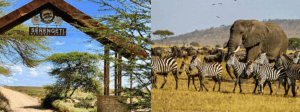
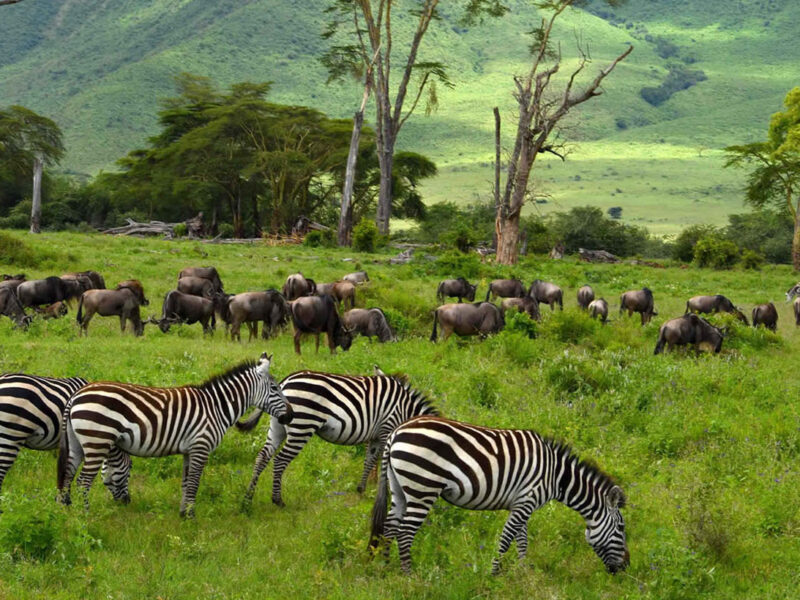
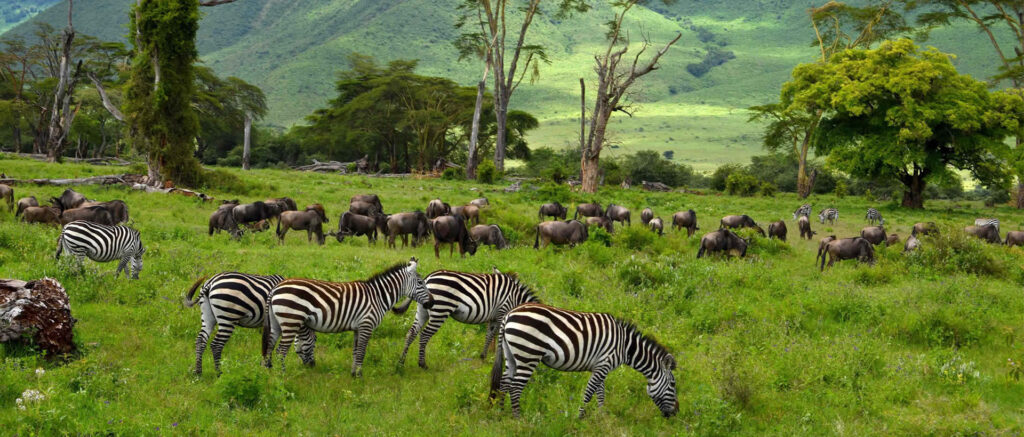
The Serengeti is arguably the world’s most famous wildlife arena. Covering nearly 15,000 km² of open grassland, woodland, and kopje-studded plains, it provides the stage for the Great Migration — an annual movement of over 1.5 million wildebeest and hundreds of thousands of zebra across the ecosystem.
Signature wildlife: Wildebeest, zebra, lion, cheetah, leopard, African wild dog
Best experience: Witnessing river crossings at the Mara River between July and October
Best time to visit: June to October for the northern migration; January to March for calving season in the south
Best for: Wildlife photographers, families, repeat safari visitors, those seeking the Big Five
Insider tip: For calving season (January–February), stay in the Ndutu area of the Southern Serengeti — predator activity is extraordinary
Accessibility: Fly-in or road transfer from Arusha; multiple airstrips across the ecosystem
2. Maasai Mara National Reserve, Kenya
The Maasai Mara is Kenya’s crown jewel — a rolling sea of golden grassland that forms the northern extension of the Serengeti ecosystem. It is consistently one of Africa’s top safari destinations, offering exceptional year-round wildlife and outstanding Big Five density.
Signature wildlife: Lion, elephant, buffalo, leopard, cheetah, wildebeest during the Migration
Best experience: Hot-air balloon safari at dawn, followed by a champagne breakfast on the plains
Best time to visit: July to October for the Migration; year-round for resident wildlife
Best for: First-time visitors, luxury travellers, honeymoon couples, photographers
Insider tip: Book accommodation in the conservancies bordering the Reserve — they offer night drives and walking safaris that are unavailable inside the core reserve
Accessibility: One-hour flight from Nairobi; multiple daily connections
3. Bwindi Impenetrable National Park, Uganda
Bwindi is UNESCO-listed and home to roughly half the world’s remaining mountain gorillas. Trekking here is one of the most intimate and profoundly moving wildlife experiences available anywhere — a one-hour permit allows you to sit with a habituated gorilla family in their natural highland forest.
Signature wildlife: Mountain gorillas, chimpanzees, L’Hoest’s monkeys, over 350 bird species
Best experience: Gorilla trekking with one of the park’s 20+ habituated families
Best time to visit: June to September and December to February
Best for: Gorilla trekking travellers, birdwatchers, conservation-minded visitors
Insider tip: Choose your sector carefully — Buhoma for accessibility, Ruhija for birding, Rushaga and Nkuringo for fewer crowds
Accessibility: Road transfer from Kampala (7–8 hrs) or charter flight to Kihihi or Kisoro airstrips
4. Murchison Falls National Park, Uganda
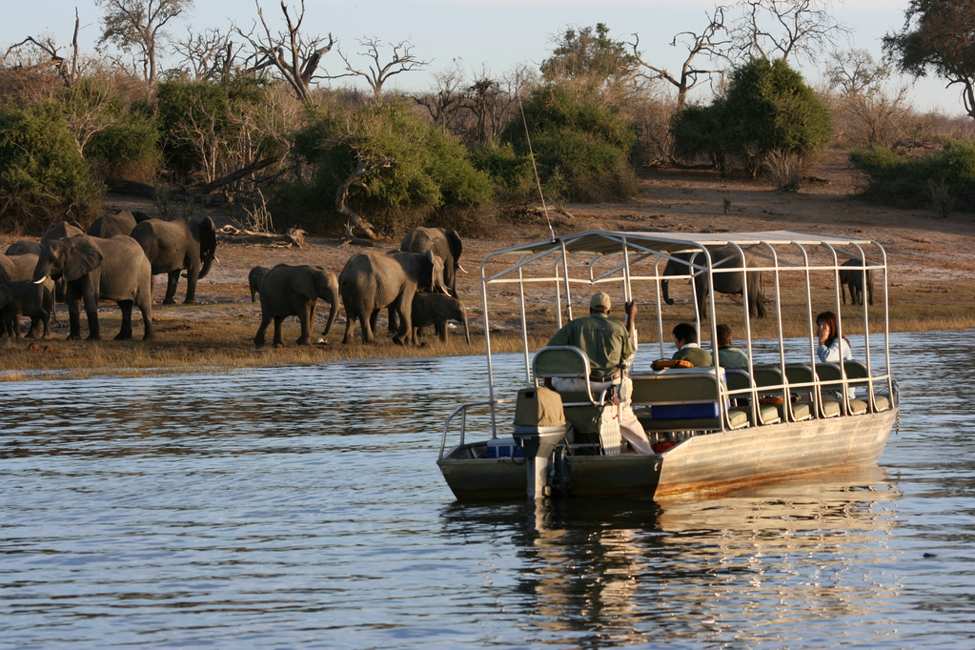
Uganda’s largest national park contains some of Africa’s most dramatic scenery. The Nile forces itself through a narrow gorge just seven metres wide, creating the thunderous Murchison Falls before broadening into a papyrus-lined river teeming with hippos and Nile crocodiles. The northern savannah supports strong populations of elephant, giraffe, and lion.
Signature wildlife: Elephant, lion, giraffe, hippo, Nile crocodile, shoebill stork
Best experience: Boat cruise to the base of the falls combined with a game drive in the north
Best time to visit: December to February and June to September
Best for: Families, first-time Uganda visitors, adventure seekers, birdwatchers
Insider tip: A morning drive along the Nile Delta is the most reliable spot in the world to see a shoebill stork — a truly special bird
Accessibility: 4–5 hour drive from Kampala or charter flight to Pakuba airstrip
5. Queen Elizabeth National Park, Uganda
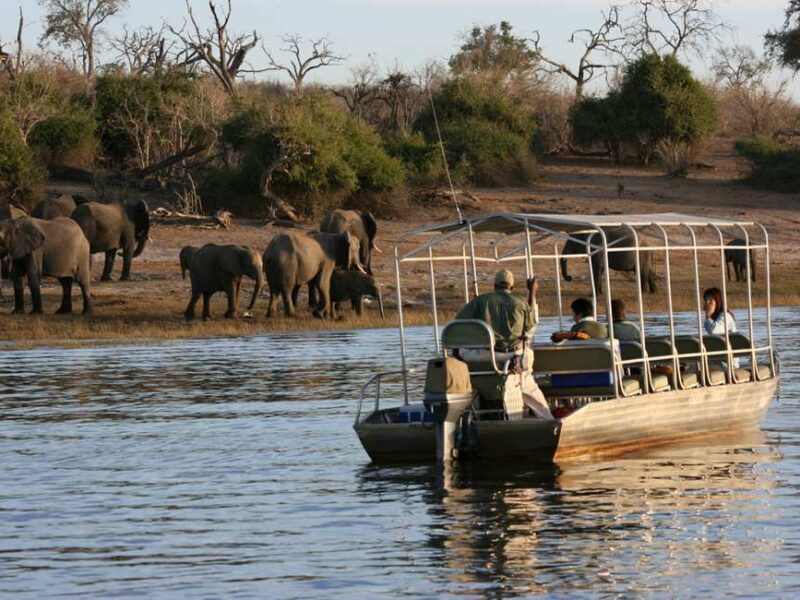
One of Uganda’s most diverse ecosystems, Queen Elizabeth National Park sits in the shadow of the Rwenzori Mountains. Its famous Ishasha sector harbours the celebrated tree-climbing lions — a behaviour rarely observed elsewhere. The Kazinga Channel Cruise is one of East Africa’s best boat safaris, gliding past the world’s largest concentration of hippos.
Signature wildlife: Tree-climbing lions, elephant, hippo, buffalo, chimpanzees, over 600 bird species
Best experience: Chimp tracking in Kyambura Gorge combined with a Kazinga Channel boat cruise
Best time to visit: June to September and December to February
Best for: Wildlife photographers, primate lovers, birdwatchers, nature-focused travellers
Insider tip: Combine with a visit to nearby Bwindi for a powerful primate-focused itinerary
Accessibility: 6 hours from Kampala by road or charter to Kasese airport
6. Ngorongoro Conservation Area, Tanzania
The Ngorongoro Crater is the world’s largest intact volcanic caldera and one of Africa’s most densely populated wildlife areas. Its enclosed 260 km² floor supports an estimated 25,000 large animals, including one of Tanzania’s last stable populations of black rhino. Visiting feels like stepping into a natural Eden.
Signature wildlife: Black rhino, lion, elephant, hyena, flamingo, wildebeest year-round
Best experience: Full-day crater floor game drive — a microcosm of the entire East African safari experience
Best time to visit: June to September; drier conditions improve visibility in the crater
Best for: Luxury travellers, first-timers, photographers, families seeking guaranteed wildlife
Insider tip: Stay at a lodge on the crater rim — the morning descent through mist into the crater is extraordinary
Accessibility: Three hours from Arusha by road
7. Amboseli National Park, Kenya
Amboseli offers one of Africa’s most iconic backdrops: vast herds of elephant roaming beneath the snow-capped summit of Mount Kilimanjaro. The park’s open plains make for exceptional wildlife viewing and outstanding photography, particularly in the morning light when the mountain is typically clear.
Signature wildlife: Elephant (among Africa’s largest herds), lion, cheetah, giraffe, zebra
Best experience: Dawn game drive with Kilimanjaro reflected in seasonal swamp — a photographer’s dream
Best time to visit: June to October and January to February
Best for: Wildlife photographers, families, honeymoon couples seeking iconic imagery
Insider tip: Spend at least two nights to catch Kilimanjaro cloud-free — mornings give the best views before cloud builds
Accessibility: Four to five hours from Nairobi by road or a short charter flight
8. Volcanoes National Park, Rwanda
Set in Rwanda’s north-west, Volcanoes National Park protects the Virunga Massif’s five dormant volcanoes and is Rwanda’s gateway to mountain gorilla trekking. Compared to Bwindi, Volcanoes offers a slightly shorter average trek and is paired with Rwanda’s exceptional infrastructure and high-end lodge scene.
Signature wildlife: Mountain gorillas, golden monkeys, buffalo, black-fronted duiker
Best experience: Gorilla trekking or golden monkey tracking for a rare half-day primate experience
Best time to visit: June to September and December to January
Best for: Luxury gorilla trekkers, honeymooners, visitors combining Rwanda’s gorillas with Uganda
Insider tip: Combine with the Dian Fossey Tomb hike for context on the conservation history that saved this species
Accessibility: Two to three hours from Kigali by road
9. Tarangire National Park, Tanzania
Tarangire is one of Tanzania’s most underrated parks and a brilliant addition to any northern circuit itinerary. During the dry season (July–October), the Tarangire River becomes a magnet for one of Africa’s largest elephant concentrations, while ancient baobab trees provide a dramatic, otherworldly backdrop.
Signature wildlife: Elephant, oryx, kudu, lion, over 550 bird species
Best experience: Walking safari among the baobabs — a more intimate alternative to vehicle-based game drives
Best time to visit: July to October for maximum wildlife density along the river
Best for: Birdwatchers, photographers, repeat visitors seeking something beyond the standard circuit
Insider tip: Tarangire pairs exceptionally well with Lake Manyara and can be done in a single day trip from Arusha
Accessibility: Two hours from Arusha by road
10. Lake Nakuru National Park, Kenya
Compact and accessible, Lake Nakuru is famous for its spectacular flamingo aggregations and serves as a critical black and white rhino sanctuary. Though flamingo numbers fluctuate with the lake’s water chemistry, the park reliably delivers superb wildlife viewing in a small footprint — ideal for day visitors or a short overnight stay.
Signature wildlife: Flamingo, white rhino, black rhino, lion, leopard, Rothschild’s giraffe
Best experience: Flamingo shoreline at dawn combined with a rhino sanctuary game drive
Best time to visit: Year-round, though flamingos are best when the lake level is lower (July–March typically)
Best for: Birdwatchers, families on a shorter Kenya itinerary, those seeking rhinos
Insider tip: Combine with Ol Pejeta Conservancy for the ultimate Kenya rhino and chimpanzee experience
Accessibility: Two hours from Nairobi by road
11. Kibale National Park, Uganda
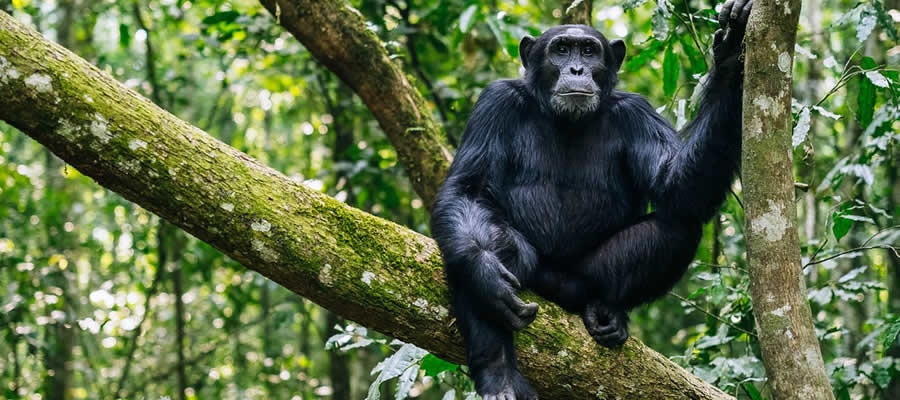
Kibale holds the highest density of primates in Africa, but it is the chimpanzees that draw travellers from around the world. Sitting within metres of a chimp community as they hoot, charge, and groom one another in the forest canopy is a humbling and genuinely thrilling encounter. The park also offers excellent birdwatching and a diverse forest ecosystem.
Signature wildlife: Chimpanzees, red colobus monkeys, L’Hoest’s monkeys, African forest elephant
Best experience: Chimpanzee habituation experience — a full day with a research chimp group
Best time to visit: June to July and December to February
Best for: Primate enthusiasts, researchers, photographers, families
Insider tip: Book the full-day Habituation Experience rather than the standard two-hour trek for a far more intimate encounter
Accessibility: 5–6 hours from Kampala by road; usually combined with Queen Elizabeth NP
12. Kidepo Valley National Park, Uganda
Kidepo is Uganda’s most remote and arguably most spectacular park — a vast, semi-arid wilderness in the far north-east bordered by South Sudan and Kenya. It is one of Africa’s last true frontiers, offering solitude, drama, and wildlife encounters that feel entirely untouched by the mass tourism found elsewhere.
Signature wildlife: Lion (large prides), cheetah, caracal, ostrich, Burchell’s zebra (rare in Uganda)
Best experience: Sundowner with a pride of lions in the Narus Valley — utterly unforgettable
Best time to visit: June to September (dry season)
Best for: Adventure seekers, off-grid travellers, repeat visitors, photographers craving solitude
Insider tip: Fly in — the drive from Kampala is 10+ hours. Charter flights from Kampala take under two hours and reveal spectacular landscapes from the air
Accessibility: Charter flight strongly recommended (Apoka airstrip)
Quick-Reference Comparison Table
Use this table to compare parks side by side and identify the best match for your interests, travel dates, and budget.
| National Park | Country | Best Known For | Best Time | Best Traveller Type |
| Serengeti NP | Tanzania | Great Migration, lion prides | Jun–Oct | Wildlife photographers, families |
| Maasai Mara NR | Kenya | River crossings, Big Five | Jul–Oct | First-timers, luxury travellers |
| Bwindi Imp. NP | Uganda | Mountain gorilla trekking | Jun–Sep, Dec–Feb | Gorilla trekking enthusiasts |
| Murchison Falls NP | Uganda | Nile cruises, Big Five | Dec–Feb, Jun–Sep | Adventure seekers, families |
| Queen Elizabeth NP | Uganda | Tree-climbing lions, chimp trek | Jun–Sep, Dec–Feb | Primate & wildlife lovers |
| Ngorongoro CA | Tanzania | Crater wildlife, Maasai culture | Jun–Sep | Luxury travellers, repeat visitors |
| Amboseli NP | Kenya | Elephant herds, Kilimanjaro views | Jun–Oct | Photographers, families |
| Volcanoes NP | Rwanda | Gorilla & golden monkey treks | Jun–Sep, Dec–Jan | Luxury gorilla trekkers |
| Tarangire NP | Tanzania | Elephant concentrations, baobabs | Jul–Oct | Birdwatchers, photographers |
| Lake Nakuru NP | Kenya | Flamingos, rhino sanctuary | Year-round | Birdwatchers, day-trippers |
| Kibale NP | Uganda | Chimpanzee tracking | Jun–Jul, Dec–Feb | Primate enthusiasts, researchers |
| Kidepo Valley NP | Uganda | Remote wilderness, lion prides | Jun–Sep | Adventure seekers, off-grid |
Which National Park Is Best For…
First-time visitors: Maasai Mara (Kenya) or Ngorongoro Crater (Tanzania) — reliable Big Five sightings, excellent infrastructure, and iconic scenery.
Families: Murchison Falls (Uganda) or Amboseli (Kenya) — dramatic wildlife, boat safaris, and manageable driving distances.
Luxury travellers: Ngorongoro Crater, Maasai Mara conservancies, or Volcanoes National Park (Rwanda) — all offer world-class lodge experiences.
Birdwatchers: Queen Elizabeth NP (Uganda, 600+ species) or Tarangire (Tanzania, 550+ species) — some of Africa’s richest birding environments.
Photographers: Serengeti (vast open plains, Migration drama), Amboseli (Kilimanjaro backdrop), or Kidepo (pristine light, dramatic topography).
Adventure travellers: Kidepo Valley NP (remote, raw wilderness) or Murchison Falls (whitewater, trekking, Nile activities).
Budget travellers: Murchison Falls or Queen Elizabeth NP — strong value compared to Kenya and Tanzania equivalents.
Gorilla trekking: Bwindi Impenetrable NP (Uganda) or Volcanoes NP (Rwanda) — both spectacular; choose based on budget and itinerary.
Big Five: Maasai Mara, Ngorongoro Crater, or Serengeti — all three offer reliable Big Five sightings with the right guidance.
Repeat visitors: Kidepo Valley NP, Tarangire, or Kibale — lesser-visited parks with entirely different wildlife and atmospheres.
Frequently Asked Questions
Which East African national park is best?
There is no single ‘best’ park. The Serengeti and Maasai Mara offer the most celebrated savannah experiences, while Bwindi and Volcanoes are unmatched for gorilla trekking. Kidepo Valley is ideal for remote adventure. The best park is always the one that aligns with your wildlife priorities, budget, and travel style.
Where can I see gorillas in East Africa?
Mountain gorillas can be trekked at Bwindi Impenetrable National Park in Uganda and Volcanoes National Park in Rwanda. Both require advance permits. Uganda’s Mgahinga Gorilla National Park (in the Virunga range) also hosts a single gorilla family. Permits must be booked months in advance through the Uganda Wildlife Authority or Rwanda Development Board.
Which park offers the best Big Five experience?
The Maasai Mara (Kenya), Ngorongoro Crater (Tanzania), and the Serengeti (Tanzania) are the strongest Big Five destinations. Murchison Falls and Queen Elizabeth National Park in Uganda also offer four of the Big Five — lion, elephant, buffalo, and leopard — with exceptional overall wildlife.
Which park is best for birdwatching?
Queen Elizabeth National Park in Uganda records over 600 species — one of the highest concentrations in any African park. Bwindi, Kibale, and Murchison Falls are also outstanding. In Kenya, Lake Nakuru and Tarangire (Tanzania) are among the region’s best birding destinations.
How many parks can I combine in one safari?
Three to five parks is a realistic and rewarding target for a two-week safari. A popular combination is Murchison Falls + Kibale + Queen Elizabeth + Bwindi in Uganda. For a cross-border experience, pairing Uganda’s gorillas with Kenya’s Maasai Mara or Tanzania’s Serengeti creates a truly comprehensive East African itinerary.
Which park is least crowded?
Kidepo Valley National Park in Uganda is one of Africa’s least visited parks, followed by Tarangire (Tanzania) outside peak months. Both reward travellers with exceptional wildlife and an authentic sense of wilderness.
How long should a safari last?
A minimum of seven to ten days is recommended for a meaningful experience. Ten to fourteen days allows you to combine two to three countries and cover diverse ecosystems without feeling rushed. For Uganda alone, ten days comfortably covers the gorillas, primates, and Nile.
What is the best time of year to visit East Africa for a safari?
The long dry season (June to October) is generally the best across all four countries — vegetation is lower, animals concentrate around water sources, and road conditions are more reliable. However, the short dry season (December to February) is excellent, particularly for gorilla trekking and Uganda safaris.
Why Choose Terenga Safaris?
Choosing the right safari operator is every bit as important as choosing the right park. At Terenga Safaris, we have spent years building deep expertise across Uganda, Kenya, Tanzania, and Rwanda — and we bring that knowledge directly to your itinerary.
- Expert itinerary planning across all four East African countries — from single-country introductions to ambitious multi-park, cross-border expeditions
- Local guides who know their parks intimately, speak the languages, and understand the nuances of seasonal wildlife movement
- Responsible tourism — we work with conservation partners and community initiatives to ensure your visit benefits both wildlife and local people
- Tailor-made experiences designed around your interests, pace, budget, and travel style — we do not do off-the-shelf
- Honest recommendations — we will tell you which park suits you best, even if it is not the most expensive option
- Transparent pricing with no hidden costs, and genuine support from enquiry through to your return flight home
Whether you are a first-time safari traveller weighing your options or a seasoned Africa visitor returning for something more remote, Terenga Safaris will help you build the itinerary your story deserves.