Can You Drive Yourself on a Safari?
June 17, 2026
Kenya, Tanzania, Rwanda, or Uganda? Which East African Safari Is Right for You?
June 18, 2026
How Social Media Is Reshaping Travel Decisions
From a single Instagram reel to a fully booked safari: how digital platforms have changed the way travellers discover, compare and choose their journeys — and what that means for anyone planning a trip to Uganda.
Picture a quiet evening, thumb scrolling through a feed, when suddenly a clip appears: mist rising over Bwindi’s forest canopy, a guide’s hushed voice, then the rustle of branches parting to reveal a silverback gorilla watching back. Thirty seconds later the scroll continues, but something has shifted; a holiday that did not exist in someone’s plans an hour ago is now taking shape in their mind.
This is, increasingly, how journeys begin. The brochure rack and the well-thumbed guidebook have not disappeared, but for a great many travellers, especially anyone under forty, the starting point of a trip is now a smartphone screen rather than a travel agency desk. How social media is reshaping travel decisions has become one of the more interesting stories in modern tourism, touching everything from where people choose to go to who they trust to take them there. This article looks at that shift honestly: what social platforms have made better, what they have made trickier, and how travellers and tour operators alike can use them with a clearer head.
From Brochures to Feeds: The Evolution of Travel Inspiration
For most of the twentieth century, travel inspiration moved slowly through a small number of trusted gatekeepers. A family might leaf through a travel agent’s brochure, glossy but generic, or borrow a guidebook from the library that was already slightly out of date by the time it reached the shelf. Decisions were shaped by a handful of voices: the travel agent behind the counter, a friend’s slide show after their big trip, perhaps a newspaper travel supplement on a Saturday morning.
The early 2000s loosened that grip. Independent travel blogs gave ordinary travellers a public voice for the first time, and review sites introduced a new kind of currency: the opinion of someone with no commercial stake in the recommendation. Then came the platforms that turned travel content into something visual, fast and endlessly shareable. Instagram made destinations feel tangible through a single striking photograph. YouTube turned multi-week itineraries into footage people would binge-watch. TikTok compressed an entire destination’s appeal into fifteen seconds. Each platform added a new layer to how people imagine a place before they have ever set foot in it.
What has changed most is not simply the technology but who gets to do the inspiring. Travel inspiration has been democratised: a guide in Kisoro with a smartphone, a backpacker filming her first river crossing, or a chef plating a dish of matooke for the camera, all now have a theoretical reach once reserved for glossy international campaigns. That shift sits at the heart of how social media is reshaping travel decisions today, and it is the backdrop against which everything else in this article plays out.
How Social Media Influences Travel Decisions
Ask a traveller today how they chose their last destination, and there is a good chance social media features somewhere in the answer. Industry surveys back this up consistently. Research from Allianz Partners and Ipsos found that a significant share of young American travellers said platforms such as TikTok, Instagram and YouTube directly shaped their travel plans, while a separate study from Data Axle put the figure even higher among Gen Z, with roughly two in three citing social platforms as their main source of destination ideas. European research tells a similar story, with a 2025 study from Bitkom finding that more than half of German social media users had been inspired to book a trip because of something they had seen online.
Inspiration, though, is only the first step. Travellers now lean on social platforms throughout the entire planning journey: scrolling short-form video to compare what a safari camp actually looks like against its polished website photos, reading comment sections almost like crowd-sourced reviews, watching a full vlog of someone else’s itinerary before building their own, and following hashtags to gauge whether a destination’s atmosphere suits them. Many will check a tour operator’s social media the way an earlier generation might have checked references, looking for consistency, responsiveness and evidence that real travellers had a genuinely good experience.
The reason visual storytelling carries so much weight is straightforward: travel is an emotional purchase as much as a logistical one. A still photograph of sunrise over the savannah, or thirty seconds of a boat gliding past hippos on the Nile, does something a paragraph of text cannot — it lets a prospective traveller rehearse the feeling of being there before they have spent a shilling. That emotional rehearsal is often what tips someone from “maybe one day” to “let’s book it.”
The table below summarises how this shift looks across the traveller journey.
| Aspect | Before Social Media | Today |
| Destination Discovery | Travel agents, brochures and guidebooks | Instagram, TikTok, YouTube and influencer content |
| Research | Printed guides and limited word-of-mouth | Video reviews, comment sections and creator vlogs |
| Booking Behaviour | In-person or phone bookings, longer lead times | Direct online enquiries, faster, often impulse-driven decisions |
| Traveller Reviews | Word of mouth among friends and family | Public, real-time reviews visible to a global audience |
| Trip Sharing | Photo albums shown after returning home | Live stories, reels and geotags shared during the trip |
| Decision Influences | Travel agent advice and guidebook authority | Peer recommendations, algorithms and influencer credibility |
Why Uganda Benefits from Visual Storytelling
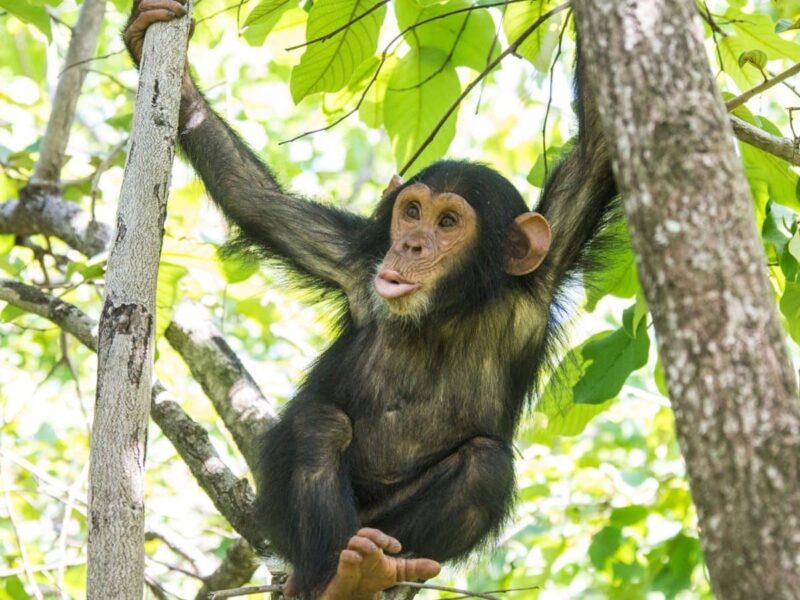
Few destinations reward visual storytelling quite like Uganda. This is a country where the experiences themselves are inherently cinematic: a silverback gorilla parting the undergrowth in Bwindi Impenetrable Forest, a boat easing through papyrus banks beneath Murchison Falls, chimpanzees calling to one another in the canopy of Kibale Forest, a fish eagle lifting off Lake Mburo at dawn. None of this needs exaggeration. It simply needs a camera, decent light, and someone willing to share it.
That is precisely why short clips and photographs travel so well out of Uganda. A thirty-second video of a gorilla trek communicates the feel of the experience far more vividly than a paragraph describing permit categories and trekking difficulty ever could. A single photograph of a dugout canoe slipping past a fishing village on Lake Bunyonyi tells a story about culture and landscape in one frame. Uganda’s tourism sector has leaned into this; diplomatic missions and tourism bodies have begun inviting content creators and culinary storytellers into the country specifically to capture and share these everyday scenes, recognising that authentic, unscripted storytelling often persuades more effectively than a traditional campaign.
There is also a quieter benefit. Visual content does not only sell beauty, it can build understanding. A short film showing how trekking fees support gorilla conservation, or a clip explaining the purpose of a community visit, gives travellers context that a polished advert rarely manages. For a destination like Uganda, where wildlife conservation and community livelihoods are genuinely intertwined with tourism revenue, that kind of storytelling does real work beyond marketing.
The Positive Impact of Social Media on Tourism
The benefits of this shift are tangible and worth stating plainly. Destinations that previously struggled for international visibility, including many of Uganda’s national parks beyond the best-known headline acts, now have a realistic route to being seen by exactly the kind of traveller who would love them. Research has become faster and more thorough too; a prospective visitor can compare a dozen lodges, watch reviews shared in real time, and cross-reference a tour operator’s claims against footage shot by past clients, all before sending a single enquiry.
Smaller tourism businesses have arguably gained the most. A community-run homestay near Kisoro or a boutique lodge bordering Kibale no longer needs a six-figure marketing budget to reach an international audience; a well-shot reel and consistent posting can do work that once required a travel fair stand or a print advertisement. Social platforms have also become an unexpected ally for conservation messaging, since short, emotionally engaging content about anti-poaching patrols or habitat restoration tends to travel further than a formal report ever would. And real-time reviews, whatever their flaws, give travellers a layer of accountability that simply did not exist when a brochure’s claims were taken largely on trust.
The Challenges of Social Media-Driven Travel
None of this comes without friction. The same mechanics that spread destinations also spread crowds; a single viral clip can turn a quiet viewpoint into a queue within weeks. The small Italian ski town of Roccaraso, for instance, was overwhelmed by an unexpected surge of visitors after one influencer’s videos drew disproportionate attention, and the Austrian lakeside village of Hallstatt reportedly saw visitor numbers triple following a wave of viral posts. Uganda’s parks are not immune to this dynamic, even if the scale differs; a viral moment around one gorilla family or one lodge can create demand that outpaces permit availability or genuinely sustainable visitor numbers.
There is a subtler issue too: the gap between an edited highlight reel and lived reality. A fifteen-second clip rarely shows the early wake-up call, the unpredictable weather, or the physical effort of a forest trek, and travellers who arrive expecting only the highlight reel can find themselves disappointed by entirely normal aspects of a real safari. Misinformation travels with the same speed as inspiration; outdated visa advice, incorrect park fees, or simply wrong information about a destination can circulate just as fast as a beautiful sunset photo, and rarely comes with a correction attached.
There is also a more reflective concern, one many travellers raise themselves: the pressure to document an experience can start to compete with actually having it. A trek spent largely behind a phone screen, framing the next post, is a different experience to one spent simply watching a gorilla family go about its day. And in destinations where local communities live alongside the attractions, there is a real question of privacy and dignity, since not every resident wants to become a backdrop for someone else’s content.
How Travellers Can Use Social Media Wisely
- Cross-check anything specific — prices, permit rules, visa requirements — against an operator’s own website or an official source rather than relying solely on a caption.
- Look for the same destination or experience across several creators rather than basing a decision on one viral post; patterns across multiple honest accounts are more reliable than any single highlight.
- Scroll past the obviously staged shot and look for the comments, the behind-the-scenes footage and the less flattering moments, since that is usually where the more honest picture sits.
- Choose experiences because they genuinely interest you rather than because they will photograph well; trips chosen for personal curiosity tend to be remembered more fondly than those chosen purely for their feed potential.
- Give a moment’s thought to consent and impact wherever wildlife or local communities are involved, whether that means keeping a respectful distance from a gorilla family or asking before photographing someone.
What This Means for Safari Operators
For tour operators, this new landscape carries both opportunity and responsibility. The opportunity is obvious: a single well-made reel can introduce a destination to people who would never have encountered it through traditional marketing. The responsibility is discussed less often, but matters just as much. Operators who show real conditions, including the early starts, the unpredictable weather and the physical demands of a trek, build more durable trust than those who only post the highlight reel. Honest content sets expectations that the actual experience can meet or exceed, which does more for repeat business and word of mouth than any filtered shot ever could.
There is also a genuine opportunity to use reach for good. Operators are well placed to fold conservation education into ordinary content, explaining where permit fees go, what a community visit actually supports, or why certain trekking rules exist, rather than treating those topics as separate from the marketing itself. Avoiding misleading claims, whether about wildlife sightings being guaranteed or distances being shorter than they are, protects both the traveller’s experience and the destination’s long-term reputation. For a company like Terenga Safaris, this means treating social platforms as an extension of the same principle that should run through every itinerary: tell travellers what is actually true, and let the destination’s genuine appeal do the rest.
The Future of Social Media and Travel
Several emerging trends are likely to shape this relationship further, though the specifics remain uncertain. Short-form video shows no sign of losing ground as the dominant format for travel inspiration, and platforms continue to refine how quickly a viewer’s interest can be connected to a bookable experience. AI-assisted planning tools are also creeping into the picture, with a growing share of younger travellers experimenting with chatbots and recommendation engines to help shape an itinerary, often alongside rather than instead of social content. User-generated content will likely keep gaining ground over polished brand campaigns, simply because audiences continue to trust a fellow traveller’s unscripted account more than a studio production. Virtual previews, from short immersive clips to 360-degree lodge tours, may also become a more common way to test an experience before committing, particularly for higher-cost trips like gorilla trekking. None of this replaces the fundamentals of good travel planning: research, realistic expectations and a trustworthy operator. It simply changes the tools travellers use to get there.
How Does Social Media Influence Travel Decisions?
Social media influences travel decisions by helping people discover destinations, compare safari experiences and research tour operators through photos, videos and traveller reviews. It shortens the distance between inspiration and booking, but its highlight-reel nature means travellers should verify details, compare multiple sources and look beyond viral content before deciding.
Frequently Asked Questions
Does social media really influence where people travel?
Yes. Recent industry surveys, including research from Allianz Partners and Data Axle, show that a large share of travellers under 35 say platforms like Instagram, TikTok and YouTube directly shape their choice of destination.
Which platforms are most useful for travel planning?
Instagram and Pinterest work well for visual inspiration and saving ideas, YouTube suits in-depth itinerary research, TikTok offers quick and authentic glimpses of an experience, and Facebook groups remain useful for asking past travellers detailed questions.
Can social media create unrealistic travel expectations?
It can. Heavily edited photos and short clips usually show only the best moment of a trip, leaving out weather, crowds or physical effort. Reading a few honest reviews alongside the highlight reel helps set more realistic expectations.
How do I know if travel content is trustworthy?
Look for consistency across several sources rather than one viral post, check whether a creator discloses sponsorships, and favour accounts that show unpolished, everyday moments alongside their best shots.
Should I rely on influencers when planning a safari?
Influencer content is a useful source of inspiration, but it should not replace research with a licensed, experienced operator. Treat it as a starting point, then verify logistics, pricing and conservation practices directly with the tour company.
How can I research a safari company online?
Check their website and licensing, look at their social media for consistency with traveller-shared content, read independent reviews on sites such as TripAdvisor, and ask direct questions about permits, group sizes and inclusions.
What role do reviews play in travel decisions?
Reviews add a layer of accountability that did not exist in the brochure era, helping verify claims about service quality. It is worth reading a range of reviews rather than relying on the most recent or most extreme ones.
Is a traditional tour operator still worth using if I plan my trip on social media?
Yes. Social media is excellent for inspiration, but a knowledgeable local operator turns that inspiration into a realistic, well-organised and safe itinerary, which matters most for logistically complex trips like multi-park Uganda safaris.
Why Choose Terenga Safaris?
This article was built around a simple idea: the most useful thing a safari operator can offer in a world full of polished content is honesty. Terenga Safaris approaches every itinerary the way we would want a destination explained to us, with realistic detail about what a gorilla trek actually involves, straightforward pricing, and recommendations based on what suits a traveller’s pace and interests rather than what photographs best.
Our team draws on genuine local expertise across Uganda and East Africa, from Bwindi’s forested ridges to the Nile’s banks at Murchison Falls, and we would rather a client arrive prepared for the real experience than be surprised by it. Responsible tourism is not a marketing line for us; it shapes which lodges we recommend, how we structure community visits, and how we talk about wildlife. If a destination’s appeal speaks for itself, as Uganda’s so often does, our job is simply to tell you the truth about it and help you plan accordingly.
Conclusion: The Most Memorable Trips Are Not Always the Most Liked
Social media has not replaced the fundamentals of good travel planning, it has reshaped how we arrive at them. Discovering a destination has never been easier, comparing experiences has never been faster, and the distance between curiosity and booking has never been shorter. But the platforms that make all of this possible reward a particular kind of decision-making: quick, visual, occasionally swept along by what is trending rather than what genuinely fits. The travellers who get the most out of social media are the ones who treat it as a starting point for inspiration, then pair it with real research and honest expertise before committing.
How social media is reshaping travel decisions ultimately says less about technology and more about what we value in a journey. The most memorable journeys are not always the ones that collect the most likes, but the ones that leave the deepest impressions long after the screen is switched off.
If you are dreaming up a Uganda safari and want honest, locally grounded advice rather than just another feed to scroll through, Terenga Safaris would love to help you plan it properly. Get in touch with our team for tailor-made itinerary advice built around what genuinely matters to you.

1 Comment
“I would love to see more conversations like this within Africa’s tourism sector. There are alot of lessons for us all from such perspective.