

Budget Uganda Safari
August 3, 2026
Uganda Migratory Birds
August 4, 2026
East Africa Safari Costs: Uganda, Kenya & Tanzania Compared
East Africa safari costs vary more than most travellers expect. Uganda, Kenya and Tanzania sit side by side on the map, yet the daily outlay for a comparable safari can differ by several hundred dollars. The gap comes from park fees, permit structures, distances between reserves and the style of camp you choose.
This guide sets out realistic 2026 figures for budget, mid-range and luxury trips. It explains what drives the numbers and who each country suits. The aim is straightforward: help you decide where your money buys the experience you want.
What Shapes East Africa Safari Costs
Three elements dominate the final bill. Park and conservation fees form the fixed base. Accommodation and guiding level determine most of the remaining spend. Season and transport method push the total higher or lower.
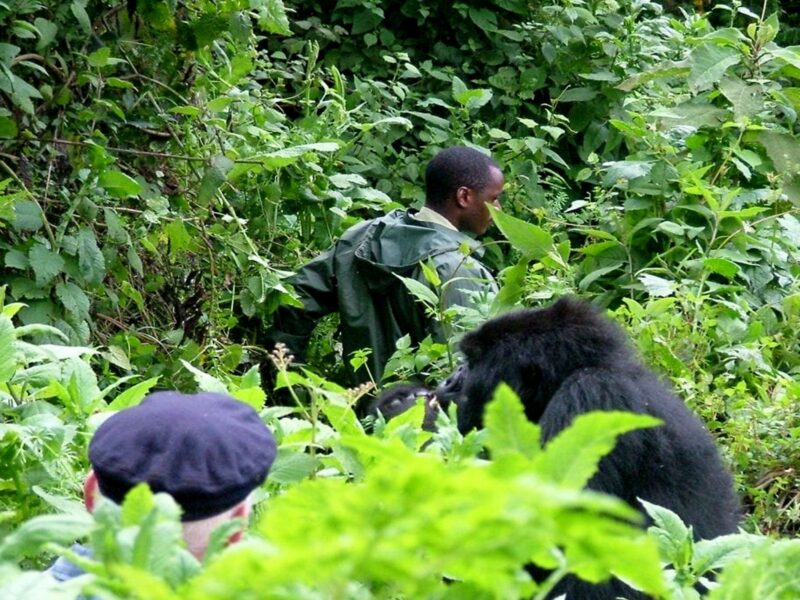
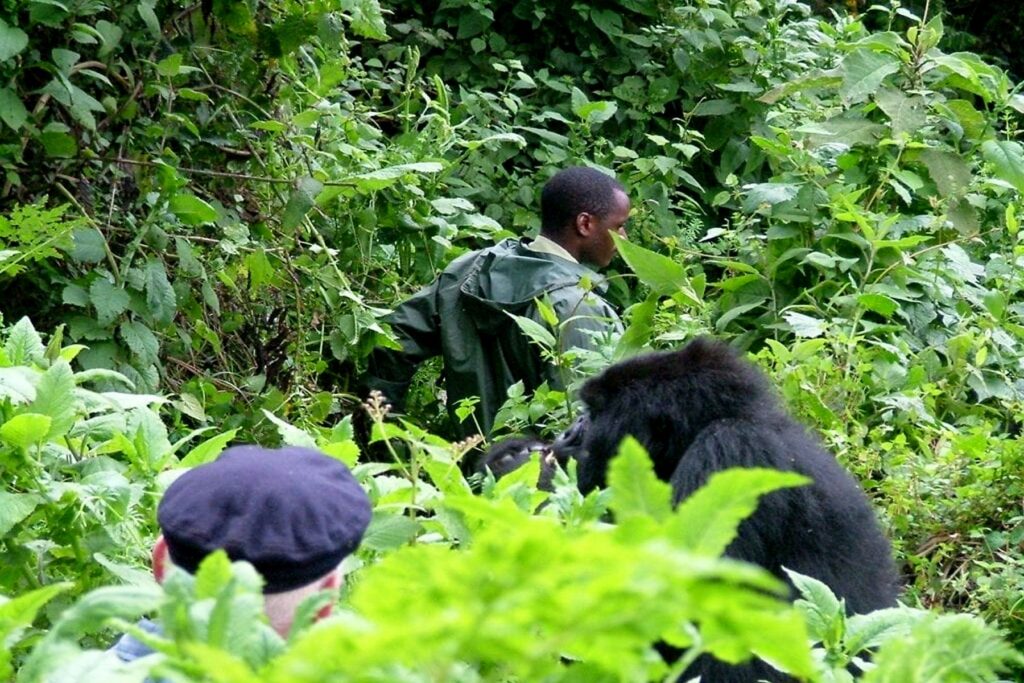
Uganda’s unique draw is mountain gorilla trekking. The Uganda Wildlife Authority sets the foreign non-resident gorilla permit at $800 in high season and $600 in the low months of April, May and November. Chimpanzee tracking in Kibale costs $250, or $200 in those same low months. Standard park entry in places such as Queen Elizabeth or Murchison Falls runs about $40–$50 per person per day.
Kenya’s fees shifted upward in recent years. The Masai Mara now charges non-residents $100 per day from January to June and $200 from July to December. Amboseli, Lake Nakuru and most other KWS parks sit around $80–$90. These rates already include tax in most published figures.
Tanzania’s northern circuit carries higher cumulative fees. Serengeti entry stands at roughly $83 per person per 24 hours. Ngorongoro Conservation Area adds a similar daily rate plus a $295 vehicle descent fee into the crater. Tarangire and Lake Manyara cost about $59. The distances between parks also mean more fuel or more domestic flights.
Uganda Safari Costs in Practice
Uganda often delivers the strongest value when primates sit high on the list. A seven-day mid-range circuit that includes one gorilla trek, a chimpanzee walk and game drives in Queen Elizabeth or Murchison typically lands between $3,500 and $4,800 per person sharing. That figure covers full-board lodges, a private 4×4, guide, most park fees and the gorilla permit.
Budget travellers who accept shared vehicles and simpler camps can bring a similar itinerary closer to $2,500–$3,200. Luxury properties with private guiding and higher-end forest lodges push the same trip past $7,000–$9,000.
The country rewards those who accept a more compact road network and occasional rough tracks. Gorilla trekking itself demands reasonable fitness; the walk can last two to six hours through dense undergrowth. Peak months (June–September and December–February) fill permits months ahead. Shoulder seasons offer quieter forests and the discounted permit rates.
Uganda suits travellers who want both primates and classic savannah in one trip, and who prefer lower overall spend than a comparable Kenya–Tanzania combination.
Kenya Safari Costs in Practice
Kenya remains the most accessible entry point for many first-time visitors. A seven-day mid-range private safari covering Amboseli, a Rift Valley stop and the Masai Mara usually costs $3,500–$5,500 per person. Shared-group budget versions fall between $1,800 and $2,900. Luxury tented camps or conservancy properties move the same length of trip into the $7,000–$12,000 range and higher.
The Masai Mara fee spike in peak season makes July–October noticeably more expensive. Travellers who visit in January–June pay half the reserve fee and often find lodges more flexible on rates. Conservancies bordering the Mara charge their own conservation fees but limit vehicle numbers, which many guests consider worth the premium.
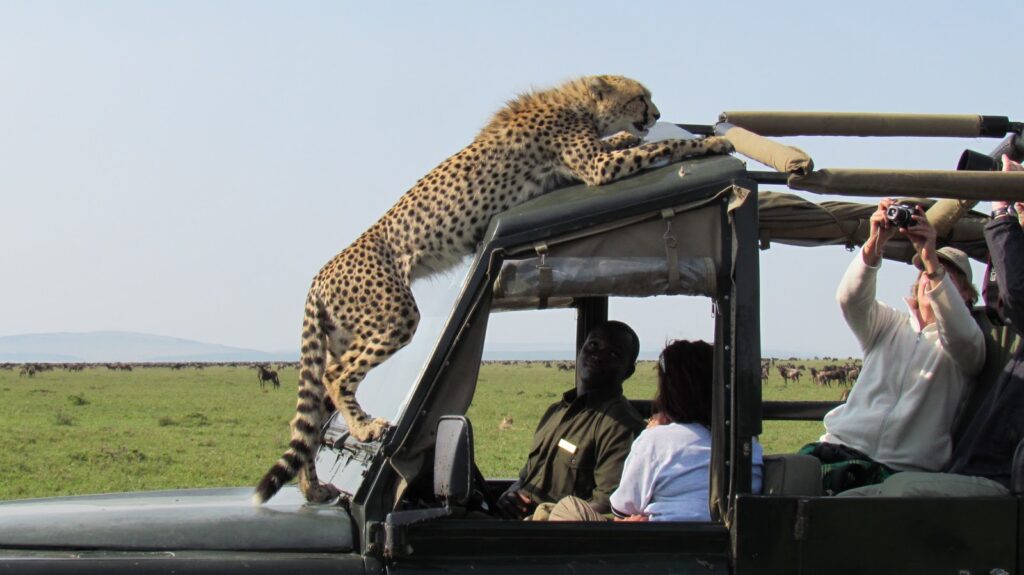
Kenya’s road network and flight connections keep logistics simpler than Tanzania’s northern circuit. The trade-off appears in denser vehicle concentrations around classic sightings during high season. Kenya works well for families, photographers who want big cats and anyone who values shorter transfers between parks.
Tanzania Safari Costs in Practice
Tanzania commands a premium, especially on the northern circuit that links Tarangire, Ngorongoro and the Serengeti. A seven-day mid-range private safari typically runs $4,200–$6,500 per person. Budget camping or basic lodge group trips start around $2,300–$3,500. Luxury mobile camps or permanent high-end properties during migration season easily reach $9,000–$15,000 and beyond.
Park fees and the crater vehicle charge accumulate quickly. Longer distances between reserves often push operators toward domestic flights, which add cost but save driving time. The Serengeti’s sheer scale and the possibility of following the migration without leaving the park remain the main justifications for the higher outlay.
Tanzania suits travellers who prioritise vast wilderness, lower vehicle density outside the central Serengeti, and the classic migration experience. It rewards those prepared to spend more for remoteness and who can accept longer travel days or flight segments.
Side-by-Side Cost Snapshot for a Typical Seven-Day Trip
Budget shared or camping style:
Uganda $2,500–$3,200 (including one gorilla permit)
Kenya $1,800–$2,900
Tanzania $2,300–$3,500
Mid-range private vehicle and comfortable lodges:
Uganda $3,500–$4,800 (including gorilla permit)
Kenya $3,500–$5,500
Tanzania $4,200–$6,500
Luxury or high-end tented camps:
Uganda $7,000–$9,500+
Kenya $7,000–$12,000+
Tanzania $9,000–$15,000+
These ranges exclude international flights, visas, travel insurance and tips. They assume two people sharing. Solo travellers pay a single supplement that can raise the per-person figure by 30–50 %. All figures reflect 2026 market rates; operators and park authorities revise them periodically, so confirm current numbers before committing.
Season, Crowding and Practical Trade-offs
High season (July–October and the December–February window) brings the Great Migration into the Masai Mara and northern Serengeti. It also brings peak fees, higher lodge rates and more vehicles at popular crossings. Low and shoulder seasons cut costs and crowds but can bring rain, taller grass and more challenging roads.
Uganda’s gorilla permits drop in April, May and November, yet those months coincide with heavier rain in the southwest. Kenya’s green season still offers excellent game viewing in the Mara and Amboseli at lower daily rates. Tanzania’s short rains in November–December can make some northern tracks sticky, though the southern Serengeti calving season remains a strong alternative.
Fitness requirements differ. Gorilla and chimpanzee treks demand steady walking on uneven forest trails. Savannah game drives suit almost any fitness level. Families with young children often find Kenya’s shorter transfers and wider range of family-friendly camps easiest.
Choosing the Right Country for Your Budget and Goals
If primates sit at the top of the list and overall spend matters, Uganda usually wins. The combination of gorillas, chimps and classic game drives in one relatively compact country keeps costs lower than a multi-country circuit.
If classic savannah, big cats and straightforward logistics rank higher, Kenya delivers strong value, especially outside peak Mara season. Conservancy stays add exclusivity without always matching Tanzania’s price.
If vast open space and the migration experience matter most, Tanzania justifies the higher East Africa safari costs. The northern circuit still ranks among the world’s great wildlife journeys.
Many travellers combine two countries. A Kenya–Tanzania itinerary that links the Mara and Serengeti typically costs more than a single-country trip of the same length, yet it removes the need to choose. Uganda pairs well with either neighbour for a primate-plus-savannah mix.
Making the Numbers Work
Book gorilla permits as early as possible; they sell out in peak months. Shoulder-season travel trims both park fees and lodge rates. Sharing a vehicle with a compatible group cuts the transport line. Flying between parks saves time but adds cost; driving keeps the budget tighter if the itinerary allows.
Always treat published package prices as starting points. Ask for a clear breakdown of park fees, permits, accommodation, guiding and transfers. Confirm whether the quote includes the current official rates; authorities adjust them without long notice.
East Africa safari costs ultimately reflect the combination of wildlife density, conservation funding and logistics that each country offers. Match the destination to the animals and landscapes you most want to see, then choose the tier that keeps the daily experience comfortable. The right balance leaves you free to watch rather than worry about the bill.
When you are ready to turn these figures into a concrete itinerary, the team at Terenga Safaris can walk through current availability, permit status and realistic quotes for the dates that suit you.

Techie
**Techie** is a travel writer and digital content creator at Terenga Safaris, specialising in Uganda and East African tourism. He writes in-depth guides on safari destinations, gorilla trekking, wildlife, adventure travel, and responsible tourism, helping travellers plan memorable experiences with confidence. Combining a passion for storytelling with research-driven content, Andrew creates practical, engaging, and SEO-optimised articles that showcase the natural beauty, diverse cultures, and unique wildlife of East Africa.
Related posts
September 17, 2026

September 17, 2026