Why Mid-Range Safaris Are the Smart Choice?
July 30, 2026
Hot Air Balloon Safaris in East Africa
July 31, 2026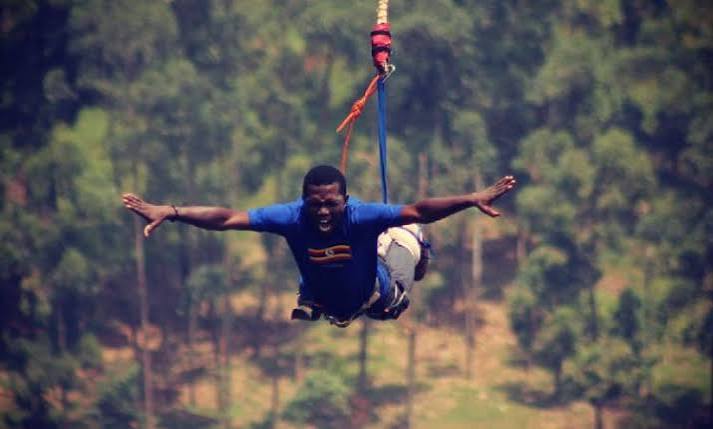
Bungee Jumping in Jinja
Bungee jumping in Jinja means climbing a forty-four-metre steel tower above the Nile River, stepping to the edge, and trusting a cord that riggers checked that same morning. Adrift Uganda has run the jump since the early 2000s, first near Bujagali Falls, then from Kalagala Falls Overland Camp after the original site disappeared under a hydroelectric dam. Most jumpers arrive here having already done gorilla trekking or a savannah game drive and want one sharp adrenaline hit before they fly home. This guide sets out what bungee jumping in Jinja actually costs, what the fall feels like, and who should book something calmer instead.
How the Jinja Bungee Jump Works
Bungee jumping
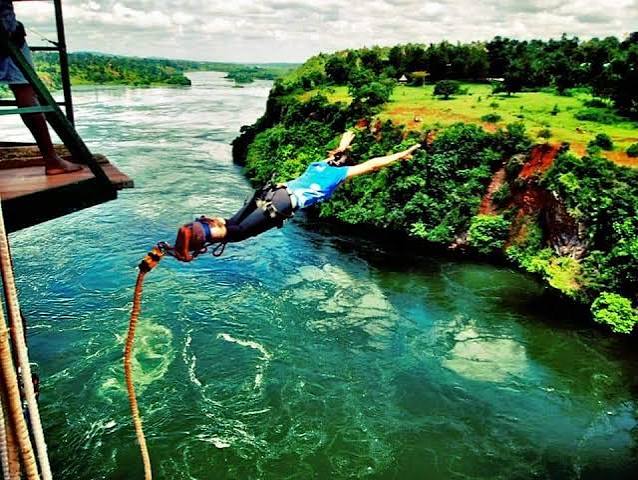
The tower sits on a cliff above the Nile at Kalagala, with a steel platform cantilevered out over the water. A ground crew straps your ankles — or, for a tandem jump, your whole body to a second person — and clips the cord before you shuffle to the edge. You get a short countdown, a nudge to look at the horizon rather than down, and then the fall. That’s the core of bungee jumping in Jinja: an ankle or body harness, a countdown, and open air.
Jumpers choose between two versions on booking. The long jump dips you into the Nile itself before the cord pulls you back up. The short jump stops well above the surface and costs a little less. Most first-timers go long, mainly for the story.
What the Fall Actually Feels Like
The first two seconds are close to freefall, and most people report their mind going blank before the sound comes back. Below the platform, the Nile runs green-brown between forested banks, with fishing canoes working the calmer stretches and birds lifting off the trees as you drop past. The cord catches hard, sends you rebounding upward almost as fast as you fell, then settles into a slower bounce while a raft crew waits below to bring you in. Photographers on site capture the moment — useful, since almost nobody remembers their own face mid-jump.
Bungee Jumping in Jinja: Cost by Category
Prices depend on citizenship and residency, and they shift often enough that you should confirm the current rate directly with Adrift before booking. As of writing, foreign tourists pay roughly $115 to $150 for a single jump, foreign residents of Uganda pay closer to $100, and Ugandan or East African citizens pay UGX 200,000 to 250,000 — around $55 to $70. A tandem jump, done alongside an instructor, runs $150 to $180. Whatever category you fall into, bungee jumping in Jinja rarely costs more than a single game drive.
Multiple jumps on the same visit usually come at a discount, with a third jump sometimes thrown in free. Guests already booked on an Adrift rafting package often pay less for the bungee as an add-on, so it’s worth asking about combined pricing before you pay for either activity separately.
Who Should Try Bungee Jumping in Jinja — and Who Should Skip It
Adrift sets the weight limits at 35 to 110 kilograms, wide enough to cover most adult travellers but worth checking if you sit near either edge. The company excludes anyone pregnant, anyone with high blood pressure or a heart condition, and anyone who has been drinking. A history of back injuries or asthma should mean a conversation with staff before you climb the tower, not after.
None of this makes the jump unsafe for the people it does suit — solo travellers, couples looking for a shared scare, groups already deep into a Jinja adventure itinerary. But bungee jumping in Jinja isn’t an activity to book on impulse without reading the fine print first, and anyone with a genuine fear of heights should expect the platform sway before the jump to test that fear harder than the fall itself.
Getting to the Jinja Bungee Jump Site
Adrift now operates from Kalagala Falls Overland Camp in Kangulumira, roughly forty minutes from Jinja town and just over an hour from Kampala on reasonable roads. The company runs a free shuttle from Kampala when at least four people book together, worth organising in advance if you’re travelling solo and want to split a vehicle. The tower runs daily, year-round, including night jumps for anyone who wants the drop without the view. Weekends fill up fastest, so book a few days ahead rather than arriving and hoping for a free slot.
Combining It With the Rest of Jinja’s Adventure Scene
Few visitors bungee jump in Jinja and then head straight back to Kampala. The same stretch of the Nile offers grade-four and grade-five white-water rafting, quad biking through the surrounding hills, and calmer options like kayaking or a sunset cruise near the river’s source. Two-day packages that combine bungee jumping with a full day of rafting run around $250 per person, a reasonable saving against booking each activity apart. Travellers building a longer Uganda itinerary — gorilla permits in Bwindi, a few nights in Murchison Falls — often slot Jinja in as the adrenaline stop between wildlife-focused days.
Is Bungee Jumping in Jinja Worth Booking?
Bungee jumping in Jinja won’t suit everyone, and it shouldn’t. The cost is modest against most safari budgets, the safety record over two decades of operation is solid, and the setting — a forested gorge on Africa’s most storied river — gives the jump a backdrop that Victoria Falls’ bungee, for all its extra height, can’t quite match. If you clear the weight and health checks and don’t mind a genuinely frightening thirty seconds, book it. If heights alone put you off, the rafting or a quiet afternoon at the source of the Nile gets you the same river without the tower.
Terenga Safaris builds Jinja stops into longer Uganda itineraries and can time a bungee morning around gorilla trekking or a Murchison Falls extension, so the adrenaline day doesn’t collide with an early departure the next morning.