Volcanoes National Park vs Bwindi.
July 31, 2026
What Is Included in a Kenya Safari Package?
August 1, 2026
How Far in Advance Should You Book Gorilla Permits?
Book gorilla permits before you book anything else. That’s the short version of this article. Everything on a Uganda or Rwanda safari — flights, lodges, visas — can be sorted within a few weeks. Permits can’t.
Uganda and Rwanda release fewer than 300 gorilla trekking slots a day between them. On the dates travellers actually want, that supply runs out months before the trek itself. This piece sets out how far in advance to book gorilla permits, park by park and season by season, and what your options look like if you’re starting later than you’d hoped.
Why Gorilla Permits Sell Out Faster Than You’d Expect
A gorilla permit isn’t a park entry ticket you buy at the gate. It’s a place in a strictly capped daily quota. Conservation rules set that cap, not commercial demand. The Uganda Wildlife Authority allows eight visitors per habituated family, once a day, for one hour.
Multiply that across Bwindi Impenetrable National Park and Mgahinga Gorilla National Park and you get roughly 160 permits a day, nationwide. Rwanda’s Volcanoes National Park runs the same eight-per-family rule across twelve families. That caps daily supply at just over 100 permits.
The scarcity is deliberate. Trackers monitor each family every day. Rangers won’t send a ninth visitor into the forest, no matter how far someone has flown.
Tour operators can’t negotiate around the cap. Neither can money. Once a date sells out, it’s gone until next year’s calendar — which is exactly why the question of when to book gorilla permits matters more than almost any other planning decision on the trip.
When to Book Gorilla Permits in Uganda
Uganda is the more forgiving of the two countries, on price and on lead time. A standard permit for Bwindi or Mgahinga costs $800 for foreign non-residents, $700 for foreign residents, and $500 for other African visitors. East African citizens pay a heavily subsidised local rate. The Uganda Wildlife Authority has also reintroduced discounted permits for April, May and November, the wetter, quieter months, dropping the non-resident price to $600.
For most dates, booking three to six months ahead gives you a realistic shot at your preferred sector and gorilla family. Push that to six months or more for peak season — roughly June to September and December to February — when foreign arrivals and domestic school-holiday travellers compete for the same slots.
One recent change makes early booking more important still. Uganda scrapped its old seven-day reservation hold in March 2026. Operators must now pay for a permit in full at the moment they book it. There’s no grace window to hold a date while you finalise flights. Your permit booking needs to run in step with your flight booking, not behind it.
When to Book Gorilla Permits in Rwanda
Rwanda’s Volcanoes National Park sits closer to Kigali than Uganda’s parks sit to Entebbe, and its lodges are generally more polished. That convenience comes at a price. A standard permit costs $1,500 per person, nearly double Uganda’s rate. The Rwanda Development Board also issues fewer permits each day.
Higher demand and lower supply shorten your booking runway considerably. Dry-season dates — June to mid-September and December to February — regularly sell out close to a year in advance, particularly around Christmas and New Year. Even outside peak months, the Rwanda Development Board recommends booking three to six months ahead as an absolute minimum. If your dates are fixed rather than flexible, plan on the longer end of that range.
Rwanda also offers a discounted combination permit, around $1,050, for travellers pairing a gorilla trek with Akagera or Nyungwe National Park during the quieter months from November to May. Ask your operator about it if those parks are already on your itinerary. Either way, book gorilla permits for Rwanda earlier than you’d instinctively plan, especially for a fixed December or August date.
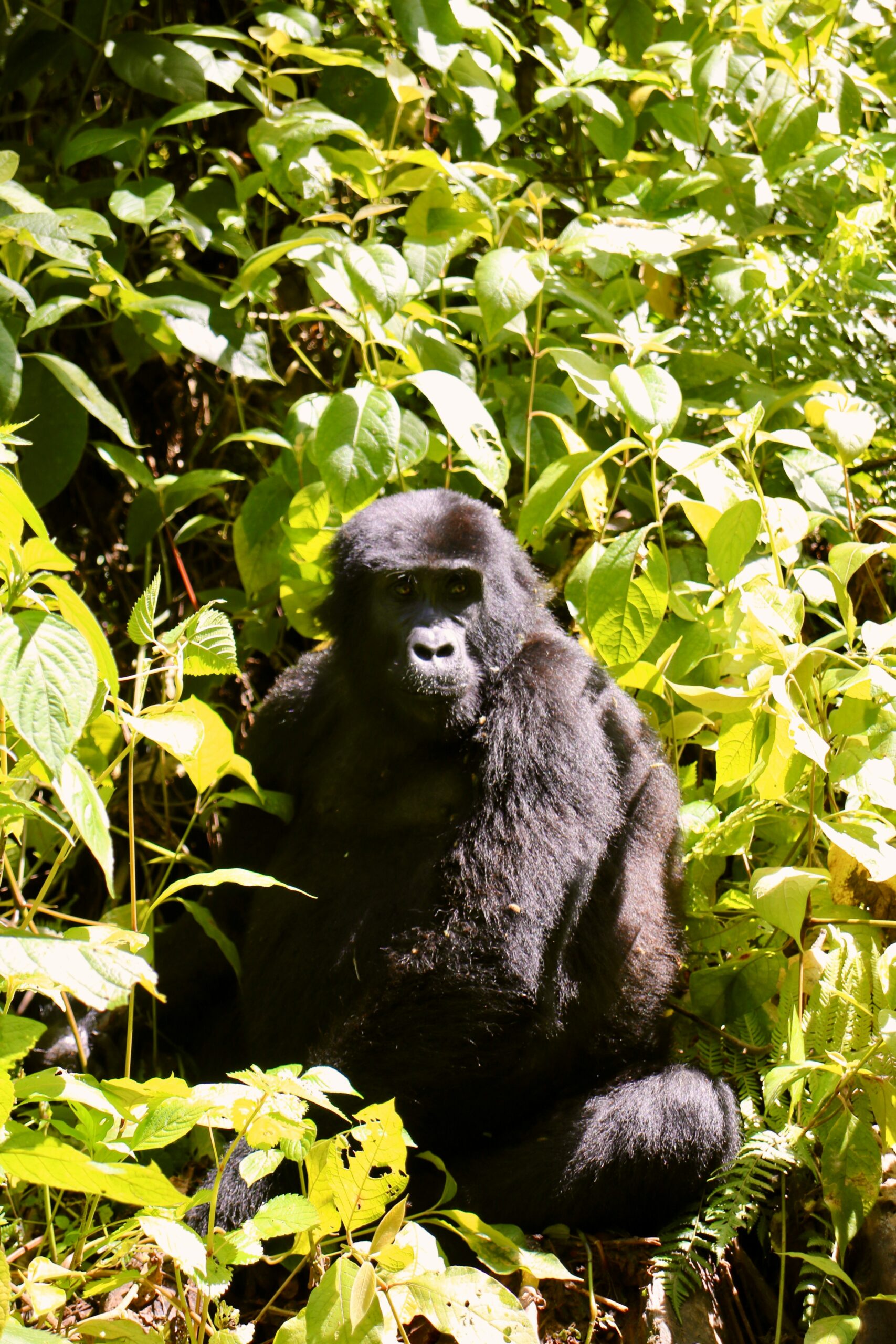
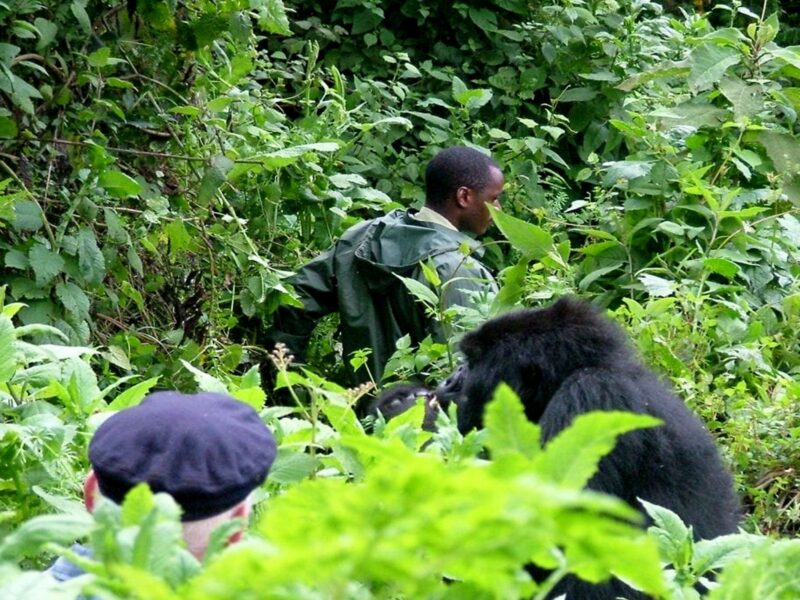
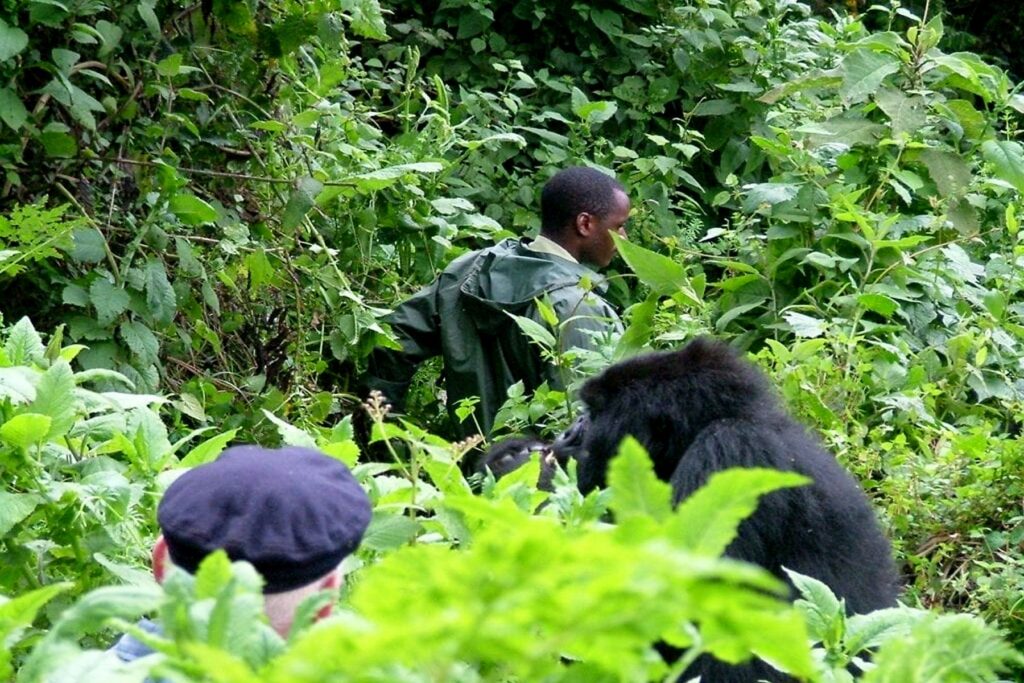
Gorilla trekking
How Far Ahead to Book Gorilla Permits, by Season
Treat the booking window as a sliding scale, not a fixed rule. For dry-season travel in either country, book six to nine months out if you want a specific sector, family, or lodge. For shoulder months such as October, or January outside the Christmas rush, three to five months is usually enough. For Uganda’s April, May and November low season, two to three months’ notice often works. Demand drops along with the discounted price, and rain keeps casual bookers away.
Group size matters too. A solo traveller or a couple can sometimes slot into a single remaining space when a family’s roster isn’t full. A group of four or more, booking the same date and the same family, needs to plan further ahead. Operators must secure that many consecutive spaces before the quota closes.
What Happens If You Book Gorilla Permits Late
Late bookings aren’t automatically doomed, but your choices narrow. Certain sectors within Bwindi — Rushaga and Nkuringo, for instance — tend to hold spare permits longer than the popular Buhoma sector. They simply involve a longer drive from Entebbe. A flexible traveller who can shift their trek date by a day or two often finds room where a fixed-date search comes up empty. So does someone willing to fly into Kigali and cross the border to reach southern Bwindi.
Uganda’s four-hour gorilla habituation experience in Rushaga, priced from around $1,500, is a genuine alternative when standard permits for your dates are gone. It carries fewer daily slots, but demand for it is also lower. Last-minute availability turns up more often than you’d expect.
The Democratic Republic of Congo’s Virunga National Park once offered the cheapest permits in the region. It has been closed to tourism since 2020 because of ongoing security concerns, and Terenga Safaris does not currently route clients there. Kahuzi-Biega National Park, also in the DRC, treks a related but distinct eastern lowland gorilla. It carries its own security considerations, worth researching independently before booking.
Who This Booking Timeline Suits — and Who It Doesn’t
If your travel dates are fixed around annual leave, a milestone birthday, or a group of friends whose schedules rarely align, book gorilla permits as early as your itinerary allows. Aim for six months out, more for December or the northern-hemisphere summer. If you’re a flexible, independent traveller who can move by a few days, you can work closer to the three-month mark and still land a permit, especially in Uganda.
This timeline suits travellers who are comfortable paying for a permit before every other detail of the trip is locked in. Uganda’s payment-on-booking rule and Rwanda’s largely non-refundable policy both ask you to commit early. It suits less well if you’re the type who books flights first and fills in activities later. For gorilla trekking, that order needs reversing.
Book Gorilla Permits Early, and Let the Rest Follow
A gorilla permit is a small, temperamental piece of paper. It decides whether your entire trip happens on the dates you want. Confirm current permit prices and any seasonal discounts directly with the Uganda Wildlife Authority or Rwanda Development Board before you commit, since both bodies revise tariffs from time to time and terms can shift between booking and travel.
At Terenga Safaris, we hold permit applications alongside itinerary planning, so the two move together rather than one waiting on the other. Worth asking about, whether you’re still deciding between Uganda and Rwanda, or simply unsure how far out to start.