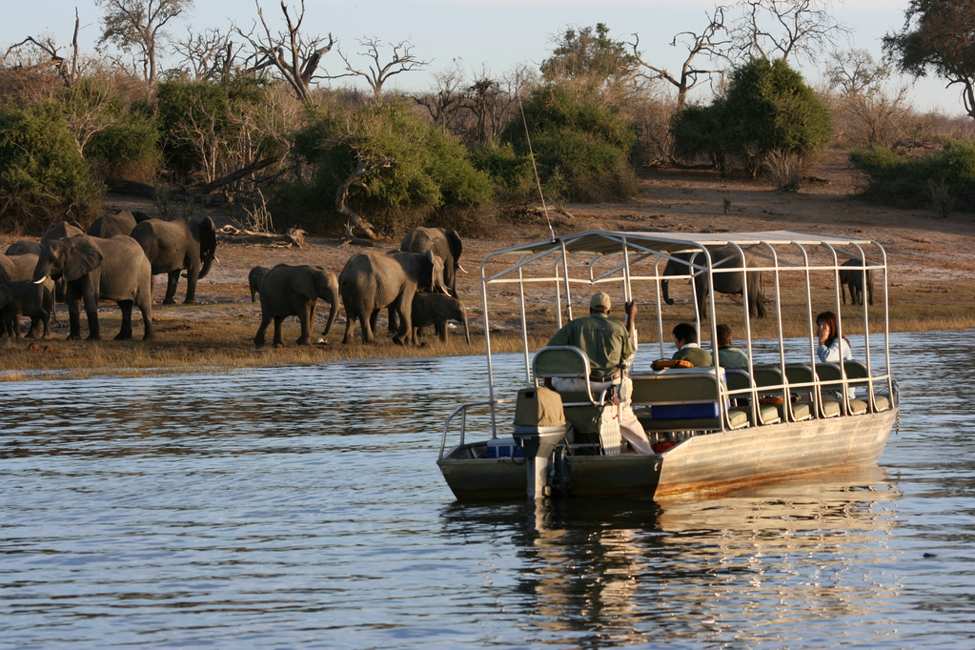
Why a Boat Safari in East Africa Should Be on Your Bucket List
June 25, 2026
Is Gorilla Trekking Worth the Money?
June 25, 2026
The 10 Best Lakes to Visit in Uganda: A Complete Travel Guide
Uganda is rightly celebrated for its mountain gorillas, dramatic national parks, and extraordinary wildlife safaris. But for many travellers who make the journey, it is the lakes that leave the most lasting impression. Whether you are drawn to the kind of silence that settles over a remote crater lake at dawn, the spectacle of hippos drifting past on a papyrus-fringed channel, or the gentle lap of water against a dugout canoe on a warm equatorial afternoon, the best lakes to visit in Uganda offer a remarkable counterpart to the country’s famous game drives. In this guide, we explore ten lakes that deserve a place on every Uganda itinerary, from the vast shores of Africa’s largest lake to hidden volcanic craters draped in mist.
Why Uganda Is Known as the Pearl of Africa’s Freshwater Landscapes
Uganda holds a greater share of Africa’s freshwater than almost any other country on the continent. Its lakes, rivers, and wetlands cover roughly 15 percent of the country’s total surface area and sustain an astonishing range of biodiversity. Lake Victoria alone supports over 500 species of cichlid fish, while the country’s lakes collectively provide habitat for more than a thousand bird species, including several globally rare and endemic varieties.
Beyond wildlife, Uganda’s lakes are deeply woven into the fabric of local communities. They have shaped cultures, sustained livelihoods through fishing and agriculture, and served as sacred sites for generations. For travellers, they offer experiences that differ fundamentally from anything available on the classic savannah safari circuit: peaceful island escapes, intimate boat cruises, community encounters, and landscapes of extraordinary beauty that change dramatically from region to region.
Several of Uganda’s most important lakes lie within or adjacent to national parks, making them natural companions to wildlife safaris. Others sit independently in the western highlands or along the Albertine Rift, rewarding adventurous travellers who are willing to venture off the beaten path.
The 10 Best Lakes to Visit in Uganda
1. Lake Victoria
Overview
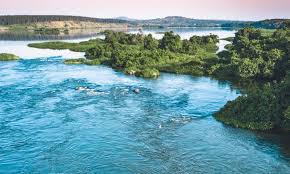
Africa’s largest lake and the world’s second-largest freshwater lake, Lake Victoria spans three countries — Uganda, Kenya, and Tanzania — with Uganda holding the largest share of its northern shoreline.
Location
Southern Uganda; Entebbe is the main access point.
Why Visit?
Victoria’s Ugandan islands offer a world of quiet contrasts. The Ssese Islands, a cluster of 84 forested islands, are a favourite escape for travellers seeking beaches, forest walks, and a slower pace. Entebbe’s lakeside botanical gardens, which sit directly on the shore, are among the finest in East Africa.
Top Activities
Island hopping, forest walks, fishing, beach relaxation, boat trips, and birdwatching in the gardens.
Wildlife and Birdlife
Grey crowned cranes, African fish eagles, and a remarkable variety of forest and waterbirds. Monitor lizards and vervet monkeys inhabit the Ssese forests.
Best Time to Visit
Year-round; the drier months of December to February and June to September offer the most comfortable conditions.
Nearby Attractions
Entebbe Wildlife Education Centre, Uganda Museum (Kampala), Ngamba Island Chimpanzee Sanctuary.
Insider Travel Tip
Take the MV Kalangala ferry from Bukakata for an authentic crossing experience to the Ssese Islands rather than flying.
2. Lake Bunyonyi
Overview
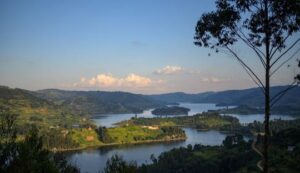
Often described as Uganda’s most beautiful lake, Bunyonyi sits high in the terraced hills of southwestern Uganda at 1,962 metres above sea level. It is one of Africa’s deepest lakes and is dotted with 29 islands.
Location
Southwestern Uganda, near Kabale, close to the Rwanda and DRC borders.
Why Visit?
Bunyonyi offers exceptional serenity. The terraced hillsides, multiple small islands, and cool highland temperatures create an atmosphere unlike anywhere else in Uganda. It is widely considered the ideal rest stop after gorilla trekking in Bwindi.
Top Activities
Canoeing, community walks, island visits, birdwatching, swimming (Bunyonyi is bilharzia-free, making it one of Uganda’s safest swimming lakes).
Wildlife and Birdlife
Over 200 bird species recorded, including the African green broadbill, African harrier hawk, and numerous sunbirds and weavers.
Best Time to Visit
June to September; conditions are pleasantly cool year-round.
Nearby Attractions
Bwindi Impenetrable National Park (gorilla trekking), Mgahinga Gorilla National Park, Kisoro town.
Insider Travel Tip
Spend at least two nights here. One afternoon is not enough to appreciate the stillness and beauty that make Bunyonyi special.
3. Lake Mburo
Overview
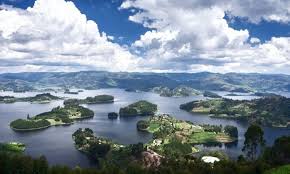
At the heart of Uganda’s most accessible national park, Lake Mburo is a compact, wildlife-rich lake easily combined with a Kampala arrival or departure.
Location
Western Uganda, approximately three hours from Kampala.
Why Visit?
Lake Mburo National Park is Uganda’s only park with zebras and impala, and the lake itself hosts hippos, crocodiles, and outstanding birdlife. Boat trips on the lake are a highlight.
Top Activities
Boat safaris, game drives, horse riding, walking safaris, and night game drives.
Wildlife and Birdlife
Hippos, Nile crocodiles, zebra, impala, eland, and over 350 bird species including the rare African fin-foot.
Best Time to Visit
June to August and December to February.
Nearby Attractions
Igongo Cultural Centre (fascinating museum of western Ugandan culture), Equator crossing on the Kampala–Mbarara highway.
Insider Travel Tip
Book a night game drive to spot civets, genets, and other nocturnal species rarely seen on daytime safaris.
4. Lake Albert
Overview
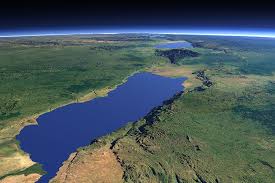
Stretching along Uganda’s western border with the DRC, Lake Albert is a long, narrow Rift Valley lake known for its remarkable fishing communities and stunning sunset views.
Location
Western Uganda, in the Albertine Rift; accessible from Hoima or Masindi.
Why Visit?
Albert offers an immersion into fishing communities, oil-town history, and spectacular Rift Valley scenery. The Delta area in the north (near Murchison Falls National Park) attracts extraordinary concentrations of birds and wildlife.
Top Activities
Boat trips, community visits, fishing, photography, and birdwatching in the delta.
Wildlife and Birdlife
Shoebill stork, African skimmer, Goliath heron, and large concentrations of waterbirds in the delta region.
Best Time to Visit
December to February and June to September.
Nearby Attractions
Murchison Falls National Park, Budongo Forest Reserve, Ziwa Rhino Sanctuary.
Insider Travel Tip
Combine a Murchison Falls game drive with a morning visit to the delta area for the best chance of seeing the elusive shoebill stork.
5. Lake Edward
Overview
Shared between Uganda and the DRC, Lake Edward sits within Queen Elizabeth National Park, one of Uganda’s finest wildlife destinations.
Location
Western Uganda, within Queen Elizabeth National Park.
Why Visit?
The lake’s northern shore feeds into the Kazinga Channel, site of Uganda’s most celebrated boat safari. Wildlife concentrations here are extraordinary.
Top Activities
Kazinga Channel boat cruise, game drives in Queen Elizabeth NP, community visits in Kyambura Gorge area.
Wildlife and Birdlife
Hippos, buffalo, elephant, and over 600 recorded bird species including the iconic African fish eagle.
Best Time to Visit
June to September and December to February.
Nearby Attractions
Kazinga Channel, Ishasha sector (tree-climbing lions), Kyambura Gorge (habituated chimpanzees).
Insider Travel Tip
Request a morning boat launch on the Kazinga Channel rather than afternoon for the best light and highest wildlife activity.
6. Lake George
Overview
Connected to Lake Edward via the Kazinga Channel, Lake George is a shallow, nutrient-rich lake famous for its extraordinary bird density.
Location
Western Uganda, within Queen Elizabeth National Park.
Why Visit?
Lake George is one of East Africa’s most important Ramsar wetland sites and harbours exceptional numbers of waterbirds. Its shallow, productive waters sustain large fish populations that in turn support hippos, crocodiles, and vast flocks of pelicans and cormorants.
Top Activities
Birdwatching, boat trips, fishing community visits.
Wildlife and Birdlife
African skimmer, pink-backed pelican, great cormorant, hippos, and Nile crocodiles.
Best Time to Visit
June to September.
Nearby Attractions
Kazinga Channel, Queen Elizabeth National Park’s northern sector, Maramagambo Forest.
Insider Travel Tip
Visit just after dawn for extraordinary light across the lake and peak bird activity before the day warms.
7. Lake Mutanda
Overview
One of Uganda’s most photogenic and least visited lakes, Mutanda sits in the far southwest surrounded by volcanic peaks and offering extraordinary views of the Virunga mountain chain.
Location
Kisoro District, southwestern Uganda.
Why Visit?
Mutanda’s combination of mirror-calm water, island villages, volcanic scenery, and proximity to gorilla trekking makes it one of Uganda’s most spectacular lakeside experiences. It remains relatively undiscovered.
Top Activities
Canoeing, island community visits, volcano viewing, photography, birdwatching.
Wildlife and Birdlife
Waterbirds, vervet monkeys, and colobus monkeys in surrounding forests.
Best Time to Visit
June to September.
Nearby Attractions
Mgahinga Gorilla National Park, Bwindi Impenetrable National Park, Kisoro town market.
Insider Travel Tip
Hire a local canoe with a guide and paddle to one of Mutanda’s inhabited islands for a genuine community encounter that very few visitors experience.
8. Lake Kyoga
Overview
A vast shallow lake in central Uganda, Kyoga is fringed with extensive papyrus swamps and serves as an important habitat for wetland wildlife, including some of Uganda’s rarest birds.
Location
Central Uganda; accessible from Soroti or Lira.
Why Visit?
Kyoga rewards adventurous travellers interested in off-the-beaten-path Uganda. Its extensive papyrus swamps are among the best places in the country to search for the shoebill stork, one of Africa’s most sought-after birds.
Top Activities
Birdwatching, boat trips into papyrus swamps, fishing community visits.
Wildlife and Birdlife
Shoebill stork, sitatunga antelope, Nile crocodile, and a wide array of papyrus-specialist bird species.
Best Time to Visit
December to February.
Nearby Attractions
Mabira Forest Reserve, Jinja (source of the Nile), eastern Uganda cultural sites.
Insider Travel Tip
Arrange a birding excursion with a specialist guide who knows the papyrus channels where shoebills are most reliably found.
9. Lake Bisina
Overview
One of Uganda’s least visited major lakes, Bisina sits in the semi-arid Teso region of eastern Uganda and is known for its remote atmosphere and prolific birdlife.
Location
Eastern Uganda, near Soroti.
Why Visit?
Bisina’s remoteness is its appeal. Travelling here feels genuinely adventurous, and the lake’s undisturbed birdlife, sitatunga antelope, and Teso cultural encounters make for a rich off-the-beaten-track experience.
Top Activities
Birdwatching, boat trips, cultural visits to Iteso communities, photography.
Wildlife and Birdlife
Shoebill stork, sitatunga, African jacana, and a wide range of wetland species.
Best Time to Visit
June to September.
Nearby Attractions
Soroti Rock, eastern Uganda cultural heritage sites, Mount Elgon National Park.
Insider Travel Tip
Combine Bisina with a visit to Soroti Rock for a rewarding eastern Uganda extension that most visitors to the country never see.
10. The Fort Portal Crater Lakes
Overview
The Tooro region around Fort Portal is home to dozens of volcanic crater lakes scattered across the tea-plantation landscape, each with its own character, colour, and microclimate.
Location
Western Uganda, around Fort Portal town in Kabarole District.
Why Visit?
The crater lakes are extraordinarily varied — some are electric green from algae, others deep blue or khaki-brown, and each sits within its own steep-sided volcanic depression. The surrounding landscape of tea gardens and the Rwenzori Mountains visible in the distance makes this one of Uganda’s most beautiful regions.
Top Activities
Hiking between crater lakes, cycling, swimming (select lakes), community walks, birdwatching, photography.
Wildlife and Birdlife
Primates in surrounding forests, numerous forest birds, Rwenzori endemics nearby.
Best Time to Visit
June to September.
Nearby Attractions
Kibale National Park (chimpanzee trekking), Bigodi Wetland Sanctuary, Rwenzori Mountains National Park, Amabere Caves.
Insider Travel Tip
Hire a bicycle for a half-day ride through the tea estates connecting the crater lakes — it is one of Uganda’s most beautiful cycling routes.
Experiences You Shouldn’t Miss on Uganda’s Lakes
The diversity of Uganda’s lakes means the range of available activities is equally varied. Whether you prefer peaceful exploration or something more active, there is an experience waiting for you on the water.
- Canoeing on Lake Bunyonyi or Lake Mutanda: paddling between islands at your own pace is one of the purest pleasures Uganda offers.
- Boat cruises on the Kazinga Channel or the Murchison Falls Nile launch: world-class wildlife encounters from the water.
- Island visits: from the fishing communities of Lake Albert to the lush forested islands of Lake Victoria, each offers a different insight into Ugandan life.
- Birdwatching: Uganda’s lakes collectively offer some of the finest birdwatching in the world, from shoebill storks on Kyoga to fish eagles on every major waterway.
- Fishing: guided excursions with local fishing communities are available on most lakes and provide genuine cultural engagement.
- Photography: from the volcanic drama of Mutanda to the soft early light over Bunyonyi’s terraced hills, Uganda’s lakes are extraordinary subjects.
- Cultural encounters: island communities on Victoria and Albert maintain traditions and livelihoods that have been practised for centuries.
- Sunset viewing: on virtually every lake, the equatorial sunsets are spectacular. Lake Bunyonyi and Lake Mutanda are particular favourites.
Planning Your Uganda Lake Adventure
Uganda’s lakes are spread across the country, and thoughtful planning is essential to make the most of them within a single itinerary. Most travellers combine two or three lake destinations with wildlife safaris and primate trekking.
Transport:
Private safari vehicles with experienced drivers are the most practical way to reach Uganda’s lakes, particularly those in remote regions such as Bisina and Kyoga. Domestic flights are available to Kihihi (near Bwindi), Pakuba (Murchison Falls), and Kasese (Queen Elizabeth), reducing road travel time considerably.
Accommodation:
Options range from community guesthouses on the Ssese Islands to luxury lodges on Lake Bunyonyi and tented camps within national parks. Booking well in advance during June to September peak season is strongly advised.
Safety:
Boat operators on major lakes within national parks are regulated and generally maintain safe standards. Lake Bunyonyi is considered safe for swimming. On other lakes, consult your guide before entering the water due to risks including bilharzia, hippos, and crocodiles.
Packing Essentials:
Lightweight, neutral-coloured clothing; a waterproof jacket; quality binoculars; sun protection; insect repellent; and a dry bag for camera equipment are recommended for lake visits.
Responsible Tourism:
Respect local fishing communities, avoid single-use plastics on and near the water, and use operators who are committed to environmental conservation and community benefit. Uganda’s lakes are fragile ecosystems under growing pressure.
Frequently Asked Questions
Which is the most beautiful lake in Uganda?
Beauty is subjective and depends enormously on what you value. Lake Bunyonyi is the most frequently cited for sheer scenic loveliness, while Lake Mutanda impresses those who reach it with its volcanic drama. The Fort Portal crater lakes offer a different kind of beauty entirely.
Which lake in Uganda is best for birdwatching?
Lake George and the Kazinga Channel area (Lake Edward) collectively offer some of the richest waterbird watching in East Africa. Lake Kyoga and Lake Bisina are the top choices for shoebill stork specifically.
Can I swim in Uganda’s lakes?
Lake Bunyonyi is considered the safest swimming lake in Uganda as it is both bilharzia-free and free of dangerous wildlife. Some crater lakes around Fort Portal are also suitable. On most other lakes, swimming is not advised due to bilharzia risk, hippos, and crocodiles.
Which lake is closest to gorilla trekking?
Lake Bunyonyi is the lake most closely associated with gorilla trekking, sitting approximately 30 minutes from Bwindi Impenetrable National Park. Lake Mutanda is also close to both Bwindi and Mgahinga Gorilla National Park.
Are boat trips on Uganda’s lakes safe?
Boat trips operated by licensed operators within national parks are carefully managed with safety in mind. Terenga Safaris only works with reputable, vetted boat operators. Always follow your guide’s instructions, particularly near hippos and crocodiles.
What is the best time to visit Uganda’s lakes?
The dry seasons of June to September and December to February are generally the best times to visit. Roads are more passable, boat trips are more comfortable, and wildlife concentrations around water are at their highest.
How many lakes can I realistically visit on one trip?
On a well-planned two-week Uganda itinerary, it is comfortably possible to visit three or four lakes alongside wildlife safaris and primate trekking. Terenga Safaris designs itineraries that maximise the combination of experiences without rushing.
Why Choose Terenga Safaris?
Terenga Safaris is a Uganda-based tour operator built on the belief that the country deserves to be experienced in full — gorillas and game drives, yes, but also the quiet beauty of a crater lake at sunrise or the laughter of children paddling past your canoe on Bunyonyi. Our team of experienced local guides brings this broader Uganda to life.
We design tailor-made itineraries that combine Uganda’s finest wildlife experiences with its most remarkable lake destinations. Every detail — transfers, accommodation, boat trips, community experiences — is planned to ensure seamless travel and meaningful encounters. Our commitment to responsible tourism means we actively support local communities and environmentally sound practices in everything we do.
Whether you are planning your first visit to Uganda or returning to discover regions you missed, we are here to make sure every day on the water, in the field, and around the fire is one you will carry home with you.
Conclusion: Uganda’s Lakes Deserve Your Attention
Uganda’s reputation as “the Pearl of Africa” was not built on wildlife alone. Its lakes — volcanic, vast, papyrus-fringed, and breathtakingly varied — represent an entire dimension of the country that most travellers only glimpse in passing. The best lakes to visit in Uganda offer their own kind of magic: slower, quieter, and often more intimate than a game drive, but no less extraordinary in what they reveal about this remarkable country’s natural and human landscape.
We invite you to contact Terenga Safaris to design an itinerary that brings Uganda’s lakes to the centre of your adventure. Our team is ready to help you discover the right combination of water, wildlife, and culture for the journey you have in mind.
Explore Further
These related guides will help you plan the rest of your Uganda and East Africa adventure:
- Why East Africa Is the Best Safari Destination: A Complete Guide
- Best Time to Visit East Africa: A Month-by-Month Safari Guide
- The 12 Best National Parks in East Africa for an Unforgettable Safari
- Hidden Gems in Queen Elizabeth National Park
- Why Murchison Falls Should Be on Your Bucket List
- Why a Boat Safari in East Africa Should Be on Your Bucket List
- Food Experiences Every Visitor to Uganda Should Try