Uganda Safari Cost Breakdown.
August 8, 2026
Night Game Drives in Uganda.
August 8, 2026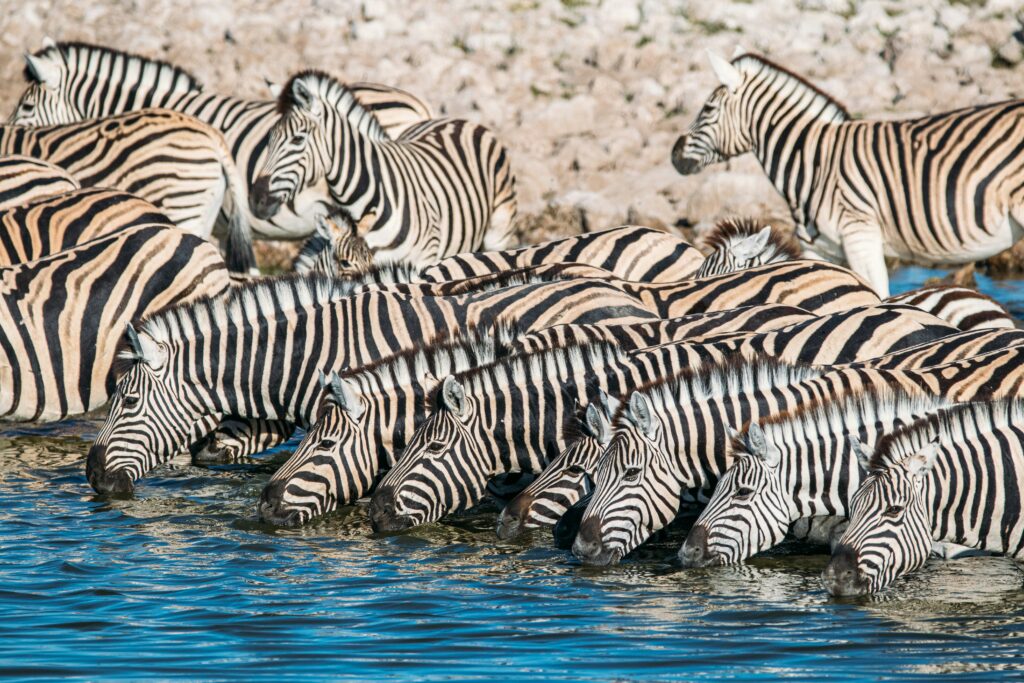
Masai Mara vs Uganda’s Savannah Parks
Masai Mara vs Uganda is one of the most common forks in East African trip planning, and it’s rarely a simple choice between good and better. Kenya’s Masai Mara delivers the wildlife density that safari brochures promise — lion prides draped over termite mounds, wildebeest columns stretching to the horizon. Uganda’s savannah parks offer something quieter and more varied, at roughly a third of the entry cost.
Neither wins outright. This guide compares the Mara against Uganda’s Queen Elizabeth and Kidepo Valley national parks across the things that actually change a trip: wildlife density, crowding, cost, and what a typical day looks like on the ground.
Masai Mara vs Uganda: Wildlife Density Is Where the Difference Is Starkest
The Masai Mara National Reserve packs an extraordinary concentration of animals into 1,510 square kilometres of open grassland. Lion, elephant, leopard and buffalo sightings are close to guaranteed on any three-day visit, and between July and October the reserve hosts part of the wildebeest migration — roughly 1.3 million wildebeest and zebra crossing the Mara River from Tanzania’s Serengeti.
Rhino is the exception. The Mara holds perhaps 35–50 black rhino, concentrated in the Mara Triangle and genuinely difficult to find; travellers who want a reliable rhino sighting do better at Kenya’s Lake Nakuru or Ol Pejeta. Everything else, though, the Mara delivers in volume that few other savannah parks can match.
This is the park for a first safari built around raw numbers — someone who wants to see predators working, not merely exist in the same park as them. It suits travellers who can accept crowds and a higher price tag as the cost of that density.
Queen Elizabeth Trades Density for Range as Uganda’s Savannah Answer to the Mara
Masai Mara vs Uganda’s Savannah Parks
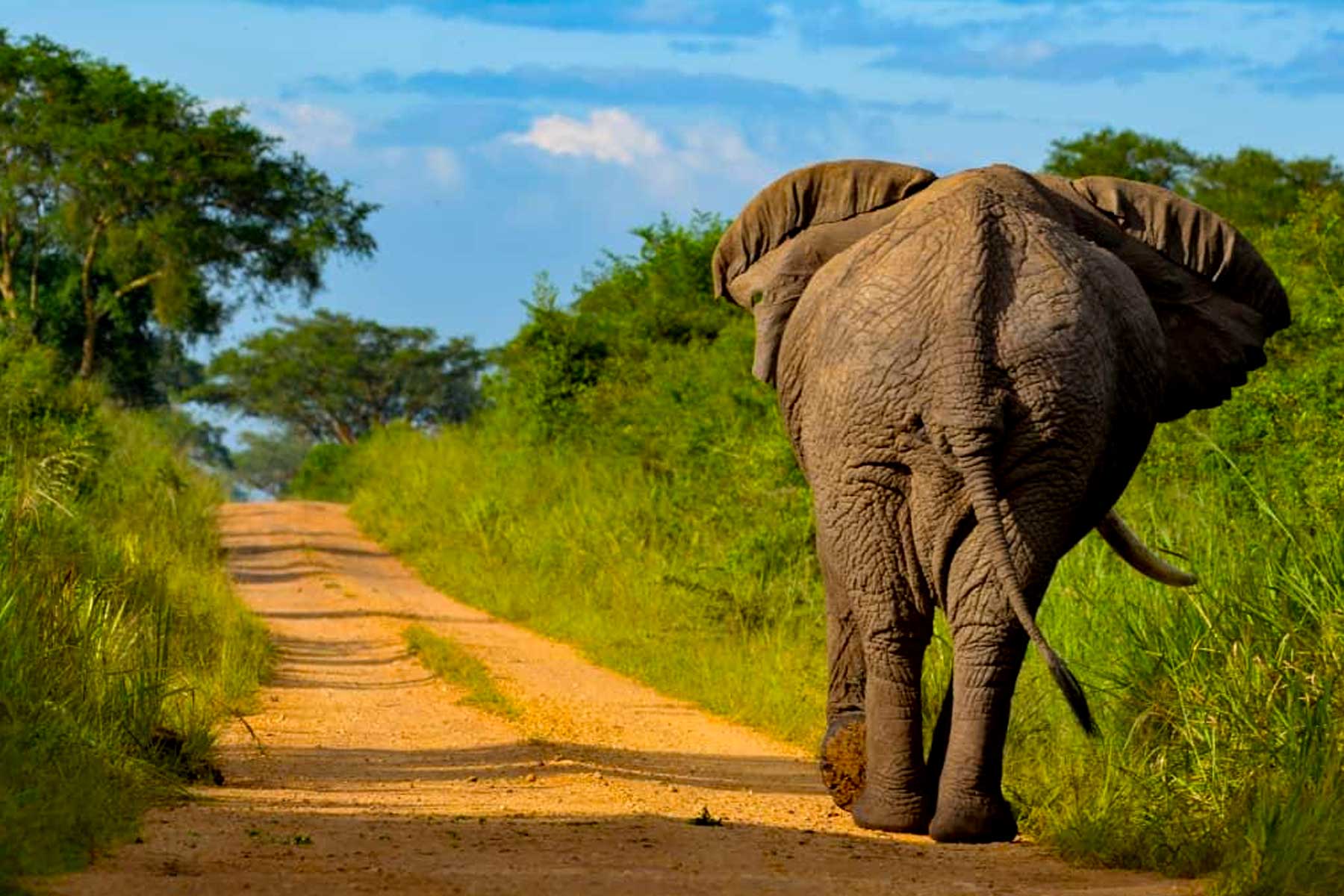
Queen Elizabeth National Park covers roughly 1,978 square kilometres of western Uganda, stretching from the Rwenzori foothills to Lakes Edward and George. Wildlife numbers don’t compare with the Mara — this isn’t the park for wall-to-wall herds — but the range of habitat and species is considerably wider.
Within a single 24-hour stretch, a visitor can track chimpanzees through Kyambura Gorge’s forest, cruise the Kazinga Channel past hundreds of hippos and Nile crocodiles, and watch the tree-climbing lions of Ishasha drape themselves across fig branches, a behaviour recorded in only a handful of places on Earth. Add over 620 recorded bird species and Uganda kob herds thousands strong on the Kasenyi Plains, and the park earns its reputation as Uganda’s most complete single destination.
What it doesn’t offer is the migration spectacle or the guaranteed big-cat density of the Mara. Lion numbers in Queen Elizabeth have declined in recent years due to poaching and human-wildlife conflict around the park’s edges, so sightings, while real, take patience. Travellers seeking variety over volume, and a quieter park in general, tend to prefer this trade.
Crowding Is the Quiet Deciding Factor in the Masai Mara vs Uganda Debate
At a popular Mara sighting — a mating pair of lions, a leopard resting in a sausage tree — fifteen to twenty vehicles is normal. At a river crossing during peak migration season, that figure climbs to forty or fifty. Private conservancies bordering the reserve cap vehicle numbers and allow off-road driving and night drives, but they add a separate conservancy fee, typically $110–$130 per person per night.
Uganda’s savannah parks sit at the opposite extreme. Queen Elizabeth sees meaningfully fewer vehicles per sighting, and Kidepo Valley, tucked into Uganda’s remote northeastern corner near the South Sudan border, is close to empty by comparison. This solitude is genuine, not marketing language, and it’s the strongest argument Uganda’s savannah parks make against the Mara.
The honest trade-off: fewer vehicles around you also means fewer eyes spotting wildlife, and a guide working alone rather than radioing a sighting from three other vehicles nearby. Solitude and density pull in opposite directions, and no park offers both at once.
Comparing Masai Mara and Uganda Savannah Park Costs
The Mara’s park entry fee for foreign non-residents runs $100 per person, per day, from January to June, rising to $200 from July through December — precisely the months most travellers want to visit for the migration. The ticket covers twelve hours only, from 6am to 6pm, so consecutive days of game viewing mean paying again each morning.
Queen Elizabeth charges a flat $40 per person, per 24-hour period, regardless of season, alongside separate activity fees for chimp tracking or the Kazinga Channel cruise. Across a comparable week-long trip, the Mara’s entry fees alone can run two to four times higher than Uganda’s, before accommodation or transport enter the calculation at all.
For travellers building a Uganda itinerary, we’ve broken down exactly where the rest of the budget goes in our full Uganda safari cost guide. The short version here: Uganda’s savannah parks are meaningfully cheaper to visit, migration season or not.
Kidepo Valley: Uganda’s Answer to the Mara’s Scale, Without the Crowds
For travellers drawn to the Mara’s wide-open plains rather than its crowds, Kidepo Valley National Park is Uganda’s closest match. Its 1,442 square kilometres of savannah, framed by the Morungole and Napore mountain ranges, hold cheetah, lion and over 77 mammal species in landscapes that feel genuinely untouched.
The honest limitation is access. Kidepo sits roughly 700 kilometres from Kampala, a full day’s drive or a charter flight, and the park has only two lodges plus a government rest camp. Wildlife sightings, while rewarding, are less predictable than in a well-stocked park like the Mara — some visitors report quiet days with limited big-cat activity. This is a park for travellers with time, an appetite for remoteness, and realistic expectations about what a low-traffic park can and can’t guarantee.
Choosing Between Masai Mara and Uganda’s Savannah Parks
The decision comes down to what you’re optimising for. Travellers who want the highest possible density of predators, the migration spectacle, and don’t mind crowds or the steeper entry fee should choose the Masai Mara — nothing in Uganda replicates that specific experience. Travellers who want habitat diversity, tree-climbing lions, a quieter park, and a lower daily cost, especially if pairing the trip with gorilla trekking in Bwindi, are usually better served by Queen Elizabeth or, for the truly adventurous, Kidepo.
Neither choice is a compromise once you know what each park is actually offering. At Terenga Safaris, we build itineraries around this exact trade-off — helping travellers weigh Uganda’s savannah parks against a Mara add-on rather than defaulting to whichever destination is better marketed.