Gorilla Permit Discounts.
August 8, 2026
Masai Mara vs Uganda’s Savannah Parks.
August 8, 2026
Uganda Safari Cost Breakdown: Where Your Money Goes
Uganda safari cost quotes swing wildly — $150 a day on one website, $1,200 a day on another — and neither number means much until you know what it includes. The gap isn’t marketing spin. It reflects five genuinely different line items that stack up in very different ways depending on how you travel.
Permits, park fees, transport, accommodation and meals each behave differently: some are fixed by government tariff, some scale with group size, and some are almost entirely up to you. This piece walks through where the money actually goes, line by line, so a quote makes sense before you sign off on it.
Gorilla and Chimpanzee Permits Set the Floor of Your Uganda Safari Cost
Uganda Safari Cost Breakdown: Where Your Money Goes
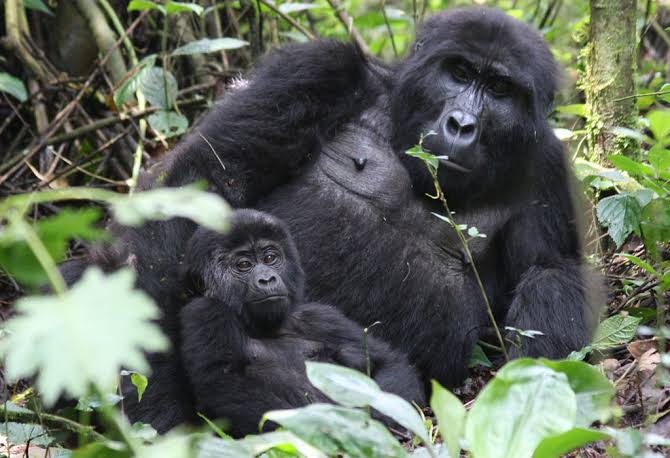
For most travellers, the single biggest line item arrives before anything else gets booked. A standard gorilla trekking permit costs $800 for a foreign non-resident, set directly by the Uganda Wildlife Authority (UWA) and non-negotiable regardless of which operator you use. Chimpanzee tracking permits run considerably lower, at $250 per person, which is why several operators pair Kibale chimp tracking with a Queen Elizabeth game drive for travellers stretching a tighter budget.
These fees aren’t padding — they fund ranger patrols, anti-poaching work and the habituation process that makes a safe encounter possible at all. Residency and citizenship status change the price substantially, and travelling in April, May or November can lower it further; we’ve covered those categories in detail in a separate guide to gorilla permit discounts.
The honest limitation: permits sell out, particularly in July, August and December, so this is the one cost you can’t leave until the last minute. Anyone planning a gorilla trek should treat the permit as the first booking, not the last.
Park Entry Fees Add a Daily Uganda Safari Cost You Can Easily Miss
Separate from any permit, UWA charges a standard park entry fee at every gate. Most Category A parks — Queen Elizabeth, Bwindi, Kidepo Valley, Kibale, Mgahinga and Lake Mburo — charge foreign non-residents around $40 per person, per 24 hours. Murchison Falls sits in its own higher bracket at roughly $45, reflecting its size and the extra infrastructure UWA maintains there.
This fee buys access, not activities. A game drive costs an additional $30 by day or $40 at night, and a launch cruise on the Kazinga Channel or the Victoria Nile adds around $30 more. Over a seven-day itinerary across two or three parks, entry fees alone can add $250–$350 per person — money that rarely appears on the headline price of a package.
Ask any operator whether their quote includes park fees as a line item or folds them into a daily rate. The answer changes what the number in front of you actually represents.
Private Transport Is a Fixed Uganda Safari Cost That Rewards Larger Groups
Uganda’s parks sit far apart — Kampala to Bwindi is an eight- to nine-hour drive — so a private 4×4 with a driver-guide is less a luxury than a practical necessity for most itineraries. Expect to pay $150–$250 per day for the vehicle, fuel and driver combined, largely independent of how many people are in the car.
That fixed structure is where group travel pays off. Two travellers splitting a $200 daily vehicle cost pay $100 each; a group of five pays $40 each for the identical vehicle and guide. Domestic flights between parks exist as an alternative, typically $250–$400 one way on scheduled bush planes, and they save a full day of driving on longer routes such as Entebbe to Kidepo.
The trade-off with flying is obvious: you lose the roadside sightings — a market town, a tea plantation, a herd of Ankole cattle crossing the road — that make the drive itself part of the safari for many travellers.
Accommodation Is Where Budget, Mid-Range and Luxury Uganda Safari Costs Diverge Most
Lodging moves the total more than any other single choice. Budget lodges and community camps near the park gates run $80–$150 per night, usually with solar power, simple en-suite rooms and limited Wi-Fi. Mid-range tented camps and lodges sit at $200–$400, typically with a pool, reliable power and a view worth the extra cost. Luxury lodges start around $400 and climb past $800, often positioned inside the park itself rather than at its edge.
The difference isn’t only comfort. A budget lodge fifteen minutes further from the park gate can mean an extra forty minutes of driving before every game drive or trek, which matters on the 5am gorilla trekking mornings. Mixing tiers works well in practice — many travellers upgrade for the gorilla trekking base, where an early, well-rested start matters most, and stay budget or mid-range everywhere else.
Meals, Tips and Incidentals Quietly Add to Your Uganda Safari Cost
Most lodges and camps quote full board, so breakfast, lunch and dinner are usually already inside the nightly rate. Drinks are the exception: sodas, beer and wine are billed separately almost everywhere, and a week of evening drinks can add $50–$100 to the trip without anyone tracking it closely.
Tipping isn’t legally required but is a firm cultural expectation. Guides and drivers typically receive $10–$20 per day from the group, porters on the gorilla trek $15–$30 plus a tip, and lodge staff a smaller daily amount left in a communal box. None of this appears on any invoice, so it’s worth setting aside as a separate cash buffer — roughly 10% of the total trip cost is a reasonable working figure.
What a Full Day Actually Costs, Tier by Tier
Put the line items together and three realistic daily bands emerge, excluding permits, flights and visas. A budget day — shared or self-drive transport, basic lodging, simple meals — lands around $150–$250 per person. A mid-range day, where most travellers ultimately settle, runs $350–$550 and includes a private vehicle, a comfortable tented camp and full board. A luxury day, with premium lodges and the smoothest logistics, reaches $550–$1,200 or more.
None of these bands include the permit itself, which sits outside the daily rate as a one-off cost regardless of tier. A seven-day mid-range trip with one gorilla trek, in other words, isn’t $350–$550 multiplied by seven — it’s that total plus the $800 permit, added once.
Building Your Own Uganda Safari Cost Estimate
The formula that actually works is simple: total cost equals your daily rate multiplied by the number of days, plus one-off permits, plus flights and visas, plus a tipping buffer of roughly 10%. Everything in this piece is a component of that sum, not a separate mystery fee.
Get the daily rate right for the way you actually want to travel, and the rest of the budget follows logically rather than by guesswork. At Terenga Safaris, we build each quote as an itemised breakdown rather than a single bundled number, so you can see exactly which of these categories you’re paying for before you commit to a date.