How difficult is gorilla trekking?
July 27, 2026
What Birds Can I See in East Africa?
July 27, 2026
Uganda Safari vs South Africa Safari
Choosing between a Uganda safari and a South Africa safari is one of the more pleasant dilemmas a traveller can face — and also one of the most confusing. Both countries are sold under the same word, “safari,” yet they sit at opposite ends of the African wildlife spectrum.
I’ve spent years guiding clients through both, and the question I hear most often — usually somewhere over a sundowner — is simple: which one is actually right for me? This comparison answers that honestly, without pretending one country beats the other on every count.
Two Different Ideas of “Safari”
The trouble with comparing them side by side is that they were never designed to be interchangeable.
- Uganda’s safari identity was built around dense, tangled rainforest and a single extraordinary animal — the mountain gorilla — alongside open savannah parks that feel refreshingly uncrowded.
- South Africa’s safari identity was built around the Big Five, open road networks, and a private lodge industry so polished it has become the global benchmark for luxury game viewing.
Neither approach is superior — they simply reward different travellers. A first-timer chasing a lion sighting from a plunge pool has different priorities to someone who has already ticked off the Big Five and wants a forest encounter with an endangered primate. Understanding that distinction early saves a lot of second-guessing later.
What a Uganda Safari Actually Feels Like
Step off a bush plane at Kihihi and the air itself tells you something has changed. Bwindi Impenetrable Forest rises around you in tangled green walls, and the birdsong is layered rather than singular — dozens of calls overlapping at once. This is the heart of a Uganda safari: dense montane forest, volcanic peaks on the Rwandan and Congolese border, and wildlife that requires effort rather than a scheduled drive-by.
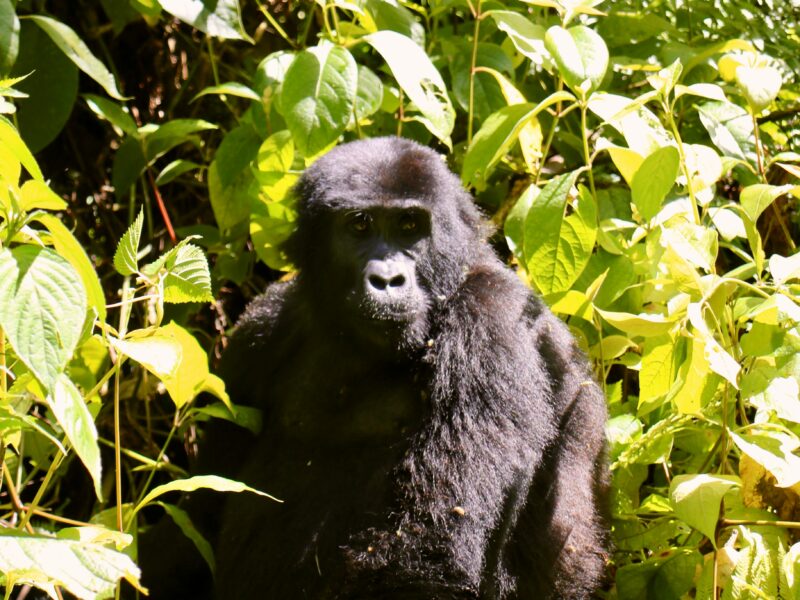
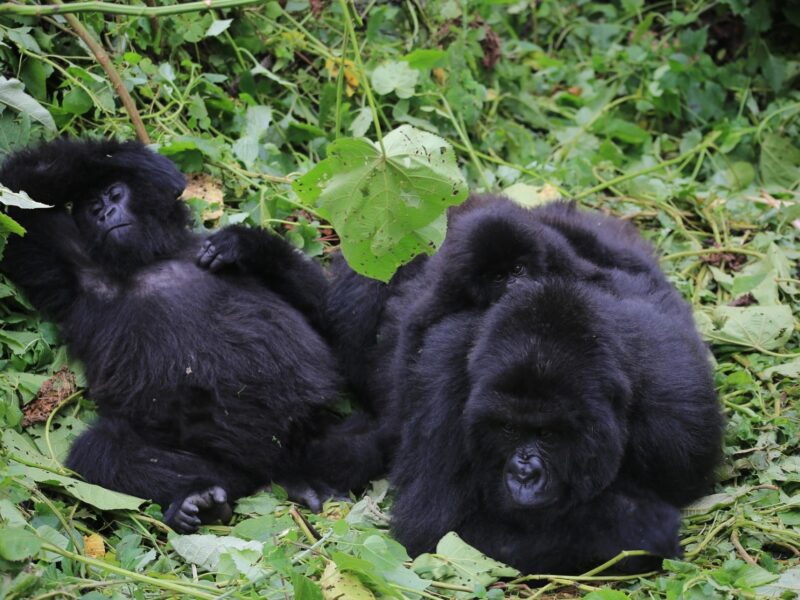
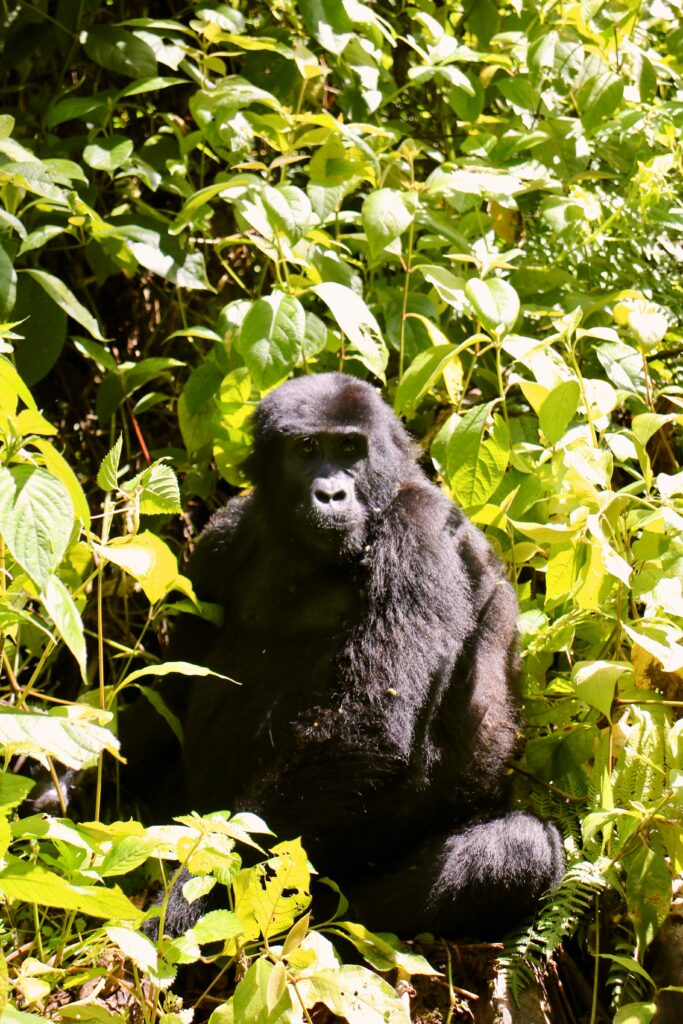
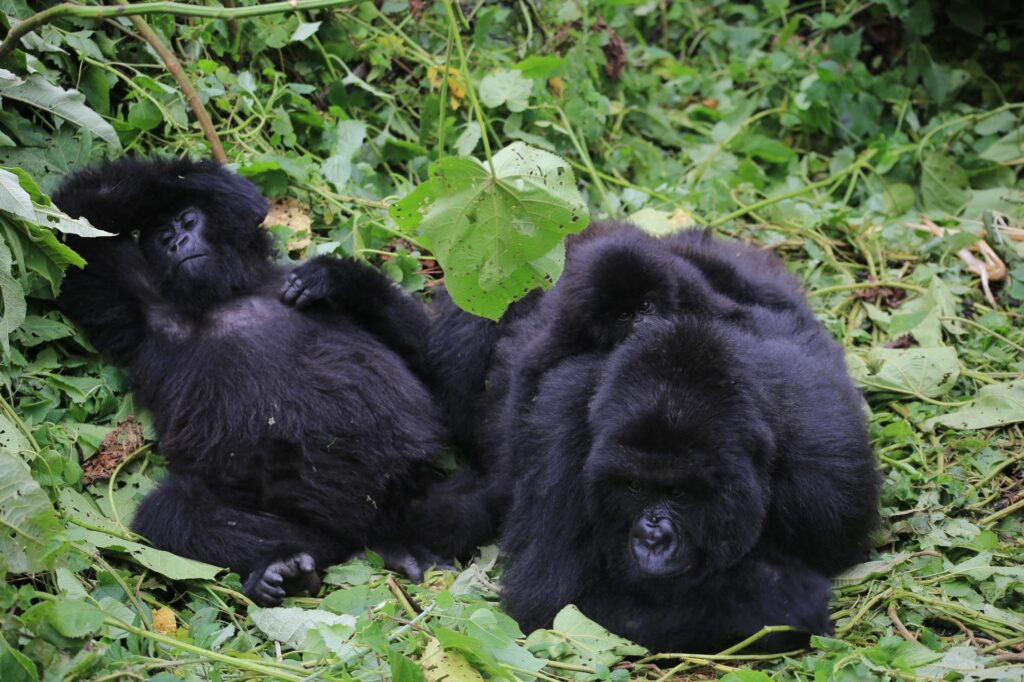
Gorilla trekking is the centrepiece, and it’s worth being honest about what it demands. Trackers locate a habituated gorilla family the same morning you set out, and you then follow rangers through steep, often muddy terrain — anywhere from one to six hours, depending on where the group has moved overnight. There’s no guarantee of an easy walk. What you are guaranteed, once you find them, is a single hour with a family group going about entirely unbothered business: juveniles wrestling, a silverback dozing against a fig tree, nothing performed for an audience.
That hour carries a fixed cost:
- A standard gorilla permit for foreign non-residents runs to USD 800 (as of 2026), covering park entry, ranger and tracker fees, and armed escort.
- Daily permits are capped, so trips built around gorilla trekking need to be booked months ahead — especially in the June–September and December–February peak windows.
Beyond Bwindi, Uganda’s safari appeal broadens considerably:
- Queen Elizabeth National Park — tree-climbing lions and boat cruises thick with hippos
- Murchison Falls — game drives beside the Nile
- Kibale Forest — chimpanzee tracking, at a fraction of the gorilla permit price
Who it suits: travellers who are reasonably fit, comfortable with unpredictable terrain, and drawn to primates and forest ecosystems over open-plain game drives alone — people who want a trip that feels earned. It doesn’t suit anyone hoping for five-star infrastructure at every stop, or a traveller unwilling to accept that a day’s trek might be physically demanding.
What a South Africa Safari Actually Feels Like
Drive out of Skukuza gate at first light and the contrast with Uganda is immediate. Kruger National Park‘s tar roads mean you can cover long distances comfortably in a rented sedan, stopping wherever a sighting appears, with no ranger dictating your pace. This self-directed freedom is the signature of a South Africa safari — rare elsewhere on the continent, since most East African parks require a licensed guide by law.
- Kruger’s international day fee sits around USD 25–30 — a fraction of an East African park fee.
- A week of self-drive camping with SANParks rest camps can be managed for roughly USD 500–800 per person, once fuel and basic chalet costs are included.
That affordability is one of the strongest arguments for a South Africa safari, particularly for families or independent travellers who still want a genuine Big Five chance on a tighter budget.
The trade-off sits at the top end of the market. Private reserves bordering Kruger — Sabi Sands, Timbavati, Manyeleti — operate outside the self-drive tar-road system entirely, with off-road tracking rights and open vehicles that deliver leopard and rhino sightings East African parks simply can’t match for consistency.
- Rates at these lodges climb from around USD 250/night at more modest camps to well over USD 1,500 at the best-known properties.
- That typically buys two guided drives a day, all meals, and a genuine chance at all five iconic species within 48 hours.
A South Africa safari also pairs unusually well with a city extension — Cape Town, the Winelands, and the Garden Route all sit within easy reach, so a two-week trip can combine wildlife with wine, beaches, and history in a way Uganda’s more compact geography doesn’t naturally allow.
Who it suits: first-time safari travellers wanting reliable Big Five sightings without physical exertion, families who value road infrastructure and flexible timing, and anyone keen to combine wildlife with a broader holiday — people prioritising comfort and predictability over forest immersion.
Cost, Fairly Compared
At the luxury end, the two countries converge — a week at a top Sabi Sands lodge and a week combining Bwindi gorillas with a Queen Elizabeth extension can land in a similar bracket once permits, transfers, and premium accommodation are factored in. Budget travellers gravitate towards South Africa’s self-drive model; those willing to pay for a single, unrepeatable primate encounter gravitate towards Uganda.
Difficulty and Accessibility
This is where the two experiences diverge most sharply.
- A South Africa safari, particularly a self-drive Kruger itinerary, asks very little of the traveller physically. Tar roads, marked routes, and rest camps with proper infrastructure mean visitors of almost any fitness level and age can manage it comfortably.
- A Uganda safari asks considerably more. Gorilla trekking involves genuine hiking at altitude, on uneven and frequently wet ground, and there’s no way to know in advance whether the day will involve a gentle 30-minute walk or a demanding five-hour climb.
Anyone with significant mobility limitations should discuss this honestly with an operator before booking, since alternative viewing options are limited. This isn’t a reason to avoid Uganda — most reasonably fit adults manage it without difficulty — but it deserves honest discussion rather than being glossed over.
So, Which Should You Choose?
- If comfort, predictability, and Big Five variety matter most, a South Africa safari will likely satisfy you more completely, and remains the gentler introduction for a first African trip.
- If you’re drawn to something rarer — a face-to-face hour with mountain gorillas, dense rainforest, and a wilder, less manicured feel — a Uganda safari rewards the extra effort and expense with an experience South Africa cannot replicate.
Many seasoned travellers eventually do both, treating them as complementary trips rather than a single either-or decision. A Uganda safari focused on primates, followed on a later visit by a Kruger extension, covers ground that neither country manages alone.
Frequently Asked Questions
Is a Uganda safari more expensive than a South Africa safari? It depends on the itinerary. Gorilla permits push Uganda’s cost up sharply for that specific activity, but outside gorilla trekking, Uganda’s parks and lodges are often more affordable than South Africa’s private reserves.
Which country has better Big Five sightings? South Africa, and Kruger in particular, offers more consistent Big Five viewing thanks to dense wildlife concentrations and skilled private-reserve tracking. Uganda has all five species, but sightings — particularly of rhino — are more localised.
Can I self-drive in Uganda the way I can in South Africa? Not really. Uganda’s park roads and terrain are far less developed, and gorilla trekking requires a licensed ranger by law, so a guided vehicle or trek leader is standard practice.
Is gorilla trekking physically difficult? It can be. Terrain and duration depend entirely on where the gorilla family has moved that morning, and treks can range from a short stroll to several demanding hours uphill.
Can I combine a Uganda safari and a South Africa safari in one trip? Yes, though flight connections mean most travellers treat them as two separate journeys rather than one seamless itinerary. Many operators, including Terenga Safaris, can sequence both into one longer African journey if time allows.
Making the Decision
There’s no universally correct answer between a Uganda safari and a South Africa safari — only the right answer for your fitness, budget, and sense of adventure. Travellers who value comfort and Big Five certainty tend to leave South Africa satisfied; those chasing something rarer tend to find that a Uganda safari earns its cost through the sheer novelty of the encounter. Terenga Safaris can help shape either journey — or both — around the traveller you actually are, rather than the one a brochure imagines.