Where Can I See Tree-Climbing Lions?
July 9, 2026
Which Country Is Best for Gorilla Trekking: Uganda or Rwanda?
July 9, 2026
Uganda Safari Costs Explained: What You’ll Really Pay in 2026 (Including the Fees Nobody Warns You About)
Game drive
Uganda safari costs have a reputation for being opaque, and it is a reputation that is at least partly deserved. The headline prices on most tour websites — the park fees, the gorilla permit, the lodge rate — tell only part of the story. The rest arrives in smaller instalments: conservation levies charged at the gate, ranger escort fees for a waterfall walk you didn’t know you were paying for, a government tourism development tax on your accommodation bill, a tipping culture that is both genuine and, if you’re unprepared, quietly stressful. None of this should put you off. Uganda remains, for what it actually delivers, one of the most competitively priced safari destinations in Africa. But going in with accurate expectations makes the difference between a journey that feels like extraordinary value and one that feels like a series of unexpected surprises.
This article breaks down Uganda safari costs honestly and in full — not to alarm, but to help you plan properly. We will cover the fixed costs, the variable ones, the ones that depend on season and group size, and the ones that are optional in name but rarely optional in practice. By the end, you should have a clear enough picture to build a realistic budget for the trip you actually want.
The Uganda Safari Costs Everyone Expects
The most predictable line items in any Uganda safari budget are international flights, park entrance fees, accommodation, and transport within the country. These are the numbers that appear on tour operator websites, and they are generally accurate as far as they go.
International flights from Europe to Entebbe typically range from £700 to £1,400 return depending on the season, airline, and how far in advance you book. The shoulder months — May and November — often offer the best prices, but they coincide with Uganda’s wetter periods, which affects road conditions and sometimes the general comfort of the trip. The trade-off is a personal calculation rather than a universal answer.
National park fees in Uganda are set by the Uganda Wildlife Authority and are structured per person per 24-hour period. Murchison Falls National Park charges $40 for non-residents. Queen Elizabeth National Park is the same. Kibale Forest National Park charges $40 for entry, but chimpanzee tracking — the main reason most people visit — costs an additional $200 on top of that. These fees are non-negotiable and payable at the gate, typically in US dollars.
Accommodation is where costs diverge most sharply. A mid-range lodge in the vicinity of Queen Elizabeth or Murchison will typically cost between $150 and $350 per person per night, inclusive of meals. At the budget end, bandas and camping sites within national parks can bring that figure below $50 per night, though the experience is significantly more basic. Luxury tented camps — the kind with solar-heated showers, three-course dinners and pre-dawn wake-up calls for game drives — start around $400 and rise from there, occasionally considerably.
Gorilla Permits: The Biggest Single Uganda Safari Cost
If you are visiting Uganda specifically to trek mountain gorillas in Bwindi Impenetrable Forest, the gorilla permit is the defining cost of your entire trip. At $800 per person, it is not cheap by any measure, and it needs to be said plainly. It is also, for most people who do it, the single most powerful wildlife experience of their lives, which is why the vast majority come away feeling the cost was justified rather than excessive.
The $800 fee is set by the Uganda Wildlife Authority and covers the permit itself, the mandatory ranger guide, and the one-hour encounter with a habituated gorilla group. What it does not cover is transport to Bwindi — which sits in the far south-western corner of the country, six to eight hours from Kampala by road, or a short charter flight from Entebbe — your accommodation in the area, or any tips for the trackers and porters who assist with the trek. Those are separate costs, and they add up.
A porter for the trek costs approximately $15 to $20 and is optional but practically advisable, particularly on the longer, steeper gorilla sectors such as Rushaga or Nkuringo. The terrain in Bwindi is serious: forest-covered slopes with no clear path, mud underfoot in almost every season, and elevation changes that leave even reasonably fit travellers breathing hard. Most people who decline a porter on principle change their view halfway up the first hill.
Permits should be booked well in advance — a minimum of three to six months for peak season travel between June and September, and ideally similar lead times in December and January. Availability is genuinely limited, particularly for the most popular gorilla families, and the frustration of arriving in Uganda without a permit is well documented among travellers who left booking too late.
The Hidden Fees in Uganda Safari Costs That Catch Travellers Off Guard
This is the part of the Uganda safari cost conversation that most booking websites gloss over, so it is worth being specific. Uganda has a Tourism Development Levy — currently set at three per cent — applied to accommodation bills at most lodges and camps. It is not large, but it is rarely mentioned in advance. Some properties also add a service charge of between five and ten per cent, which exists separately from the levy and from any tips you choose to leave for staff.
Community development fees are collected at several popular sites outside the national parks. A walk to Sezibwa Falls, a visit to a Batwa community near Bwindi, or a guided trail through a forest reserve will typically carry an entrance or activity fee in the range of $5 to $20 per person. These fees support community projects and conservation initiatives, and most travellers are happy to pay them once they understand the purpose — but encountering them unannounced outside the gate of an attraction you thought was covered by your park fees can feel frustrating without prior context.
Ranger escort fees operate similarly. In some parks and reserves, rangers are required to accompany visitors on walks beyond the vehicle circuit — for safety, conservation and legal reasons — and a nominal escort fee of $10 to $30 is charged for this service. At Ziwa Rhino Sanctuary, where Uganda’s only white rhinos can be tracked on foot, the tracking fee is around $40 and entirely separate from any accommodation or guided game drive costs on the sanctuary.
Then there is the question of activity add-ons. Most mid-range and luxury Uganda itineraries include standard game drives, but guided chimp tracking in Kibale, boat cruises on the Kazinga Channel, boat safaris to the base of Murchison Falls, and nature walks in the Kigezi highland forests are typically priced individually, sometimes as extras within a lodge’s daily rate and sometimes as genuinely separate bookings. When you are budgeting a Uganda safari, treating every notable activity as a potential additional cost until explicitly told otherwise is a safer approach than assuming inclusion.
Getting Around: Why Transport Is a Major Uganda Safari Cost
Uganda is not a large country — roughly the size of the United Kingdom — but the distances between its main safari destinations are substantial in terms of travel time. Murchison Falls is four to five hours from Kampala on a good day. Bwindi is six to eight. Kidepo Valley, Uganda’s most northerly and arguably most dramatic national park, is nine to ten hours from the capital, on roads that range from good tarmac to corrugated murram track.
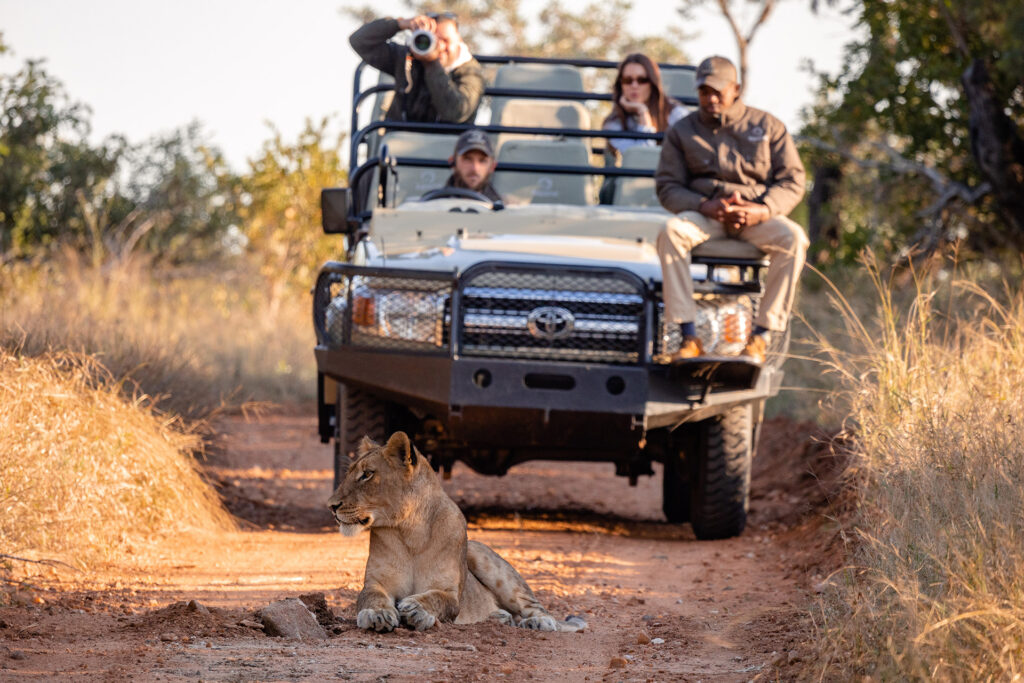
A private vehicle and driver-guide is the standard mode of transport for most Uganda safari visitors, and the cost is one of the more significant line items in the overall budget. A self-contained safari vehicle — typically a 4WD Land Cruiser with a pop-up roof for game viewing — with a professional driver-guide costs between $200 and $350 per day depending on the company, the vehicle specification, and the itinerary. Fuel and park vehicle fees are often charged on top of the daily rate, which can add $50 to $100 per day depending on how far you travel and which parks you enter.
Charter flights exist between Entebbe, Murchison Falls, Kihihi (the airstrip serving Bwindi), and a handful of other destinations, and they dramatically reduce travel time at a proportionally higher cost. A return flight from Entebbe to Kihihi with one of the scheduled light aircraft companies typically costs between $400 and $600 per person. For travellers with limited time, the cost is often justified. For those on tighter budgets, the road journey — particularly to Bwindi through the Kigezi highlands — is genuinely scenic and not the trial it might sound.
Self-drive is technically possible in Uganda and increasingly popular with experienced travellers, but it requires a robust 4WD, good navigation skills, and a comfort level with roads that vary considerably in quality. It reduces per-day transport costs significantly but removes the benefit of a knowledgeable guide who knows where the wildlife concentrates, understands the park systems, and can handle the occasional logistical complication that arises in rural East Africa.
Tipping on a Uganda Safari: What to Budget and Who to Tip
Tipping is not a formal cost in any itinerary, but leaving it out of a budget conversation about Uganda safari costs would be misleading. In Uganda’s safari industry, as across much of East Africa, tipping is an important supplement to the wages of the people who make your trip work. It is not mandatory and it should never feel like a shakedown, but it is genuinely expected and genuinely meaningful.
For a driver-guide, a broadly accepted range is $15 to $25 per day for a solo traveller or couple, rising slightly for larger groups. Gorilla tracking rangers and trackers are typically tipped at the end of the trek — $10 to $15 per ranger is a common benchmark, though some travellers choose to give more, particularly after a long or demanding trek. Lodge and camp staff are often tipped collectively through a box at reception, with $5 to $10 per person per night being a reasonable contribution.
Porters at Bwindi, as mentioned, are hired at a fixed rate but tipping an additional $5 to $10 at the end of the trek is customary and expected. In total, budgeting $15 to $30 per person per day in tips across the full length of a Uganda safari gives a reliable working figure, adjustable upward for exceptional service or particularly demanding multi-day activities.
How Seasonality Affects Uganda Safari Costs
Uganda does not have a single peak season in the way Kenya’s Great Migration creates one, but pricing still varies throughout the year in ways that are worth understanding before you book. The two dry seasons — June to August and December to February — are the most popular and carry peak pricing at most lodges and camps. The wet seasons — March to May and October to November — bring reduced rates, fewer visitors, and conditions that require a slightly different outlook.
In the wet season, Uganda’s national parks do not close. Game viewing in Murchison and Queen Elizabeth continues, though some tracks become impassable after heavy rain and game drives can feel more exploratory than productive. Gorilla trekking in Bwindi continues year-round, but wet season treks are longer, wetter and physically harder, as the gorillas tend to move higher and faster in search of food. A reduction in permit costs does not accompany this increased difficulty — the $800 fee is fixed regardless of month — which is one reason the dry season retains its appeal for first-time visitors.
Lodge rates during the low season can drop by twenty to forty per cent compared to peak season, which represents a meaningful saving on longer itineraries. Permit availability is also somewhat easier, particularly for smaller or less-sought-after gorilla families. Travellers who have previous Uganda experience and are comfortable with variable conditions often find the wet season the more rewarding time to travel — the vegetation is intensely green, the birding is at its best, and the absence of crowds in what is already an uncrowded country produces a quality of solitude that feels extraordinary.
What Uganda Safari Costs Look Like Across Budget Levels
Building a realistic daily cost estimate for a Uganda safari depends on combining fixed costs — park fees, permit, transport — with variable ones like accommodation and activities. The following is an honest breakdown by budget level, excluding international flights.
Budget travel: $150–$250 per person per day
Achievable through camping or budget lodge accommodation ($30–$60 per night), shared minibus transport between major towns, and a focus on parks where the primary activity is game drives rather than primate permits. Gorilla trekking on a budget is possible but requires careful planning around the $800 permit, which is the dominant cost at this tier. Total trip cost for ten days at this level, including a gorilla permit, typically sits between $3,500 and $4,500 per person excluding flights.
Mid-range: $300–$550 per person per day
This tier covers comfortable mid-range lodges with full board, a private 4WD vehicle and driver-guide, and the major permit-based activities: gorilla trekking, chimp tracking, and a Kazinga Channel boat cruise. It represents the experience most returning travellers describe when recommending Uganda, and it is the level at which the country’s value proposition becomes most compelling compared to comparable East African destinations. Ten days at mid-range typically totals $6,000 to $9,000 per person excluding flights.
Luxury: $700–$1,500+ per person per day
Uganda’s luxury tier has improved significantly in recent years. Properties like Buhoma Lodge and Gorilla Forest Camp at Bwindi, or Paraa Safari Lodge at Murchison, offer genuine comfort in remote settings. At this level, most activities are included, charter flights replace road transfers, and the experience is designed around convenience and exclusivity. Ten days at the upper end of this tier can reach $12,000 to $18,000 per person excluding international airfare, making it competitive with — though still generally below — equivalent-tier Kenya camps during peak season.
Getting Real Value From Your Uganda Safari Budget
Value on a Uganda safari is not primarily about finding the cheapest option. It is about ensuring that the money you spend goes towards experiences that are genuinely worth having, and that you are not paying for inclusions you won’t use or missing the things that make the country extraordinary.
Gorilla trekking is non-negotiable if you are visiting Uganda for the first time. No other experience in the country — or arguably in Africa — compares, and cutting it from the budget to save $800 is a decision almost every traveller who has done it would strongly advise against. The permit price is fixed and the experience is finite; the number of habituated gorilla groups is limited and the population cannot expand without limit. This is one area where the cost directly reflects the rarity and significance of what you are getting.
Chimp tracking in Kibale is significantly cheaper at $200 and often rated a close second among Uganda’s primate experiences. If you are choosing between the two on budget grounds, prioritise gorillas in Bwindi and, if itinerary and cost allow, add Kibale. If you must choose only one primate experience, choose gorillas without hesitation.
On the accommodation side, the mid-range tier generally represents Uganda’s best value. Budget options are available and usable, but some are poorly located — requiring long drives to park gates each morning — which costs time and fuel that partially offsets the accommodation saving. The best mid-range lodges tend to sit within or on the borders of national parks, meaning game drives begin from your doorstep rather than from a distant town, and the ambient wildlife experience extends beyond scheduled activities.
Planning Uganda Safari Costs: The Honest Bottom Line
Uganda safari costs, when broken down properly, are rarely as confusing as they first appear — but they do require honest accounting. The headline figures are just the beginning. Permits, transport, tips, levies and add-on activities all contribute to the real total, and the gap between the quoted package price and the final spend can be significant without prior awareness.
The more useful question is not what Uganda safari costs compared to some abstract ideal, but what it costs compared to what it delivers. For the experience of standing in a mountain forest, watching a gorilla silverback move through undergrowth that has existed unchanged for millennia, there is no comparison. For the combination of primates, savannah game, birdlife, and physical landscapes that shift from tropical forest to volcanic highlands to Nile floodplain within a single week’s travel, the pricing is genuinely strong.
Approaching the budget conversation honestly — accounting for everything before you book rather than discovering the extras on arrival — is what separates a trip that exceeds expectations from one that slightly disappoints despite delivering exactly what was promised. That distinction matters more in Uganda than almost anywhere, because the country rewards travellers who arrive prepared and leaves others wondering why the maths didn’t add up.
At Terenga Safaris, we build itineraries with full cost transparency from the first conversation — not because it makes for easy selling, but because travellers who understand what they are paying for make better decisions and have better trips. If you want to work through a realistic budget for a Uganda safari, we are happy to walk through it with you, without obligation and without the kind of selective pricing that leaves surprises at the end.