Uganda vs Rwanda for First-Time Gorilla Trekkers
August 5, 2026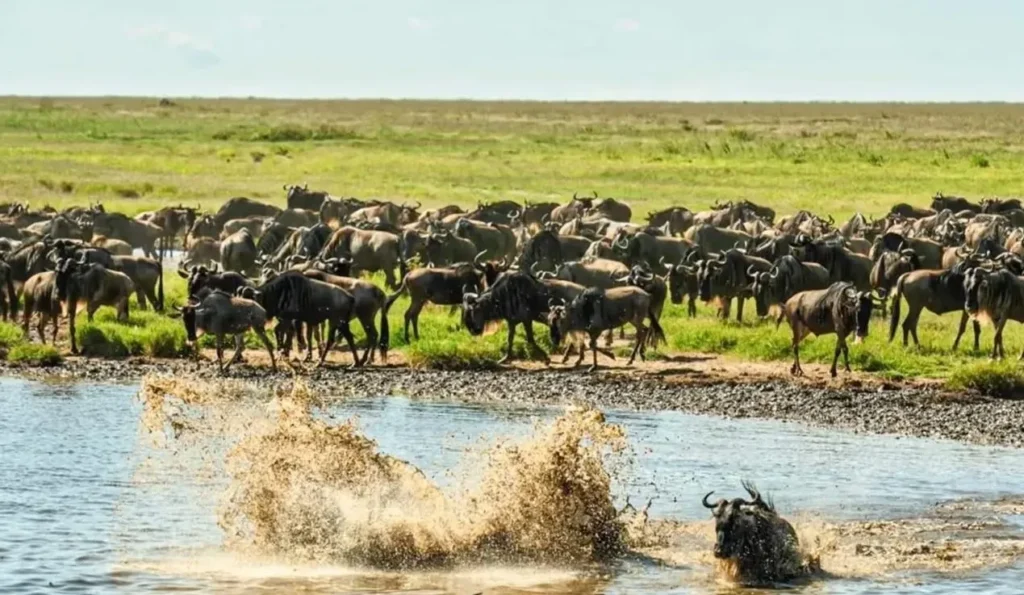
Serengeti vs Queen Elizabeth: Which Safari Is Right for You?
Ask ten safari veterans the Serengeti vs Queen Elizabeth question, and most will land on the same word: distance. The Serengeti sprawls across northern Tanzania in short grass and endless horizon. Queen Elizabeth National Park folds crater lakes, a busy channel and forest into a much smaller stretch of western Uganda. Both parks put you within metres of lions.
Only one puts the Great Migration in front of your vehicle. This guide sets Serengeti and Queen Elizabeth side by side on cost, wildlife, access and season. Use it to decide which safari earns your money and your time.
Getting There: Serengeti vs Queen Elizabeth by Road and Air
Serengeti vs Queen Elizabeth: Which Safari Is Right for You?
The Serengeti covers roughly 14,750 square kilometres of Tanzania’s northern circuit. That’s larger than Uganda’s entire national park network combined. Queen Elizabeth National Park covers about 1,978 square kilometres in the western rift valley. That gap in scale shapes almost everything else about a visit.
Reaching the Serengeti usually means flying from Arusha or Kilimanjaro International Airport into one of the park’s dirt airstrips. A road transfer from Arusha takes six to eight hours on rough tracks, and few visitors choose it twice. Reaching Queen Elizabeth usually means driving five to six hours from Kampala or Entebbe instead. The route passes terraced hills and roadside markets that feel like part of the trip, not a delay.
Neither route is effortless. The Serengeti’s flights add several hundred dollars to a trip, and they depend on weather and light-aircraft schedules. Queen Elizabeth’s transfer costs less but keeps you in the vehicle longer, which matters with young children or a tight schedule. Travellers who want the most wildlife per hour on the road tend to favour Uganda’s shorter drive. Those chasing sheer scale favour Tanzania’s flight.
Wildlife: Serengeti’s Migration vs Queen Elizabeth’s Kazinga Channel
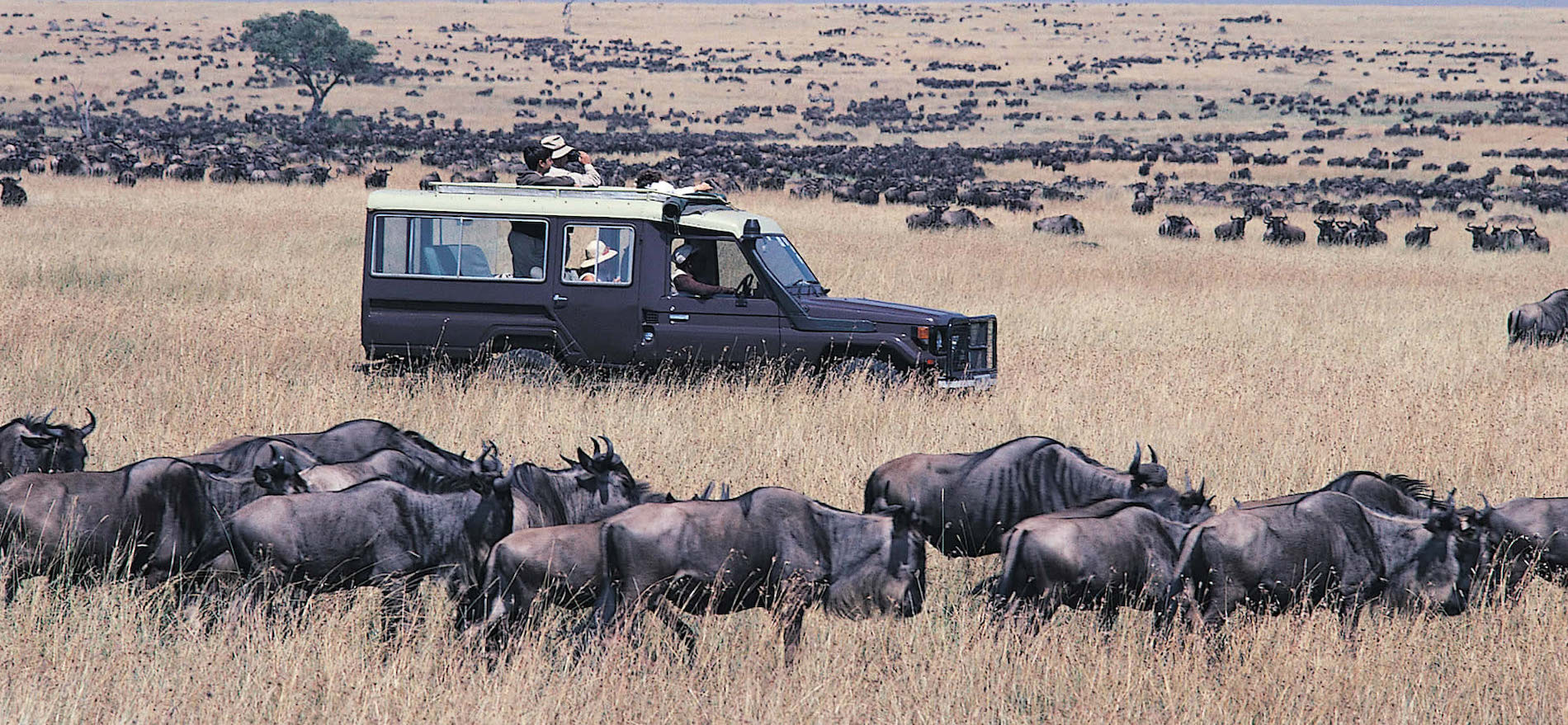
The Serengeti’s headline act is the wildebeest migration. Roughly 1.5 million wildebeest and several hundred thousand zebra move in a rough clockwise loop through the ecosystem each year. Time a visit around the Grumeti or Mara river crossings, between June and September, and you’ll watch predators pick off stragglers in real time. Miss the timing, and resident lion prides remain, but not the drama the park is famous for.
Queen Elizabeth doesn’t attempt a migration. It offers something narrower, and for many visitors just as memorable. The Kazinga Channel is a two-hour boat cruise past hippo pods and buffalo herds so dense that some afternoons feel less like wildlife viewing and more like a wildlife census. Further south, the Ishasha sector holds one of Africa’s few populations of tree-climbing lions, draped over fig branches through the heat of the day. Chimpanzee trekking in Kyambura Gorge adds a primate encounter the northern Tanzania circuit simply doesn’t have.
On predator density during migration season, the Serengeti wins outright. On variety packed into a single day, Queen Elizabeth often wins instead. Lions, elephants, hippos, chimpanzees and over 600 recorded bird species sit within a couple of hours’ drive of each other. Choosing between Serengeti and Queen Elizabeth on wildlife alone really comes down to scale versus range.
Cost and Access: What Serengeti and Queen Elizabeth Actually Cost
The Uganda Wildlife Authority sets Queen Elizabeth’s park entry fee at USD 40 per adult foreign non-resident, per 24 hours. Activities cost extra: USD 30 for the boat cruise, USD 100 for a chimpanzee permit in Kyambura Gorge. Tanzania’s park authority charges considerably more for the Serengeti. Foreign non-resident rates run between USD 70 and USD 83 per adult per 24 hours, depending on season, and lodges inside the park add concession fees of USD 50 to 71 per person, per night. Both authorities revise tariffs periodically, so confirm current figures with your operator before you commit to dates.
Add the flight into the Serengeti, and a week there routinely costs more per person than the same length of time in Queen Elizabeth. That gap narrows if you’re pairing the Serengeti with Ngorongoro Crater or Zanzibar, where shared transfers spread the cost. It widens if Queen Elizabeth is one stop on a Uganda circuit that also includes Bwindi’s gorilla trekking. Uganda’s shorter internal distances simply keep transport costs down.
Best Time for a Serengeti or Queen Elizabeth Safari
The Serengeti’s dry season, June to October, brings the river crossings and the clearest game viewing. It’s also when lodges fill fastest and prices peak. The calving season on the southern plains, January to March, offers dense predator action of a different kind. Newborn wildebeest draw in cheetah and hyena by the score.
Queen Elizabeth has two drier windows: December to February, and June to August. Roads firm up in these months, and the Ishasha lions are easier to spot in open branches rather than dense cover. The wetter months bring lower prices and greener scenery. Chimpanzee trekking gets muddier, though, and some back roads turn difficult after heavy rain.
Who Serengeti and Queen Elizabeth Each Suit
The Serengeti suits travellers building a Tanzania-focused trip who want the single biggest wildlife spectacle on the continent. It suits those who don’t mind paying for it, whether that means a flight-in safari or a longer overland route through the Ngorongoro Highlands. It particularly rewards photographers timing a visit around the crossings, and travellers who’ve already done a shorter, cheaper safari elsewhere.
Queen Elizabeth suits travellers already in Uganda, and families who want strong wildlife density without long transfers. It also suits anyone combining a safari with gorilla or chimpanzee trekking elsewhere in the country. It’s the more forgiving choice for a first safari or a shorter trip. It won’t give you the migration’s scale, and it isn’t trying to.
Making the Call: Serengeti vs Queen Elizabeth
There’s no wrong answer between Serengeti and Queen Elizabeth, only a wrong fit. If the migration itself is the reason you’re going on safari, book Tanzania and build the rest of the trip around the crossing dates. If you want maximum wildlife variety for the time and money you have, and Uganda already draws you for gorillas or chimps, Queen Elizabeth earns its place without needing to compete with the Serengeti at all.
We’ve built itineraries around both parks at Terenga Safaris. The honest answer we give most clients is the one above: it depends on what you came to see. Tell us your dates and your budget. We’ll tell you which park suits your trip, or which order to see them in if you’re doing both.