Luxury Uganda Safari: Is It Worth the Price?
July 26, 2026
Multi-Country Safari: Is It Worth Crossing Borders in East Africa?
A multi-country safari sounds like the obvious upgrade. Why stop at Uganda’s misty forests when Rwanda’s volcanoes and Kenya’s plains sit only a border away? The answer is less straightforward than tour operators make it sound. Combining countries adds genuine value to some itineraries, and it adds cost, hours, and fatigue to others. The difference usually comes down to three things: permit prices, drive times, and how many days you actually have. This piece works through the real numbers — visas, permits, and border-crossing hours — so you can decide whether a multi-country safari earns its place in your itinerary, or whether one country done properly serves you better.
What a Multi-Country Safari Actually Involves
A multi-country safari usually means combining two or three of East Africa’s four safari nations: Uganda, Rwanda, Kenya, and Tanzania. The East Africa Tourist Visa makes the first three straightforward. For $100, valid for 90 days, the visa grants multiple entries across Uganda, Kenya, and Rwanda, provided your itinerary stays within those three countries.
Buying separate visas costs more. Uganda’s single-entry e-Visa runs $50, Kenya’s $51, and Rwanda’s $50 — $151 in total against the EATV’s flat $100. The catch: you must apply through your country of first entry. Land in Kigali, and you apply via Rwanda’s immigration portal, not Uganda’s or Kenya’s.
Tanzania sits outside this arrangement. Pair Uganda or Kenya with the Serengeti and you’ll need a separate Tanzania visa, roughly $50 on arrival or online. And if your trip never leaves Uganda, buying the $100 EATV instead of the $50 single-entry visa simply wastes fifty dollars on entry rights you won’t use.
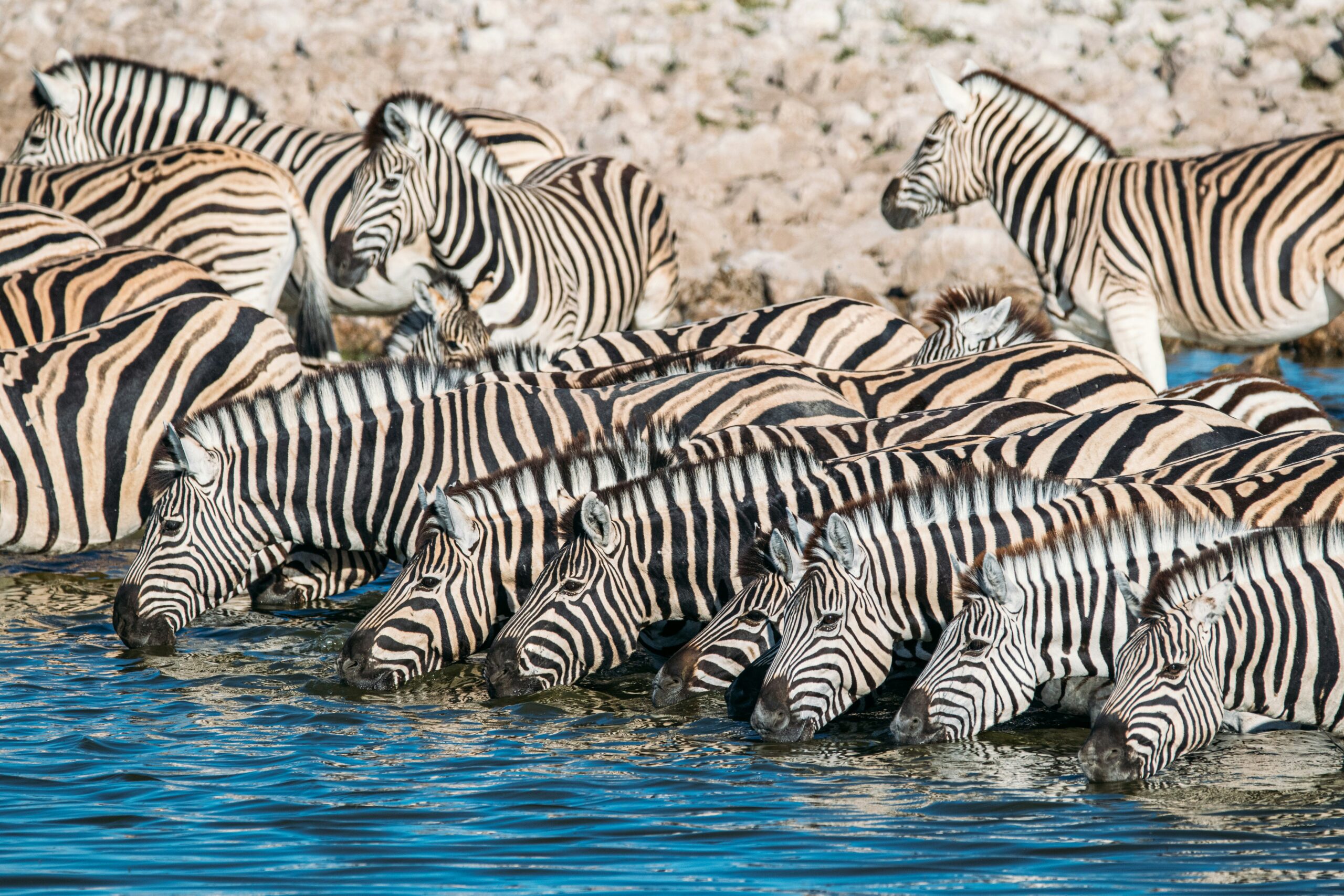
The great wild beast migration
The Real Cost of a Multi-Country Safari: Permits, Parks, and Fees
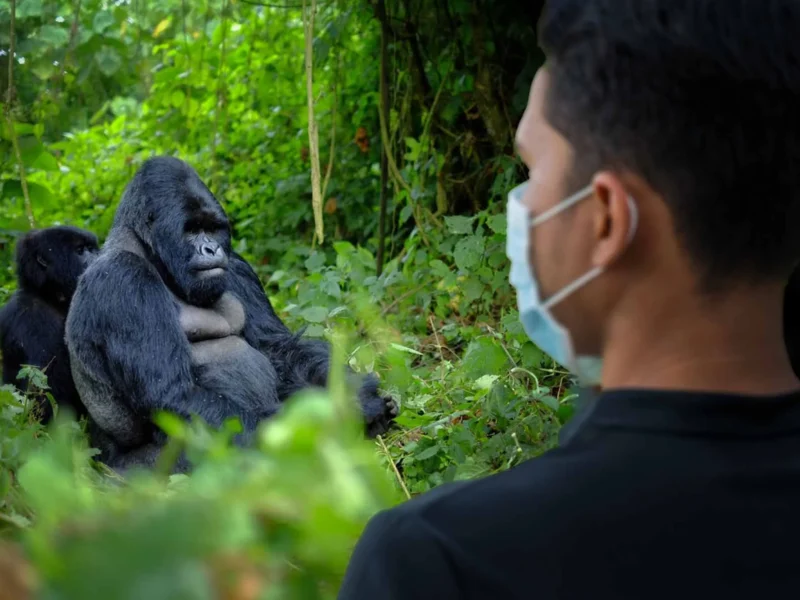
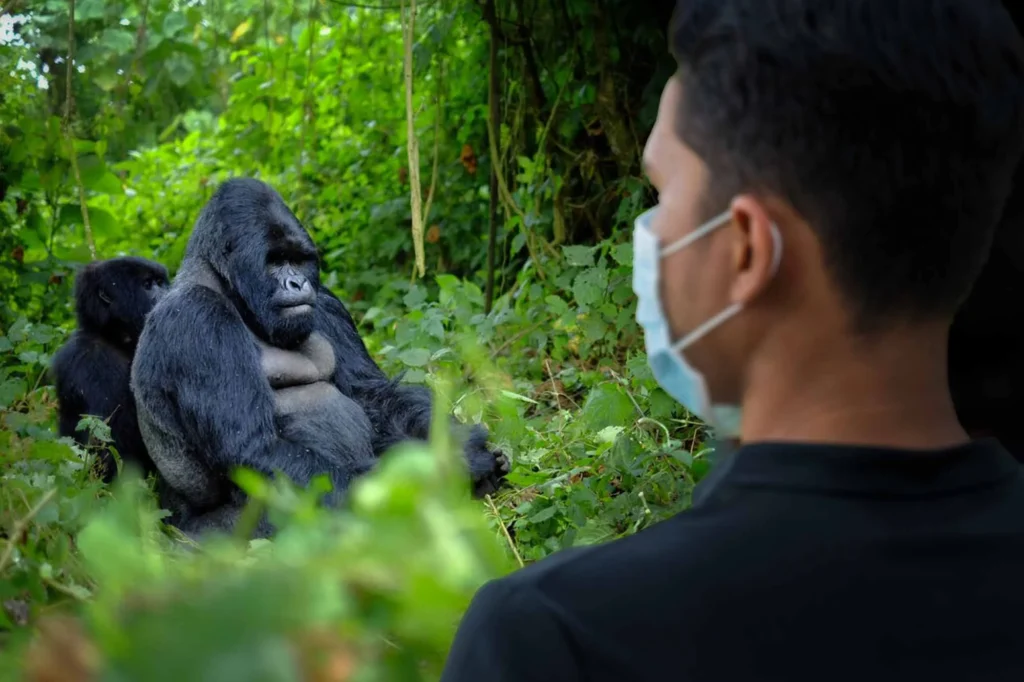
Money is where a multi-country safari earns or loses its case. Gorilla trekking illustrates the point cleanly. A Uganda permit costs $800 per person, covering Bwindi Impenetrable National Park or Mgahinga. Rwanda’s equivalent permit costs $1,500, nearly double, for a broadly similar hour with a habituated family in Volcanoes National Park.
Some operators sell both treks as a single multi-country safari package. Do the maths before booking. $800 plus $1,500 comes to $2,300 in permits alone, before flights, lodges, or a single meal. Two treks with two different gorilla families in two countries can be worthwhile for a primatologist or a repeat visitor. For most first-time travellers, one gorilla trek delivers the experience; the second buys diminishing returns at a steep price.
Kenya and Tanzania price differently, because the draw there isn’t a permit but the Great Migration itself. A combined Masai Mara–Serengeti safari, following the herds across the border, runs from roughly $2,450 to $9,500 per person, depending on lodge tier. Here the multi-country structure earns its cost more convincingly. The migration genuinely moves between the two ecosystems, so following it means crossing the line on the map.
The Time Cost of a Multi-Country Safari: What Border-Crossings Actually Take
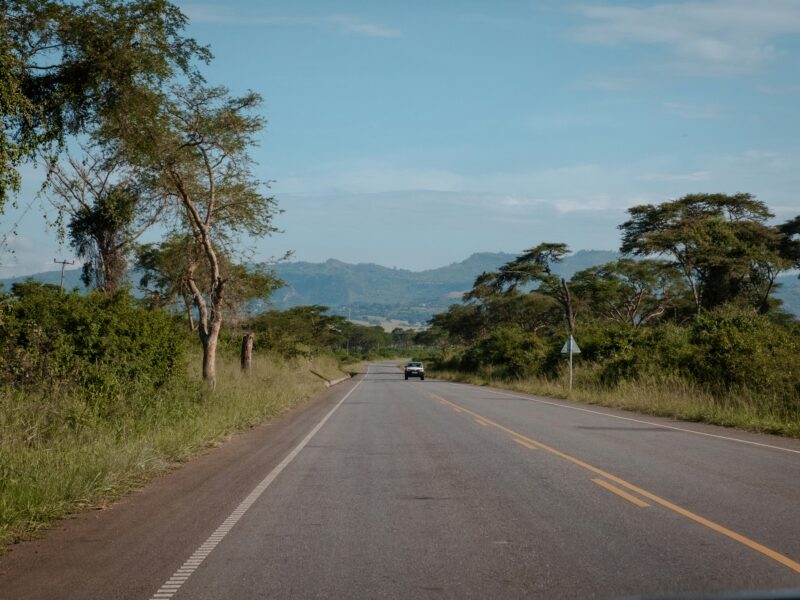
Money is only half the ledger; hours are the other half, and you spend them whether or not you notice. Kigali to Bwindi is one of the most popular multi-country safari combinations. The drive takes anywhere from four to nine hours by road, depending on which border you use and which Bwindi sector you’re trekking. The Cyanika crossing near Kisoro serves Rushaga and Nkuringo in three to four hours; reaching Buhoma or Ruhija through Katuna can take the better part of a day.
The Masai Mara to Serengeti route runs similarly long. The drive to the Isebania border alone takes about six hours from most Mara camps. Add one to four hours for immigration and vehicle swaps on the Tanzanian side. Some operators now fly guests between the two — a short hop to Migori airstrip cuts the crossing to under an hour — though it costs more than the road route and depends on aircraft availability.
A direct flight between Entebbe and Kigali takes about an hour and cuts the road time dramatically, though it still leaves the same three-to-nine-hour drive from Kigali to whichever Bwindi sector you’re trekking. Flying saves a day on the Rwanda leg but doesn’t remove the Uganda-side drive, so factor both segments in before assuming a flight solves the timing problem entirely.
Either way, budget a full travel day for any land border crossing in East Africa, sometimes two. On a seven-day trip, losing a day and a half to transit changes the maths considerably. On a fourteen-day trip, it barely registers.
What You Actually Gain from a Multi-Country Safari
The case for a multi-country safari is strongest when the countries offer genuinely different experiences, not near-duplicates. Uganda’s forests and Rwanda’s volcanoes both hold mountain gorillas, and trekking both means paying twice for a similar encounter. Uganda paired with Kenya, by contrast, offers something different. Rainforest and primates sit alongside open savannah and the migration — two distinct pictures of East Africa in one trip.
The same logic applies to Kenya and Tanzania. The wildebeest herds physically cross between the Masai Mara and the Serengeti each year. Following them across the border isn’t duplication — it’s continuity. You’re not repeating an experience; you’re staying with the same story as it moves.
Who a Multi-Country Safari Suits — and Who It Doesn’t
A multi-country safari suits travellers with ten days or more. It suits a first, and possibly only, trip to East Africa. And it suits anyone who prefers breadth over depth. It also suits anyone chasing a specific, cross-border phenomenon like the migration, where the animals themselves dictate the itinerary.
It suits fewer people than the marketing implies. Travellers with a week or less generally do better staying in one country and going deeper. That means more game drives and less time in a vehicle at a border post. Budget-conscious travellers rarely recoup the extra permit and transfer costs in extra value. And anyone drawn to a single park’s rhythm — watching the same waterhole across three mornings, say — often prefers one place to three.
Making the Call
There’s no universal answer to whether a multi-country safari is worth it. The answer is a calculation specific to your days, your budget, and what you actually want to see. Count your available days, subtract a full day for each border crossing, and look honestly at what remains.
If the countries you’re combining offer genuinely different landscapes and wildlife, and the days still work out, cross the border. If you’re paying twice for a similar hour with a similar animal, one well-planned country usually serves you better. When we build itineraries at Terenga Safaris, this is the first conversation we have with a traveller. Not which countries to combine — but whether combining them serves the trip at all. Visa costs, permit prices, and border rules shift often enough that it’s worth confirming the current figures with your operator before booking.