
January Weather in Serengeti and What It Means for the Migration
October 9, 2026
How Climate Changes Affect the Great Migration?
October 9, 2026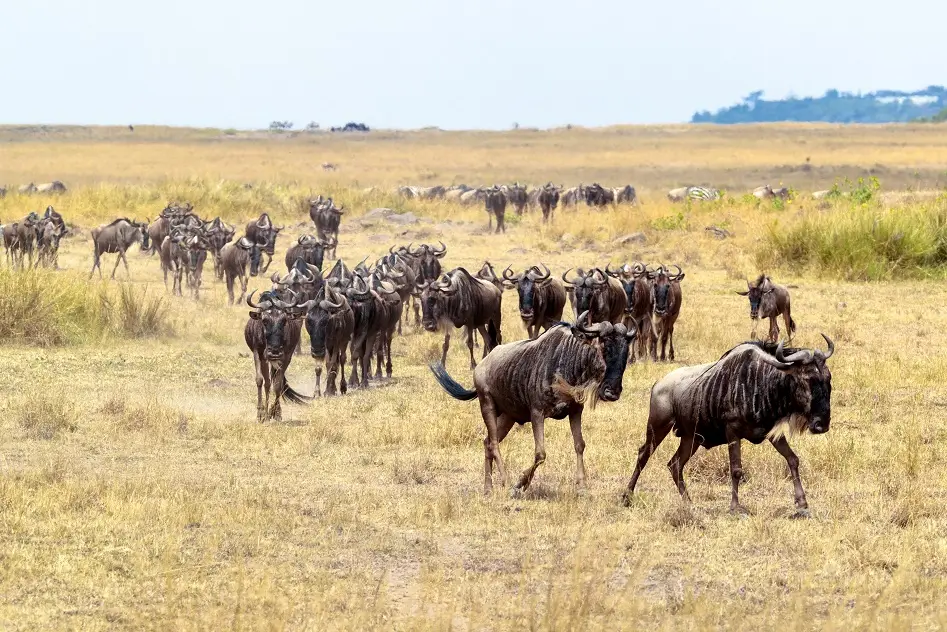
How Far Do Wildebeest Travel During the Great Migration?
How Far Do Wildebeest Travel During the Great Migration? This question introduces travelers to one of Africa’s most extraordinary wildlife journeys. Every year, enormous herds of wildebeest move across the Serengeti-Mara ecosystem.
The journey takes the animals through Tanzania and Kenya. They travel in search of fresh grass, reliable water, and suitable grazing conditions. Their movement creates the world-famous Great Migration.
Many wildebeest travel approximately 800 to 1,000 kilometers during their annual migration cycle. However, the exact distance changes with rainfall and grazing conditions. Nature controls the route and timing.
This remarkable journey also includes large numbers of zebras and gazelles. Together, the animals form one of the largest land mammal movements on Earth.
A Tanzania safari gives travelers a chance to witness different stages of this incredible journey. Visitors can experience calving season, long-distance movements, predator encounters, and dramatic river crossings.
Moreover, Tanzania wildlife safaris offer much more than migration viewing. The Serengeti provides exceptional landscapes, diverse wildlife, fascinating cultures, and important conservation stories.
At Terenga Safaris, we help global travelers understand Africa through carefully planned and authentic safari experiences.
How Far Do Wildebeest Travel During the Great Migration? Understanding the Distance
How Far Do Wildebeest Travel During the Great Migration? Most migration herds cover an estimated 800 to 1,000 kilometers annually. This distance represents a continuous and flexible cycle rather than one straight journey.
The wildebeest move through Tanzania’s Serengeti ecosystem and Kenya’s Maasai Mara ecosystem. Their route changes according to rainfall, grass growth, and water availability.
Therefore, no exact distance applies to every animal every year. Some herds may travel farther because environmental conditions influence their movement.
The migration follows a roughly circular pattern. Wildebeest spend different periods in southern, central, western, and northern areas of the ecosystem.
Eventually, many herds return toward the southern Serengeti. This movement completes another important stage of the annual cycle.
A Tanzania wildlife tour allows travelers to experience different parts of this enormous ecosystem. Each region offers unique landscapes and wildlife encounters.
Understanding the distance makes the migration even more impressive. These animals complete their journey without roads, maps, or human direction.
Instead, instinct and environmental conditions guide their movement across one of Africa’s greatest wilderness areas.
A Journey Guided by Rainfall and Fresh Grass
The wildebeest do not migrate simply because of a calendar. Rainfall and fresh grazing opportunities guide their movement throughout the year.
When rain reaches a particular area, new grass begins growing. Wildebeest can detect environmental changes and move toward better grazing conditions.
Fresh grass provides important nutrients for the enormous herds. Access to water also influences where animals remain.
Consequently, the Great Migration changes direction when environmental conditions change. A Tanzania safari can therefore offer different migration experiences every year.
The animals follow nature rather than fixed schedules. This unpredictability creates excitement for travelers on Tanzania adventure safaris.
Experienced safari guides understand the ecosystem and seasonal patterns. However, responsible guides never promise an exact wildlife location.
Instead, expert planning increases the chances of finding migration herds in suitable regions.
This natural movement explains why travelers should choose safari dates carefully. Different seasons provide different opportunities across Tanzania and Kenya.
A flexible travel plan can create a more rewarding Tanzania wildlife safari experience.
How Far Do Wildebeest Travel During the Great Migration? The Southern Serengeti Stage
The southern Serengeti represents an important starting point in the migration cycle. Vast grasslands provide excellent grazing conditions during favorable rainy periods.
How Far Do Wildebeest Travel During the Great Migration? Their journey begins with important events across these southern plains.
The calving season creates one of the most remarkable wildlife experiences. Hundreds of thousands of wildebeest calves arrive within a relatively short period.
Newborn animals must quickly learn to stand and follow their mothers. Their development becomes essential before the herds begin longer movements.
Meanwhile, predators take advantage of the large concentrations of vulnerable animals. Lions, cheetahs, hyenas, and leopards remain active around suitable hunting areas.
Therefore, Tanzania wildlife safaris during this period can provide exceptional predator encounters.
The southern plains also offer stunning scenery. Green grasslands often stretch toward distant horizons under dramatic African skies.
A Tanzania safari during the calving period provides travelers with a deeper understanding of wildlife survival.
This stage represents the beginning of another remarkable journey across the ecosystem.
Moving Through Central Serengeti
After spending time in southern grazing areas, many wildebeest begin moving through central Serengeti regions. The timing depends greatly on rainfall patterns.
Central Serengeti provides excellent wildlife viewing throughout much of the year. Permanent water sources support many animals even after migration herds move onward.
Lions, leopards, elephants, giraffes, and buffaloes inhabit different parts of this region. Therefore, Tanzania safaris often include central Serengeti.
The Seronera area offers particularly diverse wildlife opportunities. River systems and surrounding habitats attract many species.
Migration herds may pass through the wider region during different stages of their journey. Visitors can therefore enjoy both migration viewing and resident wildlife.
A Tanzania wildlife tour in central Serengeti provides excellent opportunities for photography. Open plains, acacia trees, and rocky kopjes create classic African landscapes.
Furthermore, the area offers comfortable safari lodges and camps. Travelers can stay close to important wildlife habitats.
This combination makes central Serengeti an important destination for many Tanzania adventure safaris.
How Far Do Wildebeest Travel During the Great Migration? The Western Corridor
The western corridor represents another major section of the migration route. Wildebeest often move toward this region as grazing conditions change.
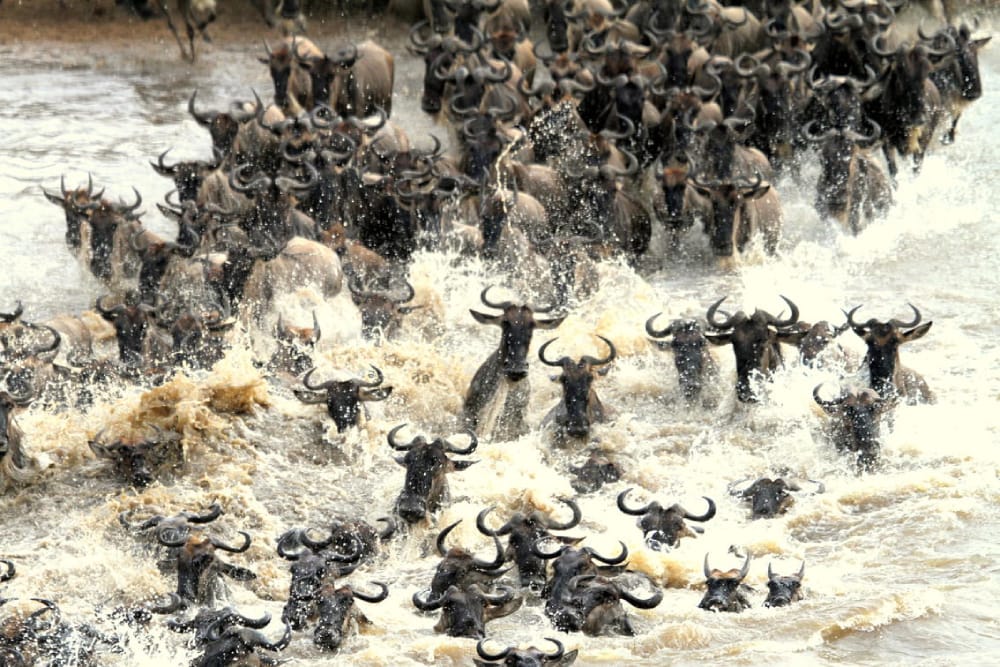
This stage can include some of the journey’s most dramatic moments. Rivers create significant obstacles for the moving herds.
The Grumeti River becomes particularly important during certain migration periods. Wildebeest gather along riverbanks before attempting dangerous crossings.
Some animals hesitate near the water. Others suddenly enter and encourage larger numbers to follow.
The resulting movement can create an extraordinary wildlife spectacle. Thousands of animals may cross within a short period.
Crocodiles inhabit parts of the river and increase the risks. Strong currents can also challenge weaker animals.
However, wildlife follows its own rhythm. Tanzania safari travelers should understand that no operator can guarantee a specific crossing.
Patience often creates the most rewarding experiences. Even without a major crossing, the western Serengeti offers excellent wildlife and beautiful landscapes.
Therefore, the journey remains exciting at every stage.
The Long Journey Toward Northern Serengeti
The northern Serengeti represents one of the most famous areas during the Great Migration. Wildebeest travel long distances before reaching this remote wilderness.
How Far Do Wildebeest Travel During the Great Migration? By this stage, the herds have already covered significant distances across Tanzania.
Northern Serengeti offers beautiful rolling landscapes, open grasslands, and important river systems. The region provides excellent wildlife viewing and a strong wilderness atmosphere.
The Mara River creates one of the migration’s greatest challenges. Wildebeest must decide when and where to cross.
Large herds may gather along the riverbanks for extended periods. Then, one movement can suddenly trigger a dramatic crossing.
Thousands of animals may rush into the water together. The scene becomes one of Africa’s most powerful wildlife experiences.
Nevertheless, crossings remain completely unpredictable. Environmental conditions and animal behavior influence every event.
A Tanzania wildlife safari in northern Serengeti rewards travelers with patience. The entire region provides remarkable wildlife encounters beyond the famous crossings.
Elephants, lions, leopards, and many other animals inhabit this extraordinary wilderness.
How Far Do Wildebeest Travel During the Great Migration? Crossing Into Kenya
The migration ecosystem extends beyond Tanzania. Many wildebeest eventually move northward into Kenya’s Maasai Mara.
This cross-border movement demonstrates the enormous scale of the migration. Wildlife does not recognize political boundaries.
Instead, animals follow ancient grazing routes shaped by nature and survival.
The Maasai Mara provides seasonal grazing opportunities for large numbers of migrating animals. Its grasslands support wildebeest, zebras, gazelles, and numerous other species.
Predators also benefit from the increased availability of prey. Lions, cheetahs, leopards, and hyenas remain active throughout the ecosystem.
Travelers can combine Tanzania safaris with Kenya wildlife experiences. A cross-border journey offers a broader understanding of the Serengeti-Mara ecosystem.
However, each destination provides unique landscapes and safari opportunities.
Visitors should allow enough time for meaningful wildlife viewing. Long travel schedules can reduce time spent enjoying the wilderness.
Careful planning creates a better Tanzania wildlife tour and a more memorable African adventure.
The Return Journey South
The Great Migration does not end in Kenya. The wildebeest eventually begin moving south again as environmental conditions change.
Fresh rainfall creates new grazing opportunities in Tanzania. The herds respond by continuing their long circular movement.
This return journey forms another major stage of the annual migration cycle.
Many travelers imagine wildebeest moving north once every year. In reality, the migration remains a continuous process.
The animals constantly respond to changing conditions across the ecosystem. Rain can influence movement at different times.
Therefore, Tanzania wildlife safaris can offer migration experiences throughout many months.
The return journey takes herds back toward important grazing areas in the Serengeti. Eventually, many animals reach the southern plains again.
The cycle then prepares for another calving season.
This extraordinary natural rhythm has continued for countless generations. Protecting the connected ecosystem remains essential for its future.
How Far Do Wildebeest Travel During the Great Migration? A Test of Survival
Distance represents only one challenge during the Great Migration. Wildebeest also face predators, rivers, drought, disease, and difficult terrain.
Every stage tests the animals’ ability to survive. Young calves face particularly difficult conditions during their first migration.
Predators constantly search for opportunities among the enormous herds. Lions often hunt wildebeest across open grasslands.
Cheetahs use their speed to pursue suitable prey. Hyenas also hunt actively and compete with other predators.
River crossings create additional dangers. Strong currents and crocodiles can threaten animals attempting to cross.
However, the enormous size of the herds helps ensure the survival of the population. Nature maintains balance through birth, death, and adaptation.
A Tanzania safari provides an opportunity to witness these natural processes responsibly.
Professional guides help visitors understand animal behavior without disturbing wildlife. Responsible Tanzania adventure safaris focus on observation and conservation.
The migration teaches travelers about resilience and the powerful realities of the natural world.
Wildlife Beyond the Wildebeest
Although wildebeest dominate the Great Migration, the Serengeti offers much more wildlife. Tanzania wildlife safaris provide exceptional biodiversity throughout the ecosystem.
Zebras form an important part of the migrating herds. Their striped patterns create spectacular scenes alongside thousands of wildebeest.
Gazelles also move through suitable grazing areas. Several antelope species inhabit different parts of the Serengeti.
Elephants travel through woodland and grassland habitats. Their presence adds another unforgettable experience to a Tanzania safari.
Giraffes move gracefully across the landscape while feeding on acacia trees. Buffaloes often gather in large groups.
The Serengeti also supports impressive predator populations. Lions remain common in suitable habitats across the ecosystem.
Leopards hide near riverine forests and trees. Cheetahs prefer open landscapes where they can use their speed.
Birdlife adds another important dimension to Tanzania wildlife tours. The ecosystem supports many colorful and interesting bird species.
Therefore, travelers should view the migration as part of a much larger natural experience.
How Far Do Wildebeest Travel During the Great Migration? Cultural Experiences Around Safari Lodges
A Tanzania safari offers meaningful cultural experiences alongside wildlife adventures. Communities around the Serengeti region contribute greatly to Tanzania’s cultural heritage.
Maasai cultural visits remain among the most popular experiences. Travelers can visit selected communities through respectful and responsible tourism programs.
Guests can learn about traditional homes and community life. Cultural activities may include traditional dances, songs, and storytelling.
Visitors can also explore beautiful Maasai beadwork and handmade crafts. Local artisans create colorful items that represent important cultural traditions.
Some experiences introduce travelers to traditional food and daily activities. These encounters provide deeper connections with local communities.
Safari lodges and camps may partner with nearby communities to organize responsible cultural visits.
Additionally, travelers can explore local markets in selected towns. Markets provide opportunities to discover handmade products and local foods.
A Tanzania wildlife tour becomes more meaningful when visitors understand both wildlife and people.
Respect should guide every cultural experience. Travelers should follow community guidance and request permission before taking photographs.
Responsible tourism can create benefits for visitors and local communities.
Conservation Protects the Great Migration
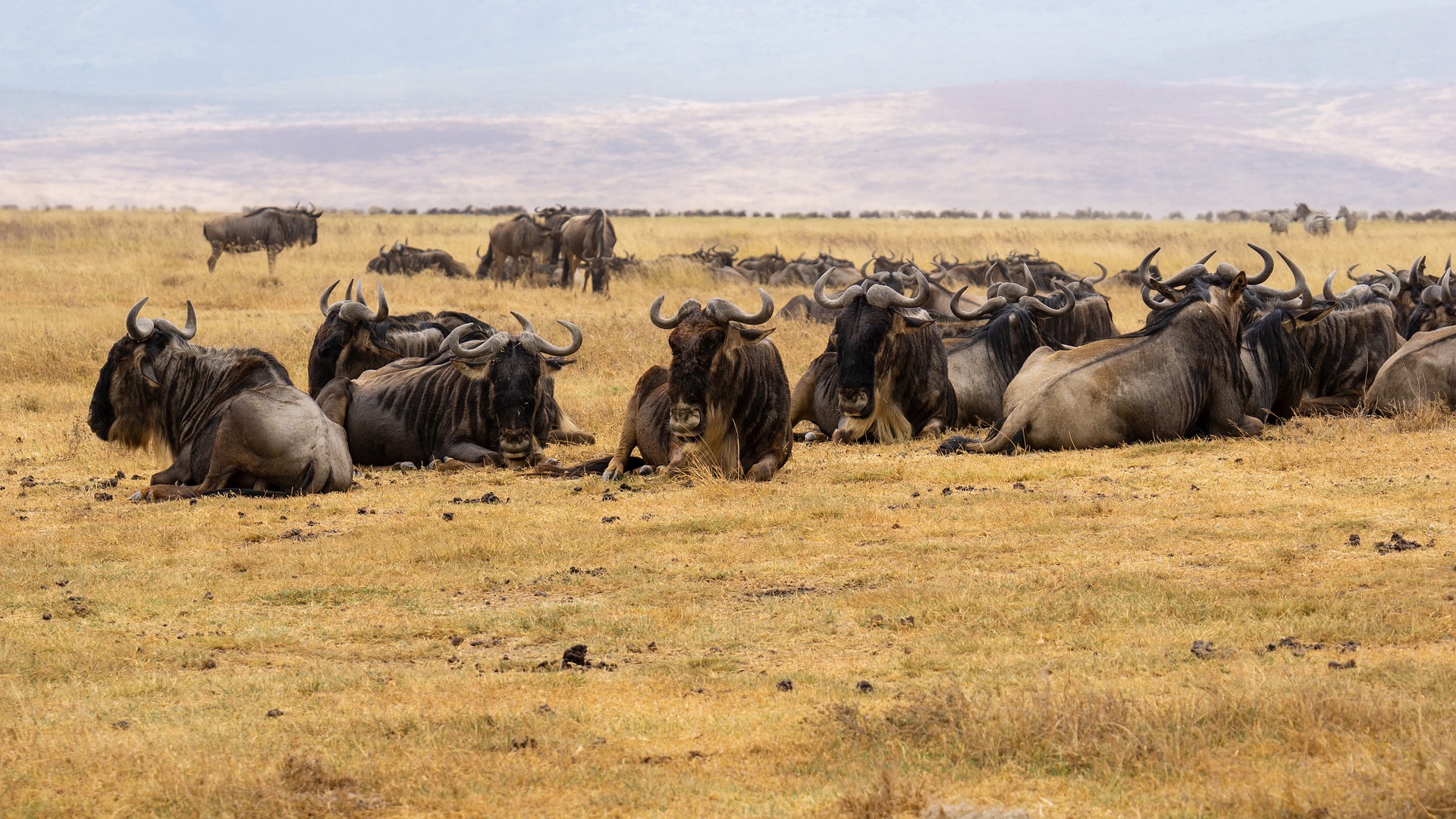
The future of the Great Migration depends on strong conservation efforts. Wildebeest need large and connected landscapes to complete their journey.
Migration routes must remain open and protected. Wildlife cannot survive if important corridors become permanently blocked.
Tanzania and Kenya share responsibility for protecting this extraordinary ecosystem. International cooperation supports the movement of animals across borders.
National parks and conservation areas play essential roles. These protected landscapes provide habitats for wildlife and support tourism.
Responsible Tanzania safaris also contribute to conservation. Tourism can create financial support for wildlife protection and local communities.
Travelers should choose operators that respect park regulations and environmental standards.
Professional guides understand how to observe wildlife safely. They avoid unnecessary disturbance and maintain appropriate distances.
Eco-conscious safari lodges can also reduce environmental impacts. Sustainable practices help protect the wilderness that travelers come to experience.
Therefore, every responsible Tanzania wildlife safari can contribute to the long-term protection of Africa’s natural heritage.
How Far Do Wildebeest Travel During the Great Migration? Choosing the Best Time to Visit
Different seasons provide different migration experiences. Therefore, travelers should choose safari dates based on personal interests.
The southern Serengeti offers remarkable calving experiences during suitable seasonal periods. Travelers can observe newborn animals and increased predator activity.
Central areas often provide excellent resident wildlife viewing. The region can offer rewarding game drives throughout much of the year.
Western Serengeti may provide opportunities to witness important river movements. Northern Serengeti attracts travelers interested in Mara River crossings.
However, nature remains unpredictable. Rainfall can influence migration timing and location.
For this reason, travelers should avoid expecting exact dates for wildlife events. A professional Tanzania safari specialist can recommend suitable areas based on seasonal patterns.
The best Tanzania safari focuses on the entire wilderness experience. Migration viewing becomes even more rewarding when combined with landscapes and diverse wildlife.
Flexibility allows travelers to enjoy unexpected moments. Often, these spontaneous encounters become the most memorable safari experiences.
Planning Tanzania Safaris with Expert Knowledge
Successful Tanzania safaris require careful planning and local understanding. Choosing the right destinations can improve the entire travel experience.
Travelers should consider travel dates, accommodation preferences, and wildlife interests. Budget and comfort expectations also influence itinerary planning.
A well-designed Tanzania wildlife tour allows enough time for game drives and relaxation. Rushing between destinations can reduce the quality of the experience.
Accommodation location also matters. Staying close to important wildlife areas reduces unnecessary travel.
Professional safari guides provide valuable knowledge about animal behavior and ecosystems. Their experience helps visitors understand what they see.
Reliable safari planning also includes comfortable vehicles and suitable accommodation.
At Terenga Safaris, we focus on carefully designed African travel experiences. Our goal involves connecting travelers with authentic wildlife, culture, landscapes, and conservation.
We understand that every traveler deserves a journey suited to their interests.
Tanzania adventure safaris can become life-changing experiences when planning combines knowledge, responsibility, and attention to detail.
