
Uganda Vaccinations Recommended Before You Travel
July 11, 2026
Self-Drive vs Guided Uganda Safari
July 15, 2026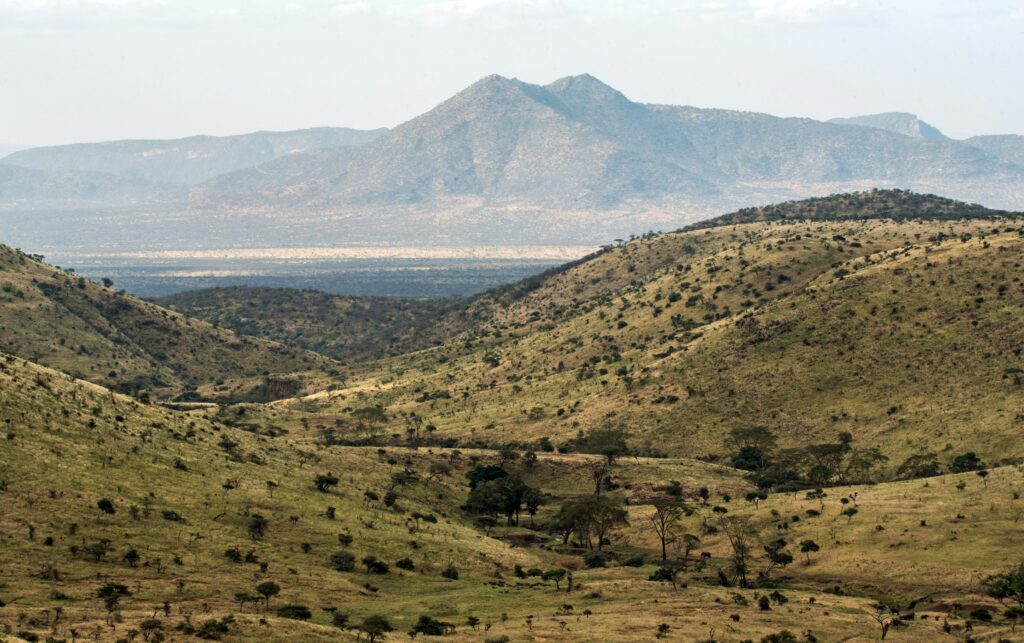
East Africa’s Spectacular Landscapes: A Traveller’s Guide to the Region’s Finest Scenery
East Africa’s Spectacular Landscapes
There is a particular moment, usually somewhere around dusk on the second or third day of a safari, when a traveller stops reaching for their camera and simply looks. It might happen on the crater rim at Ngorongoro, or on the escarpment above the Rift Valley near Fort Portal, or on a boat drifting beneath the spray of Murchison Falls. Whatever the setting, it is the moment East Africa’s spectacular landscapes stop being a backdrop and start being the reason for the whole journey.
This region does not rely on a single iconic view the way some destinations do. Instead, East Africa’s spectacular landscapes unfold as a sequence — volcanic highlands giving way to savannah, savannah giving way to rainforest, rainforest opening onto lakes so large they generate their own weather. Understanding which of these landscapes matches your interests, fitness and time in the region is, in many ways, the real work of planning a good trip.
What follows is a working guide to the landscapes that define East Africa, and Uganda in particular, written from years of watching how travellers actually respond to each one — where the light is best, where the crowds gather, and where a quieter version of the same view still exists for those willing to travel a little further.
The Great Rift Valley: East Africa’s Defining Landscape
No discussion of East Africa’s spectacular landscapes can begin anywhere except the Rift Valley, the vast geological fracture running from the Red Sea down through Kenya, Tanzania and Uganda. It was formed over millions of years as the African continental plate slowly began tearing itself in two, and the evidence is written across the land in escarpments, volcanic cones and elongated lakes.
From the Kichwamba escarpment near Queen Elizabeth National Park, the valley floor drops away so suddenly that the crater lakes below look like scattered coins from a great height. Early morning is the time to be there, before the heat haze softens the view, when the light picks out individual acacia trees on the valley floor a thousand feet down.
Photographers rate this among the most rewarding of East Africa’s spectacular landscapes precisely because it rewards patience rather than luck — the view barely changes hour to hour, so there is time to wait for the right cloud or the right shaft of light without fear of missing anything.
The honest limitation is accessibility: the best viewpoints often sit along unpaved roads that are slow going after rain, and a self-drive traveller unfamiliar with the terrain can lose the better part of a day finding the right spot. A guide who knows the escarpment roads well saves considerably more time than the extra cost suggests.
The Rwenzori Mountains: Uganda’s Snow-Capped Landscape
Few travellers arrive in Uganda expecting glaciers, which is exactly why the Rwenzori Mountains tend to surprise people. Straddling the border with the Democratic Republic of Congo, this range was named the Mountains of the Moon by the second-century geographer Ptolemy, who had heard rumours of snow on the equator and struggled to believe it.
The Rwenzoris are unlike anywhere else among East Africa’s spectacular landscapes. Lower slopes are cloaked in dense montane forest, giving way to bamboo, then to a strange and beautiful zone of giant lobelias and groundsel that grow nowhere else on the continent, before the final approach to permanent snowfields above 4,500 metres.
This is not a landscape to admire from a vehicle window. Reaching the glacial zone requires a multi-day trek with a genuine level of physical preparation, unpredictable rain even in the dry season, and a support team experienced with the terrain. Most visitors instead walk the lower trails for a day or two, which still deliver views across the Semuliki Valley that few other parts of Uganda can match.
Trekkers seeking a serious mountaineering challenge should allow at least seven days for the full ascent; those wanting a taste of the range without the commitment can manage a satisfying day or overnight hike from the Kilembe or Nyakalengija trailheads.
Kidepo Valley: Uganda’s Wildest Savannah Landscape
In Uganda’s remote north-eastern corner, close to the border with South Sudan and Kenya, lies a savannah landscape that many seasoned safari travellers consider the country’s finest. Kidepo Valley National Park sits within a wide bowl ringed by the Morungole and Napore mountains, its golden grasslands interrupted by the dry, sand-choked course of the Narus River.
What sets Kidepo apart within the broader story of East Africa’s spectacular landscapes is its emptiness. Visitor numbers remain a fraction of those at Uganda’s more accessible parks, so a game drive here often unfolds without another vehicle in sight — a rarity increasingly hard to find elsewhere in East Africa.
During the dry months, wildlife concentrates around the last remaining water in the Narus Valley, creating a density of animals that belies the park’s reputation as remote and difficult to reach. That remoteness is real, however: Kidepo lies roughly ten hours by road from Kampala, or a ninety-minute charter flight, and travellers should budget accordingly.
This landscape suits those who have already done a more conventional Ugandan safari and want something wilder, or anyone for whom solitude matters as much as wildlife sightings.
Murchison Falls: Where the Nile Carves Its Landscape
Some landscapes are shaped by tectonics and time; others are shaped, quite literally, by force of water. At Murchison Falls, the entire volume of the Victoria Nile is squeezed through a gap in the rock barely seven metres wide before dropping forty-three metres into the gorge below.
The sound reaches visitors before the sight does, a low continuous roar that grows as the footpath climbs towards the viewpoint. Standing at the top, with spray drifting across the rocks and rainbows forming and dissolving in the mist, it becomes clear why early European explorers considered this one of the most dramatic sights on the entire river.
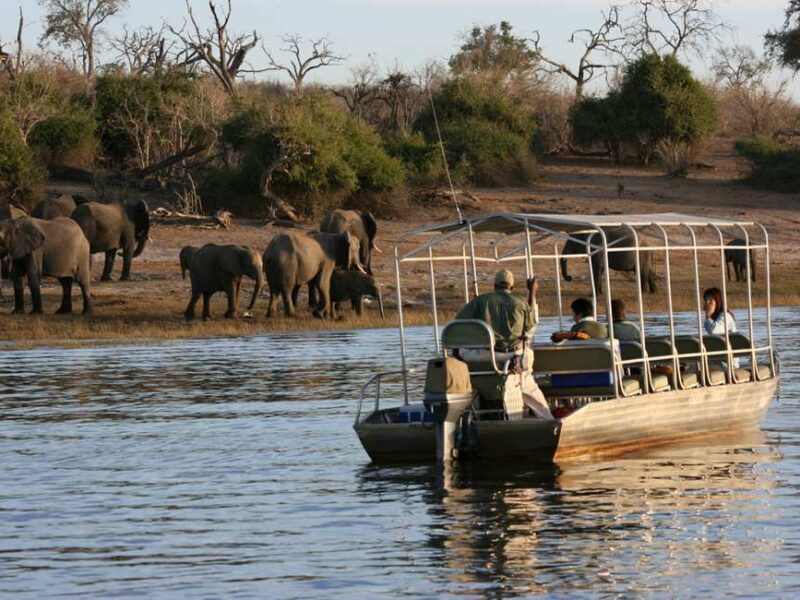
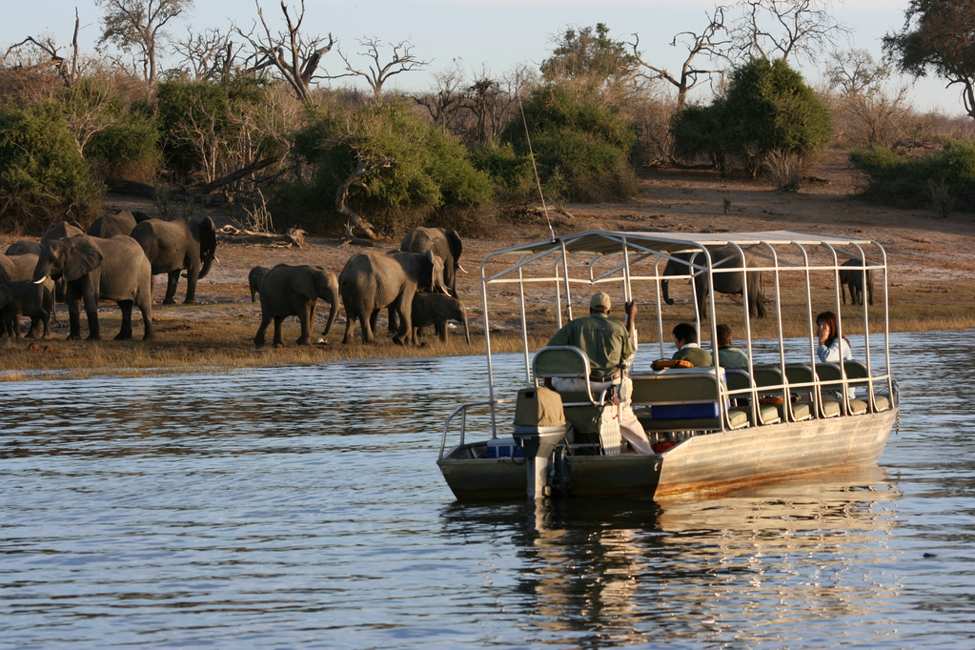
A boat safari along the calmer stretch below the falls offers a completely different perspective on this landscape, gliding past basking crocodiles, pods of hippopotamus, and elephant herds coming down to drink, with the falls themselves visible in the distance as a permanent white scar on the escarpment.
Murchison works well for families and first-time safari travellers because the falls are reachable via a short, well-maintained walk, and the surrounding park offers reliable game viewing without the altitude or fitness demands of the Rwenzoris.
Bwindi’s Ancient Rainforest: A Different Kind of Spectacular Landscape
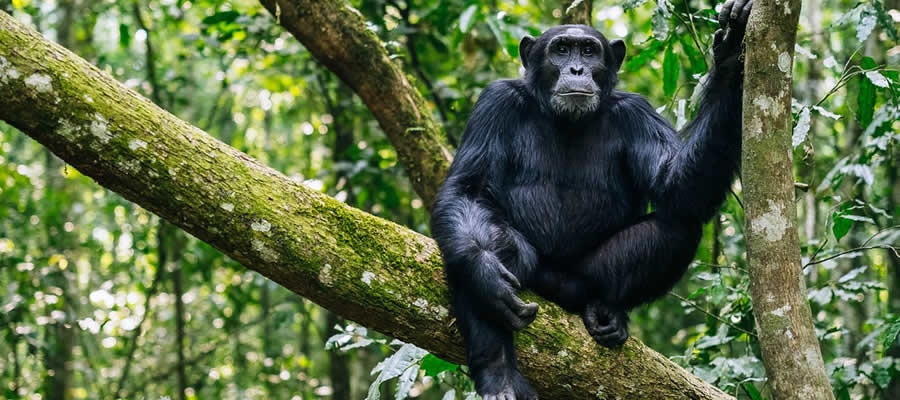
Not every remarkable view in Uganda is wide and open. Bwindi Impenetrable Forest offers something closer to intimacy than spectacle at first glance — a tangle of vines, moss-covered trunks and dense undergrowth that has grown largely undisturbed for more than 25,000 years, making it one of Africa’s oldest surviving rainforests.
Morning mist tends to settle low over the canopy here, filtering the light into soft green shafts that make the forest feel considerably older than its trailhead suggests. This is one of the few places where East Africa’s spectacular landscapes reveal themselves gradually, through sound and texture as much as through sightlines.
Bwindi is best known as the primary location for gorilla trekking in Uganda, and the forest terrain that makes the landscape so distinctive is the same terrain that makes trekking genuinely demanding — steep, often muddy paths at altitude, sometimes for several hours before a gorilla family is located. Permits are limited and should be booked well in advance, particularly for travel during the peak dry seasons.
The Great Lakes: Victoria, Albert and Edward
East Africa’s spectacular landscapes are defined as much by water as by mountains and plains. Lake Victoria, the largest tropical lake in the world, is so vast that its far shore disappears below the horizon, generating localised storms that build visibly across the afternoon sky before breaking in dramatic, short-lived downpours.
Further west, Lake Albert and Lake Edward sit within the Rift Valley itself, framed by the Blue Mountains of the Congo on one side and Uganda’s savannah on the other. Fishing communities along their shores have worked these waters for generations, and a sunset crossing by boat remains one of the more understated ways to experience this landscape without the crowds that gather at better-known viewpoints.
Travellers drawn to birdlife find the lakeshores especially rewarding, with shoebill storks, African fish eagles and pelicans among the highlights, particularly around the wetlands near Lake Albert’s Semliki delta.
Serengeti and Ngorongoro: Tanzania’s Contribution to East Africa’s Landscapes
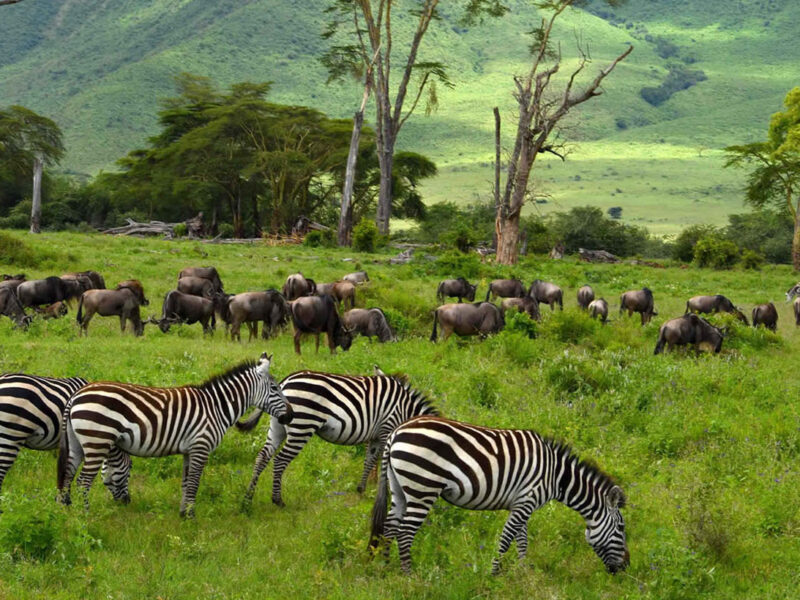
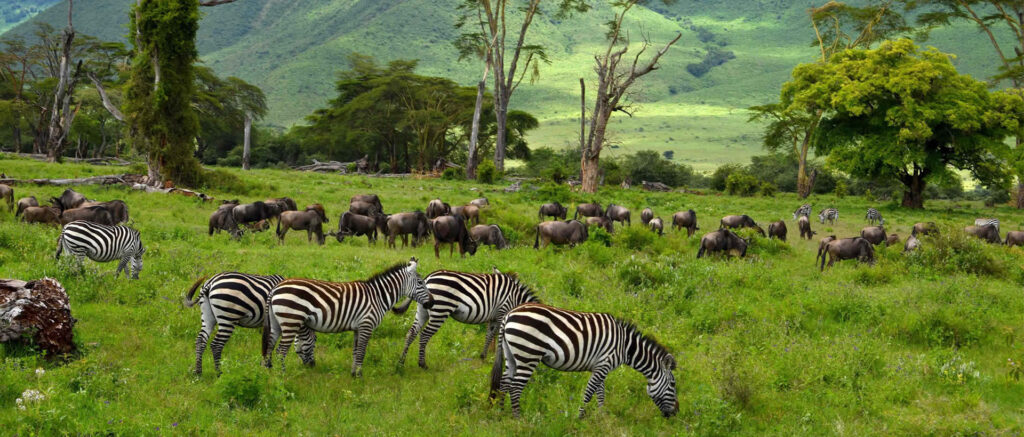
No honest account of East Africa’s spectacular landscapes can stop at Uganda’s border. In northern Tanzania, the Serengeti‘s endless plains stretch to a horizon so flat and unbroken that early travellers described losing all sense of scale, while the Ngorongoro Crater nearby offers something almost the opposite — a self-contained world enclosed within the walls of a collapsed volcano, roughly twenty kilometres across.
Standing on the crater rim at sunrise, with mist pooling on the floor two thousand feet below and the outline of grazing herds only slowly resolving as the light strengthens, it is easy to understand why this is often cited alongside the Serengeti as one of the continent’s defining views.
Combining Uganda and Tanzania in a single itinerary is increasingly common among travellers who want to experience the full range of East Africa’s spectacular landscapes in one trip, though it requires additional flights and a realistic allowance of time — rushing between the two rarely does either justice.
Sipi Falls and Mount Elgon: Landscapes of Uganda’s East
On the slopes of Mount Elgon, an extinct volcano straddling the Kenya-Uganda border, the Sipi Falls tumble down through a series of three drops surrounded by coffee terraces and eucalyptus groves. The setting feels almost pastoral compared with the wilder landscapes further west, and that contrast is part of its appeal.
Local guides lead walks between the three falls, often stopping at small-scale coffee farms along the way to explain the growing and roasting process — a practical, grounded counterpoint to the grander wildlife-focused landscapes elsewhere in the country. Mount Elgon itself, with one of the largest volcanic calderas in the world, rewards more committed hikers with several days of trekking through moorland and hot springs.
This corner of Uganda suits travellers combining a safari with something more active, or those looking for a scenic, lower-cost add-on near the Kenyan border without the logistics of a major park.
Choosing Which of East Africa’s Spectacular Landscapes Suits Your Trip
With so much variation on offer, the most common mistake is trying to see everything in a single visit. A realistic itinerary usually anchors around two or three landscapes rather than five or six, allowing enough time in each to actually experience it rather than simply pass through.
Travellers with limited time and an interest in classic savannah scenery are usually best served by Murchison Falls or Queen Elizabeth National Park, both within a reasonable drive of Entebbe. Those willing to trade convenience for solitude should look towards Kidepo. Anyone drawn to the region for its geology and drama, rather than its wildlife alone, should weight their itinerary towards the Rift Valley escarpments and, fitness permitting, the Rwenzori foothills.
Seasonality matters more than many travellers expect. The dry months, broadly December to February and June to September, offer easier road travel and better wildlife concentration around water sources, while the wetter months bring a different kind of scenery entirely — deeper greens, dramatic cloud formations, and a landscape that photographs beautifully even if the going underfoot is harder.
At Terenga Safaris, itineraries are built around this kind of honest trade-off — matching a traveller’s available time, fitness and interests to the landscapes that will genuinely reward them, rather than attempting to fit every highlight into a single rushed loop.
A Region Best Understood Through Its Landscapes
What makes East Africa’s spectacular landscapes so difficult to summarise in a single article is also what makes the region worth returning to more than once. A first visit might centre on the savannah and its wildlife; a second might be drawn to the mountains, the lakes, or the rainforest that most visitors never see beyond a gorilla trekking permit.
There is no single correct way to experience this part of the world, only a series of honest choices about time, fitness, budget and what kind of view you want to be standing in front of when the light finally does something worth remembering. Terenga Safaris can help shape those choices into an itinerary built around the landscapes that matter most to you.