What is the best time of year to visit Jinja City?
January 28, 2026
What Is the Cost of a Balloon Safari?
January 28, 2026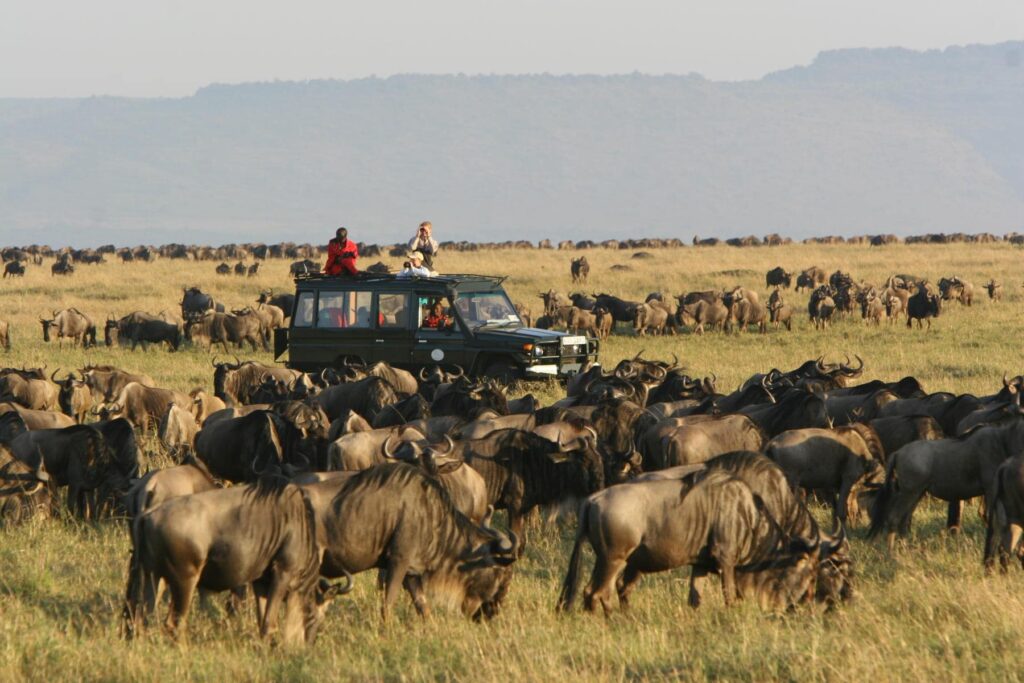
What Is the Best Way to Photograph Running Wildebeest?
For wildlife photographers and safari enthusiasts worldwide, what is the best way to photograph running wildebeest? is a defining question when planning iconic Africa safaris. Photographing running wildebeest is closely tied to the legendary Great Migration, one of the most dramatic wildlife spectacles on Earth, spanning Kenya Safaris and Tanzania Safaris. This phenomenon involves over a million wildebeest thundering across open plains and river crossings, offering unmatched opportunities for motion photography, storytelling, and conservation imagery. Understanding what is the best way to photograph running wildebeest? requires not only camera skills but also deep knowledge of wildlife behavior, light, positioning, and timing within the correct destinations.
Kenya Best Safaris and Tanzania Best Safaris place photographers directly inside this natural theater. Kenya Great Migration Safaris in the Maasai Mara and Tanzania Great Migration Safaris in the Serengeti provide vast open landscapes ideal for capturing speed, dust clouds, muscle tension, and raw energy. Kenya Birding Safaris and Tanzania Birding Safaris further enrich the photographic experience, adding aerial motion and ecosystem context. Cultural interactions with the Maasai People through Kenya Cultural Safaris and Tanzania Cultural Safaris add human depth to migration photography, enhancing storytelling credibility.
Terenga Safaris positions itself as an authority in wildlife photography safaris by combining expert guides, ethical wildlife viewing, and precise seasonal planning. Asking what is the best way to photograph running wildebeest? becomes the foundation for creating powerful images that reflect Africa’s authenticity, conservation importance, and breathtaking wilderness.
Which Destinations Offer the Best Conditions for Photographing Running Wildebeest?
When considering what is the best way to photograph running wildebeest?, selecting the correct destination becomes essential. Kenya Safaris in the Maasai Mara National Reserve deliver exceptional photography conditions due to open savannahs, predictable migration routes, and dramatic river crossings. Wide plains allow photographers to capture full-body motion shots without visual obstruction, while natural light enhances dust trails and herd dynamics. Kenya Great Migration Safaris peak between July and October, offering consistent opportunities for high-speed action photography.
Across the border, Tanzania Safaris in Serengeti National Park present equally powerful scenes. Tanzania Great Migration Safaris offer varied terrain, including rolling grasslands and rocky outcrops, ideal for framing running wildebeest against textured backgrounds. Tanzania Birding Safaris complement this by adding movement in the skies, while predators nearby increase narrative tension within photographic compositions. Accessibility to these parks is seamless through Nairobi or Arusha, followed by road transfers or domestic flights arranged by Terenga Safaris.
Expectations during these safaris include early morning game drives, expert positioning of vehicles, and guidance on anticipating herd movement. Costs typically range from USD 400 to USD 900 per day depending on accommodation level, guide expertise, and photographic focus. Combining these safaris with Uganda Gorilla Trekking is possible through extended itineraries, allowing photographers to capture both high-speed savannah action and intimate forest encounters. Ultimately, understanding what is the best way to photograph running wildebeest? begins with choosing landscapes where movement, light, and scale converge perfectly.
How Should Photographers Position Themselves and Their Equipment?
Mastering what is the best way to photograph running wildebeest? requires precise positioning and technical preparation. Successful photographers position themselves slightly ahead of the herd’s direction, allowing animals to move toward or across the lens rather than away from it. This technique captures eye contact, muscle movement, and dust interaction, creating images full of life and direction. Low-angle shooting from safari vehicles enhances the sense of speed and scale, making the wildebeest appear more powerful and dominant within the frame.
Camera settings play a vital role. Fast shutter speeds freeze action, while controlled panning with slower speeds creates motion blur that emphasizes speed. Kenya Safaris and Tanzania Safaris provide consistent lighting conditions during dry seasons, making exposure management easier. Kenya Birding Safaris and Tanzania Birding Safaris further refine photographers’ motion-tracking skills, helping them anticipate movement patterns that apply equally to running mammals.
Cultural awareness also enhances photographic outcomes. Kenya Cultural Safaris and Tanzania Cultural Safaris introduce photographers to the Maasai People, whose understanding of land and wildlife movement offers valuable insights. These interactions improve ethical positioning and respect for both people and animals. Equipment expectations include telephoto lenses, dust protection, and stabilized camera supports provided or advised by Terenga Safaris.
Best times for this photography align with migration months, while costs remain dependent on safari length and specialization. By applying these strategies, photographers gain clarity on what is the best way to photograph running wildebeest? while producing images suitable for global publications and conservation storytelling.
Why Choose Terenga Safaris for Wildebeest Photography Safaris?
Choosing the right operator defines success when answering what is the best way to photograph running wildebeest? Terenga Safaris brings extensive experience across Kenya Safaris and Tanzania Safaris, ensuring photographers are guided by professionals who understand wildlife behavior, migration timing, and photographic composition. Expert guides communicate silently with drivers, position vehicles strategically, and respect ethical viewing distances, allowing uninterrupted photographic moments.
Terenga Safaris integrates Kenya Best Safaris with Tanzania Best Safaris, offering cross-border itineraries that maximize exposure to diverse migration scenes. Kenya Great Migration Safaris provide iconic river crossings, while Tanzania Great Migration Safaris showcase expansive herd movement across endless plains. Kenya Cultural Safaris and Tanzania Cultural Safaris enrich each journey through meaningful engagement with the Maasai People, adding cultural storytelling layers to wildlife photography.
Costs remain transparent, with flexible packages tailored for amateur and professional photographers alike. Best travel periods are clearly communicated, ensuring optimal light, weather, and wildlife density. Combining Uganda Gorilla Trekking into extended itineraries offers photographers the rare chance to capture both speed-driven savannah drama and intimate forest portraits, creating a diverse and authoritative portfolio.
Ultimately, Terenga Safaris transforms the question what is the best way to photograph running wildebeest? into a fully guided, ethical, and unforgettable safari experience. Through expertise, trust, and deep regional knowledge, Terenga Safaris stands as a reliable authority for photographers seeking Africa’s most powerful wildlife imagery.