What Should I Pack for a Safari?
July 8, 2026
Where Can I See Tree-Climbing Lions?
July 9, 2026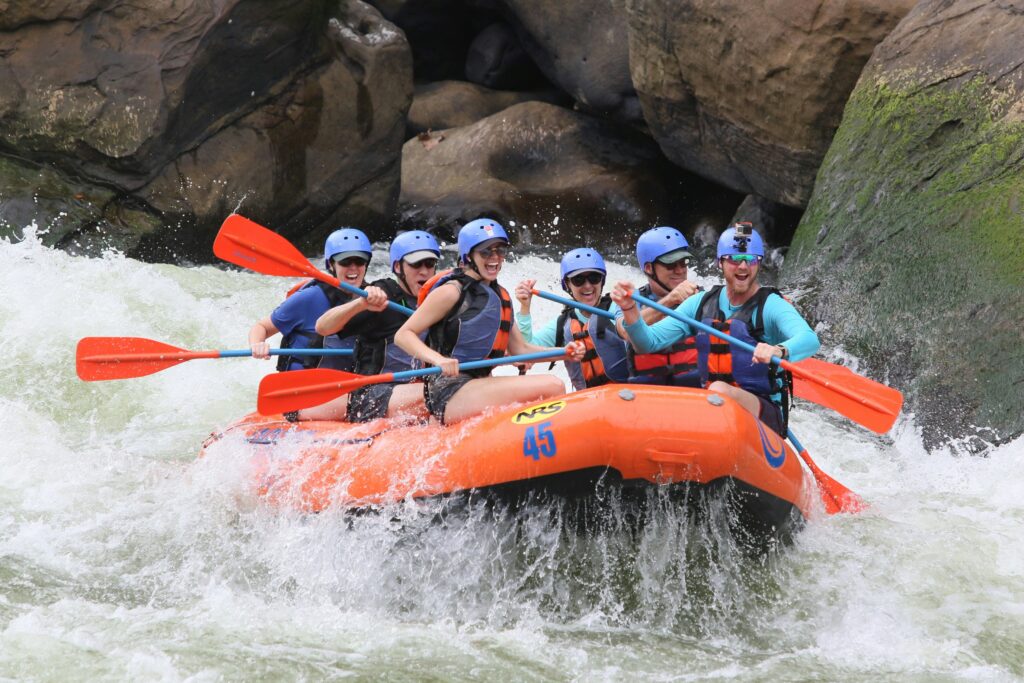
Why Jinja Is One of the World’s Best White Water Rafting Destinations
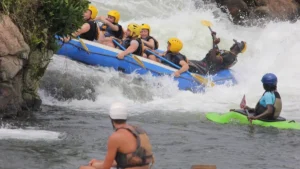
There is a particular sound the Nile makes just north of Jinja, a low continuous roar that reaches you before the river itself comes into view. It is the sound of white water rafting in Jinja announcing itself, and it has drawn paddlers from Colorado, New Zealand and the Zambezi to this stretch of river for more than two decades. Jinja did not become a rafting destination by accident. It happens to sit on one of the very few rivers on earth where a young, powerful watercourse leaves a great lake and immediately drops through a series of enormous, warm-water rapids, all within easy reach of a town with an airport, hotels and hospitals nearby.
That combination, big volume, warm water and genuine accessibility, is rare. Most of the world’s serious white water is cold, remote, or both. The Nile at Jinja is neither, which is a large part of why it competes seriously with the Zambezi, the Colorado and the Futaleufú for a place on any serious rafter’s list.
The Source of the Nile: Why Jinja’s Geography Creates World-Class Rapids
Jinja sits at the point where Lake Victoria empties into the Victoria Nile, roughly eighty kilometres east of Kampala. Because the river is fed by a lake rather than seasonal rainfall alone, it carries a huge, relatively stable volume of water year-round. That volume is what turns ordinary rapids into genuine white water rafting terrain: standing waves several metres high, powerful hydraulics, and the kind of continuous, muscular current that smaller rivers simply cannot produce.
The water itself is warm, usually in the mid-twenties Celsius, because it has just spent thousands of years sitting in a tropical lake before beginning its journey to the Mediterranean. Rafters do not need wetsuits here, which changes the entire feel of the day. You are not fighting cold as well as current; you are simply reading the river.
Grade 5 White Water: What the Rapids Actually Feel Like
The commercially run stretch below Jinja includes several rapids classified as Grade 5, the highest grade generally considered safe for commercial rafting. Names like Overtime, Bubugo and Nile Special have become familiar to rafters worldwide, each with its own personality: some are long wave trains that simply will not let go, others are short, violent drops that flip boats in an instant.
Flipping is common here, and operators are candid about it rather than pretending otherwise. A well-run trip briefs guests thoroughly on swimming position, re-entry and what to do if separated from the raft, and safety kayakers shadow every group through the largest rapids. It is exhilarating precisely because the risk is real and well managed, not eliminated.
Full-Day Versus Half-Day: Choosing the Right White Water Rafting Trip
Most Jinja operators offer both a full-day and a half-day option, and the difference matters more than the marketing usually suggests. The full-day trip covers around nineteen kilometres and eight to ten rapids, including most of the Grade 5 sections, with a cooked lunch on a riverbank island partway through. It typically takes six to seven hours including transfers.
The half-day trip is shorter and gentler, often used by families or travellers combining rafting with another activity the same day. It still includes genuine white water, though operators generally route around the very largest drops. If you have only one day in Jinja and want the complete experience, the full-day trip is worth the extra time; if you are nervous, pressed for time, or travelling with children, the half-day version is a sensible compromise rather than a lesser one.
Best Time for White Water Rafting in Jinja: Seasons and Water Levels
Jinja can be rafted throughout the year, which is unusual for a river of this size. Because the Nile’s flow is regulated by Lake Victoria and by the Nalubaale and Kiira dams upstream, water levels do not swing as wildly with the seasons as they would on a purely rain-fed river.
That said, conditions do change. During Uganda’s wetter months, roughly March to May and October to November, the river runs higher and the rapids become larger and pushier, which experienced rafters often prefer. During the drier months, June to September and December to February, water levels drop slightly and some rapids become more technical, with exposed rocks demanding sharper reading of the line. Neither season is objectively better; the choice depends on whether you want raw power or technical challenge.
Who Rafting in Jinja Suits, and Who It Doesn’t
This is not a gentle float. Most operators set a minimum age around twelve to fifteen depending on water levels, and participants need to be reasonably fit, comfortable in water, and honest about any heart or back conditions before booking. If you cannot swim confidently or have a genuine fear of being submerged, even briefly, this may not be the activity for you, whatever the appeal of saying you did it.
It suits travellers who want a proper adrenaline day, people who have rafted elsewhere and want to compare the Nile against rivers they already know, and groups looking for a shared, slightly nerve-wracking experience that becomes the story everyone tells afterwards. Couples and solo travellers join scheduled group departures easily, since Jinja’s rafting community is well organised and sociable by nature.
Beyond the Rapids: Other Adventures Around Jinja
Rafting is what put Jinja on the map, but it is no longer the only reason to stop here. Bungee jumping over the Nile, kayaking, quad biking through nearby villages and sunset boat cruises to the actual source point have all grown up alongside the rafting industry, and most visitors combine two or three activities into a single stay of two or three nights.
The town itself, with its faded colonial-era shopfronts and busy market streets, is worth an afternoon on its own. Many rafting companies also run their own riverside campsites and budget lodges, which means it is entirely possible to arrive, raft, recover and explore without moving far at all.
Planning Your Trip: Costs, Safety and Getting to Jinja
Jinja is roughly a two to three hour drive east of Kampala on a good tarmac road, making it an easy add-on to a Uganda itinerary rather than a detour. Full-day rafting typically costs in the region of one hundred and forty to one hundred and sixty US dollars per person, including lunch, transport from central Jinja and photographs of the day; half-day trips cost less. These figures shift with fuel prices and season, so it is worth confirming current rates directly with an operator before travelling.
Safety standards among the established Jinja operators are generally high, with certified guides, safety kayakers and modern equipment standard practice, though it remains sensible to ask directly about guide certification and kayak support before booking rather than assuming. Terenga Safaris can help arrange rafting as part of a wider Uganda itinerary, coordinating transport and timing so that a day on the Nile fits comfortably alongside gorilla trekking, game drives or a Kampala stopover.
Frequently Asked Questions About White Water Rafting in Jinja
Is white water rafting in Jinja safe for beginners?
Yes, with the right operator. Complete beginners raft here every week; guides adjust the pace of briefing and coaching accordingly, and the half-day option offers a gentler introduction for anyone unsure.
Do I need previous rafting experience?
No prior experience is required for either the full-day or half-day trip. A thorough safety briefing and practice session on calm water precede any rapid.
What should I bring for a day of rafting on the Nile?
- Swimwear worn under quick-dry clothing
- Secure sandals or old trainers, not flip-flops
- Sunscreen, a hat and a change of clothes for after
- A dry bag for phones or cameras, if not provided by the operator
Is Jinja rafting suitable for families with children?
The half-day trip suits many older children, subject to the operator’s minimum age policy, which is usually enforced strictly on safety grounds. The full-day, Grade 5 route is generally not appropriate for young children.
Making the Decision: Is Jinja Worth It?
Uganda offers plenty of ways to spend an adrenaline-filled day, but few match the specific combination Jinja provides: warm, high-volume, genuinely serious white water within a couple of hours of an international airport. That accessibility does not make the rapids any less real, and it is precisely why Jinja has earned its reputation among rafters who have paddled rivers on several continents.
Whether rafting fits into your Uganda trip as the main event or as one adventurous day within a longer safari, it rewards honest preparation, a reputable operator and a realistic sense of your own comfort with fast, powerful water. Terenga Safaris can help build a Uganda itinerary around it, whichever way you choose to experience the Nile.