What Is the Difference Between a Game Drive and a Walking Safari?
July 10, 2026
Uganda Vaccinations Recommended Before You Travel
July 11, 2026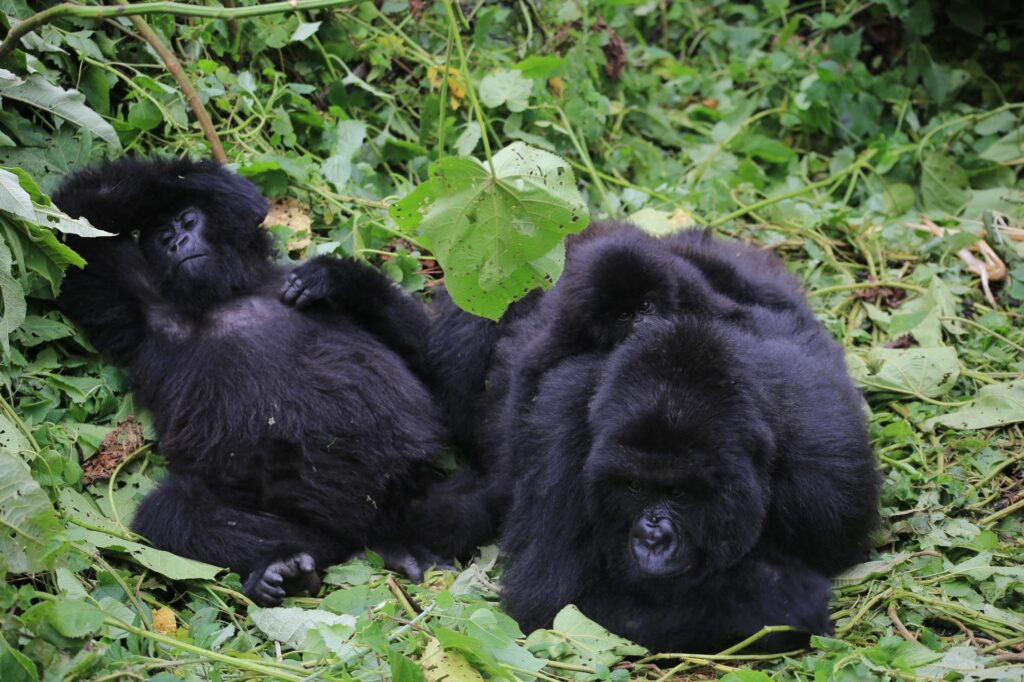
15 Facts About Uganda’s Mountain Gorillas That Will Surprise You
Mountain gorillas
Of all the wildlife encounters possible in Africa, few leave people as genuinely altered as spending an hour in the presence of Uganda’s mountain gorillas. Not because the forest is dramatic — though Bwindi Impenetrable National Park is one of the more demanding landscapes on the continent — but because mountain gorillas have a way of making the distinction between observer and observed feel considerably less clear than you expected. You watch them. They watch you back. And somewhere in that exchange, whatever assumptions you arrived with tend to quietly dissolve.
Uganda is home to roughly half the world’s remaining mountain gorillas, a population distributed across Bwindi’s ancient forest and the volcanic slopes of Mgahinga in the far southwest. These are not animals most people know well beyond the broad outline. The facts behind the encounter are often as surprising as the encounter itself. What follows are fifteen of the most significant, presented not as trivia but as context, the kind of information that makes the experience richer if you carry it with you into the forest.
What Uganda’s Mountain Gorillas Actually Are
Fact 1: Mountain Gorillas Are a Distinct Subspecies, Not a Species
The term mountain gorilla refers specifically to Gorilla beringei beringei, one of two subspecies of the eastern gorilla. The other is the Grauer’s gorilla, found in the forests of the Democratic Republic of the Congo. Western gorillas, the type most often seen in zoos, belong to an entirely separate species. This distinction matters because the conservation status, behaviour, and physical characteristics of mountain gorillas differ meaningfully from their lowland relatives.
Mountain gorillas are generally larger and more heavily built than western gorillas, with thicker fur suited to the cooler temperatures of high-altitude forest. They live exclusively in the wild. No mountain gorilla has ever survived captivity for more than a few months, which means every encounter with them happens on their terms, in their habitat.
Fact 2: Their DNA Overlaps With Ours by About 98 Per Cent
The genetic proximity between mountain gorillas and humans is not a figure used for effect. It has concrete implications for the way conservation is managed. Because the overlap sits at approximately 98 per cent, mountain gorillas are susceptible to most of the respiratory illnesses that affect people, including the common cold. A human cold can become a serious respiratory infection in a gorilla family with no prior immunity.
This is why Uganda Wildlife Authority regulations require a minimum seven-metre viewing distance at all times and prohibit anyone showing symptoms of illness from entering the forest. It is also why gorilla trekking groups are capped at eight people per family per day — a limit that protects habituation and minimises disease risk simultaneously.
Fact 3: Uganda Holds Roughly Half the Global Population
As of the most recent surveys, the total mountain gorilla population stands at just over one thousand individuals. Uganda is home to approximately four hundred and eighty of them, distributed between Bwindi’s four gorilla sectors and Mgahinga. The remainder live in Rwanda’s Volcanoes National Park and the Virunga National Park shared between the DRC and Rwanda.
What makes Uganda’s share particularly significant is Bwindi itself. Unlike the open, bamboo-heavy slopes of the Virungas, Bwindi is genuine ancient forest, dense and vertically layered, with a biodiversity that extends far beyond gorillas. The park is a UNESCO World Heritage Site not primarily because of its gorillas but because of its extraordinary ecological integrity, a fact worth holding when you are standing in it.
How Mountain Gorillas Actually Live
Fact 4: A Silverback Is Not Simply the Biggest Male
The word silverback is used casually to describe any large male gorilla, but it has a specific biological meaning. A male mountain gorilla develops the characteristic silver saddle of grey hair across his back when he reaches full maturity, typically between twelve and fifteen years of age. Not every mature male becomes a dominant silverback. Some males leave their natal group and spend years as solitary individuals before either attracting females to form a new group or joining an existing one.
A dominant silverback’s responsibilities extend well beyond physical protection. He mediates conflicts within the group, determines the daily route and rest sites, and is the primary point of reference for every other individual in the family. When a silverback charges or vocalises, the response of the rest of the group reflects a deeply established social structure, not simply fear.
Fact 5: Gorilla Families Can Range from 5 to Over 40 Individuals
The habituated gorilla families that visitors trek to see in Bwindi and Mgahinga vary considerably in size. Some consist of a single silverback with a handful of females and their young. Others are large, multi-male groups with complex internal hierarchies. The Bwindi Impenetrable sector alone has multiple habituated families, each with its own territory, social dynamics, and seasonal ranging patterns.
Understanding family size matters practically. Larger families are sometimes easier to locate because they cover more ground and produce more noise. Smaller families may offer quieter, more intimate encounters but require more patience from trackers in finding them each morning.
Fact 6: Mountain Gorillas Spend Most of Their Day Eating
A mountain gorilla consumes between eighteen and twenty kilograms of vegetation every day. Stems, leaves, roots, bark, and occasional fruit make up the bulk of the diet. This volume of food requires nearly constant movement through the forest, following seasonal availability of preferred plant species. It is one of the reasons gorillas range widely and why trackers spend their mornings following the previous evening’s trail rather than expecting the family to remain in a fixed location.
The feeding behaviour is actually one of the more rewarding things to observe during a trek. Watching a silverback strip bark from a giant fig tree, or a juvenile experiment with a stem that a female has just discarded, provides a window into the daily texture of gorilla life that no documentary can entirely replicate.
Fact 7: They Build New Sleeping Nests Every Night
Mountain gorillas construct a fresh nest each evening from bent branches and vegetation, either on the ground or low in trees depending on terrain and individual preference. These nests are used once and then abandoned. Trackers use the previous night’s nesting site as the starting point for each morning’s search, examining the nests for shed hair, dung, and other signs to confirm the family’s size and estimate where they headed at first light.
Infants share their mother’s nest until they are old enough to build their own, typically around three years of age. A juvenile practising nest construction for the first time is an oddly touching thing to witness, building and rebuilding what looks like a very inadequate bed until something acceptable emerges.
The Conservation Reality Behind Uganda Mountain Gorilla Tourism
Fact 8: Gorilla Numbers Are Actually Increasing
Mountain gorillas are the only great ape whose numbers are rising. The population dropped to an estimated 620 individuals in 1989 before sustained conservation efforts, including anti-poaching patrols, veterinary interventions, and community engagement around parks, gradually reversed the trend. The current population of just over a thousand represents a genuine conservation success, though the species remains classified as Endangered by the IUCN.
This recovery did not happen automatically. It required decades of investment from governments, conservation NGOs, and the tourism revenues generated by gorilla trekking permits. The six-hundred-dollar permit fee charged for Uganda gorilla trekking, a figure many travellers consider expensive, has been one of the primary funding mechanisms for the protection infrastructure that made this recovery possible.
Fact 9: Habituation Takes Years and Is Never Fully Complete
The process of habituating a gorilla family to human presence takes between two and four years of daily contact by small teams of researchers and trackers. Even habituated families retain the full range of natural behaviour, including charges from silverbacks who perceive a threat. Habituation is a working relationship, not a guarantee of predictability.
This is worth understanding before entering the forest. A silverback may charge to within a few metres of a trekking group, hold eye contact, and then retreat. Guides are trained to remain calm, avoid eye contact, and crouch to appear non-threatening. Following guide instructions precisely in these moments is not a minor point of etiquette; it is the difference between a remarkable experience and a serious incident.
Fact 10: Each Gorilla Has a Unique Nose Print
Just as humans are identified by fingerprints, individual mountain gorillas are identified by the unique wrinkle pattern on the bridge of their nose. Conservation researchers use nose print photography to track individuals across decades, building longitudinal records of births, deaths, group movements, and social changes.
The Dian Fossey Gorilla Fund, which continues research across the Virunga range, maintains one of the most detailed long-term great ape datasets in existence. Uganda’s Bwindi Impenetrable National Park has parallel monitoring systems tracking family composition and individual health across all habituated groups.
What to Expect When You Encounter Uganda Mountain Gorillas
Fact 11: The Trek Itself Can Take Anywhere From One Hour to Eight
This is the variable that most surprises first-time trekkers. Gorilla families move. Some mornings they are encountered quickly, within forty minutes of leaving the trailhead. On other days, particularly during seasons when fruit availability shifts the family’s range, trackers may spend the better part of a day in pursuit before a sighting is achieved.
Bwindi’s terrain compounds this variability. The forest is steep, densely vegetated, and frequently muddy. A permit does not guarantee a short or an easy walk. Physical fitness helps, but the more important quality is patience, the ability to trust your guides, accept the pace the forest sets, and stay present in the process rather than the destination.
Fact 12: You Get Exactly One Hour
Once a gorilla family is located, all eight members of a trekking group are permitted exactly sixty minutes in the family’s presence. Uganda Wildlife Authority rangers enforce this strictly, regardless of what is happening when the time expires. The limit exists to minimise stress on the gorillas and reduce the cumulative impact of daily human contact.
Sixty minutes is both shorter and longer than most people expect. It passes very quickly when a silverback is sitting three metres away examining your guide with calm disinterest. It contains enough time to observe multiple individuals, watch interactions between adults and young, and produce a significant number of photographs if you come prepared. First-time visitors often describe the hour as the fastest and most concentrated wildlife experience of their lives.
Fact 13: The Best Light for Photography Is Often Overcast
Bwindi’s forest is dense. Direct sunlight rarely reaches the understorey, and when it does, the contrast between bright patches and deep shadow makes consistent exposure difficult. Overcast conditions, which occur frequently in the forest, produce a diffused, even light that photographs considerably better than the harsh midday sun of open savannah.
A camera capable of managing higher ISO values without excessive noise is worth prioritising over sheer optical reach. Gorillas move, the forest floor is not flat, and the one-hour window does not allow for extended lens changes. Many photographers leave Bwindi with their best work from a wet, grey morning.
Fact 14: The Dry Seasons Are More Predictable, Not More Spectacular
Uganda’s main gorilla trekking seasons follow the country’s dry periods: December through February and June through September. Trails are firmer, river crossings more straightforward, and the logistical experience generally more comfortable during these months.
The wet seasons, however, have their own character. The forest is vivid and layered with mist in a way the dry season rarely produces. Gorilla behaviour does not change significantly with the seasons, since the family ranges according to food availability rather than weather. Some of the most striking photographs from Bwindi come from the long rains.
Fact 15: A Gorilla Encounter Changes How You Think About Conservation
This is the least quantifiable fact on the list, but experienced guides and researchers mention it consistently. Travellers who have spent an hour in the presence of a mountain gorilla family rarely view conservation funding, permit costs, or wildlife policy as abstract concerns afterwards. The encounter creates a direct personal stake in the outcome.
Several long-term studies on gorilla tourism have found that visitors who trek to see Uganda mountain gorillas are significantly more likely to make subsequent financial contributions to conservation organisations, advocate for wildlife protection in professional settings, and return to East Africa for further wildlife experiences. The hour in the forest, it turns out, does not end when you leave it.
Planning a Uganda Mountain Gorilla Trek: What Matters Most
A gorilla trekking permit for Uganda costs six hundred US dollars per person and must be booked in advance through the Uganda Wildlife Authority or a licensed operator. Permits for peak season months, particularly July and August, sell out many months ahead. Building permit procurement into the planning timeline early is not optional advice; it is a practical requirement.
Bwindi has four sectors: Buhoma, Ruhija, Rushaga, and Nkuringo. Each offers access to different habituated families. Sector choice affects the driving time from Kampala, the accommodation options available, and the character of the forest terrain you will walk through. Nkuringo, for instance, involves steep descents that make it one of Bwindi’s more demanding options. Rushaga has the largest number of habituated families and consequently more permit availability.
Mgahinga Gorilla National Park, Uganda’s smaller gorilla destination in the far southwest, offers a different landscape altogether, the open slopes and bamboo zones of the Virunga volcanoes rather than Bwindi’s ancient closed-canopy forest. Availability is more limited, but the experience of tracking gorillas across volcanic terrain has a particular quality that regular visitors to Bwindi find genuinely different.
Terenga Safaris handles permit procurement, sector selection, and accommodation logistics for gorilla trekking across both parks, alongside the broader Uganda itineraries that most visitors combine with their Bwindi or Mgahinga visit. The practical value of working with an operator who knows how permit availability shifts by month, sector, and season becomes clear when you are planning a trip where a single permit date anchors everything else.
Uganda’s mountain gorillas reward travellers who come prepared, not with expensive equipment or extraordinary fitness, but with patience, genuine curiosity, and the understanding that what makes this encounter significant has nothing to do with ticking a box. The fifteen facts above are not a checklist to recite in the forest. They are the kind of context that deepens a remarkable experience into something that stays with you considerably longer than the sixty minutes you were allocated.