
Best Travel Tools to Enhance an East African Safari.
July 3, 2026
Best Luxury Safari Lodges in Bwindi for Gorilla Trekking.
July 4, 2026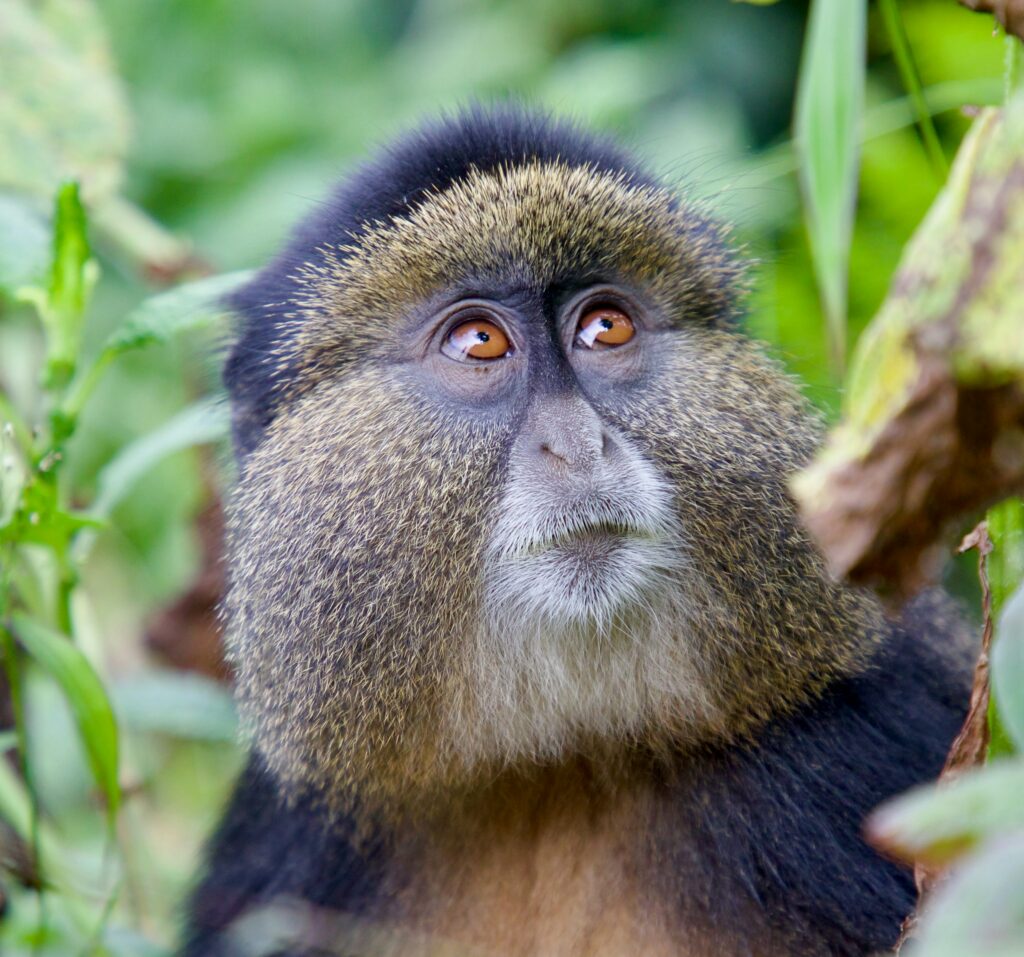
Best Places to Track Golden Monkeys in East Africa
Ask most first-time visitors what they associate with the Virunga volcanoes and they will say gorillas, and they would not be wrong. But spend an hour in the bamboo forest on Mount Sabinyo’s lower slopes and you will understand why a growing number of travellers now come specifically to track golden monkeys, a species found almost nowhere else on earth and one that behaves nothing like its larger, quieter cousin.
Golden monkeys are endemic to the Virunga Massif, the chain of volcanoes straddling Uganda, Rwanda and the Democratic Republic of Congo, and they are listed as endangered, which makes the handful of places where you can track golden monkeys genuinely limited rather than a marketing line. Where you choose to track golden monkeys shapes almost everything else about the trip: cost, difficulty, how far you travel to reach the trailhead, and whether the experience stands alone or slots neatly alongside a gorilla trek already on your itinerary.
This piece works through the main options for golden monkey tracking in East Africa, what separates a good morning with the troop from a disappointing one, and the practical detail, permits, seasons, fitness, that determines whether a particular location suits you. We will start with the destination most Uganda-based travellers reach first, before moving across the border to compare it with Rwanda’s equivalent experience.
Why Golden Monkey Tracking Is Worth Planning Around
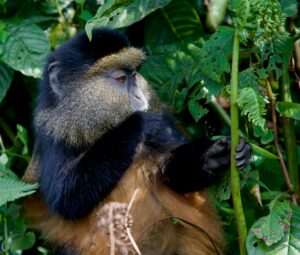
A golden monkey troop can number over eighty individuals, and unlike gorillas, who tend to move deliberately and rest for long stretches, golden monkeys are almost constantly in motion, leaping between bamboo stems ten or fifteen feet off the ground with a speed that makes photography genuinely challenging. Their colouring, a deep orange-gold across the back and flanks fading to black limbs and tail, catches the light strikingly against the pale green of new bamboo growth, which is part of why the encounter photographs so well even on an overcast morning.
The other reason golden monkey tracking matters is conservation. Numbers were hit hard by habitat loss and years of regional instability, and the species survives only within the protected forest of the Virunga volcanoes. Tourism revenue from permits funds a meaningful share of the ranger patrols and habitat monitoring that keep the population stable, so choosing to track golden monkeys is not simply a wildlife encounter, it is a direct, traceable contribution to a fairly narrow conservation effort.
It is also, refreshingly, less physically demanding than gorilla trekking in most cases. Golden monkeys favour lower-altitude bamboo zones rather than the steep, muddy upper slopes gorillas often retreat to, which means a shorter, gentler walk and a genuine alternative for travellers whose fitness or time does not stretch to a full gorilla trek. That combination, lower cost, lower physical demand, still-excellent wildlife, is exactly why the practice of golden monkey tracking has grown from a minor add-on into a trip in its own right.
Mgahinga Gorilla National Park, Uganda: The Easiest Place to Track Golden Monkeys
Mgahinga sits in Uganda’s far south-western corner, tucked against the Rwandan and Congolese borders, and it is the smallest of Uganda’s national parks by some distance. It shares the same three volcanoes, Muhabura, Gahinga and Sabinyo, that Rwanda’s Volcanoes National Park is built around, but on the Ugandan side the bamboo forest where golden monkeys spend most of their day sits closer to the park headquarters, which keeps the walk shorter for most groups.
A typical morning here starts at Ntebeko, the park’s entrance gate, with a briefing from rangers before the group sets off behind a tracker who already has a rough idea of where the troop bedded down. Reaching them can take anywhere from thirty minutes to two hours depending on how far the monkeys have ranged overnight, and once found, visitors get a full hour with the troop, watching juveniles chase each other through the canopy while adults strip bamboo shoots with practised speed.
Uganda offers two tiers of golden monkey tracking at Mgahinga: a standard habituated-group visit, and a longer, more involved habituation experience for travellers who want to spend an extended morning with a troop still being acclimatised to human presence. The standard permit is considerably cheaper than a gorilla permit, which makes Mgahinga a sensible way to add a second primate encounter to a Bwindi-based itinerary without dramatically inflating the budget.
The honest limitation is accessibility. Mgahinga is a long drive from Kampala, roughly nine to ten hours, and most visitors only justify the detour because they are already in the south-west for gorilla trekking in Bwindi, a few hours further north. Travel this way and golden monkey tracking becomes a natural, low-effort addition; travel purely for the monkeys alone and the logistics feel disproportionate to the encounter, however good it is.
Volcanoes National Park, Rwanda: A Larger-Scale Golden Monkey Trekking Experience
Cross into Rwanda and the same bamboo forest continues, but the infrastructure around it changes noticeably. Volcanoes National Park, roughly two and a half hours from Kigali on good tarmac, runs one of the most polished tourism operations in the region, and golden monkey trekking here benefits from that same efficiency: well-marked trailheads, a larger visitor centre, and rangers thoroughly used to explaining golden monkey behaviour to first-time visitors.
Rwanda tracks two habituated golden monkey troops, both considerably larger than what most Ugandan groups encounter, sometimes numbering well over a hundred individuals when family groups merge temporarily to feed. That scale changes the character of the visit; rather than watching a contained troop move through one patch of bamboo, you can find yourself surrounded on several sides at once, with monkeys overhead, at eye level and underfoot in the same few minutes.
Permit pricing sits below Rwanda’s gorilla permit by a wide margin, and the walk itself is generally shorter and less steep than most of Rwanda’s gorilla treks, which sit at higher altitude on the volcanic slopes proper. This makes Volcanoes National Park a strong choice for families, older travellers, or anyone combining a Rwanda gorilla trek with a second, gentler primate morning before flying home from Kigali.
Where Rwanda’s golden monkey tracking loses a little ground to Mgahinga is originality of experience. Because Volcanoes National Park sees considerably higher visitor numbers overall, group sizes at the trailhead can feel busier, and the encounter, while excellent, is a more thoroughly optimised tourism product than Uganda’s quieter equivalent. Neither is wrong; it comes down to whether you value polish and convenience or a slightly rawer, lower-traffic morning in the forest.
Virunga National Park, DRC: The Least Practical Option for Golden Monkey Tracking
For completeness, golden monkeys also range into Virunga National Park on the Congolese side of the massif, and the park does, in principle, offer tracking permits. In practice, ongoing insecurity in eastern DRC has made Virunga’s accessibility unpredictable for years at a stretch, with the park closed to tourism entirely during periods of conflict.
Given that Uganda and Rwanda offer comparable or superior golden monkey tracking with none of the associated risk, there is little practical reason to choose the Congolese side unless you have a specific interest in Virunga itself and have taken independent, current advice on the security situation. This is one instance where the more straightforward destination is also, by a wide margin, the sensible one.
When to Go: Best Season for Golden Monkey Tracking
Golden monkey tracking runs year-round in both Uganda and Rwanda, which is one genuine advantage over gorilla trekking’s more pronounced seasonal crowding. That said, the two dry seasons, roughly June to September and again from December to February, keep the bamboo forest floor firmer underfoot and reduce the odds of tracking through persistent drizzle, which matters more here than it might sound given how much of the forest sits above 2,300 metres.
The wetter months, particularly March to May, bring lush new bamboo growth that the monkeys feed on avidly, which can mean shorter search times as troops stay concentrated in productive feeding patches rather than ranging widely. The trade-off is muddier trails and a higher chance of rain interrupting the walk itself, so travellers prioritising comfort should lean towards the dry windows, while those chasing active feeding behaviour might quietly prefer the rains.
Permits, Fitness and Who Golden Monkey Tracking Suits
Permits for golden monkey tracking must be booked in advance through the respective wildlife authority, though availability is considerably less pressured than gorilla permits, since group sizes are smaller and demand lower. Most tour operators, Terenga Safaris included, can secure a permit within a matter of weeks rather than the months of lead time gorilla trekking often demands, which makes golden monkey tracking a realistic late addition to an itinerary already in motion.
Fitness requirements are modest by comparison with gorilla trekking. The walk to reach a habituated troop rarely exceeds two hours each way, the terrain is generally less steep, and the altitude, while still meaningful at over 2,300 metres, is lower than many gorilla trekking routes. This makes golden monkey tracking a sound option for families with older children, travellers recovering from a long flight, or anyone who wants a genuine wildlife encounter without the physical commitment gorilla trekking sometimes involves.
Deciding Where to Track Golden Monkeys
There is no wrong answer between Mgahinga and Volcanoes National Park; both put you within a few metres of a troop of golden monkeys moving through bamboo at a pace that makes gorillas look positively sedate by comparison. The right choice depends far more on the shape of your wider itinerary, which country your gorilla permit sits in, how much driving time you are prepared to absorb, than on any meaningful difference in the wildlife itself.
Whether you are weighing up a Uganda-based trip through Bwindi and Mgahinga or a Rwanda loop built around Kigali and the Volcanoes, Terenga Safaris can help slot golden monkey tracking into the itinerary at the point where it adds the most, without turning an efficient trip into an unnecessary detour. Get the sequencing right and it becomes one of the easiest, most rewarding mornings of the entire safari.